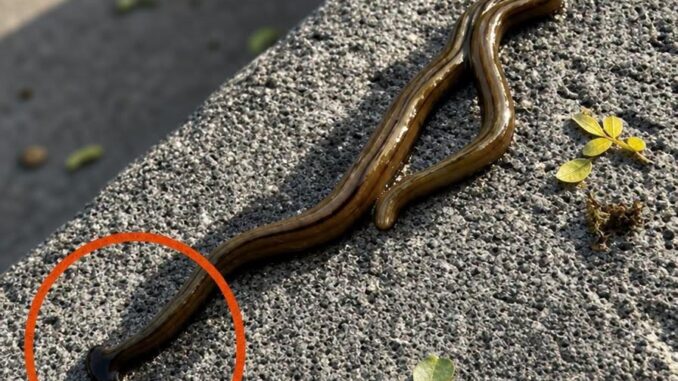
A quiet morning in the backyard can quickly become surprising when you notice a creature you have never seen before. Moving slowly across damp pavement, garden soil, or a shaded area near plants, it may look like something between a worm and a s
lug. Its unusual shape can make it seem unfamiliar and even concerning.
One creature that often catches homeowners’ attention is the hammerhead worm. With its flat body and distinctive shovel-shaped head, this land flatworm looks very different from the common earthworms many people are used to seeing in gardens.
Although finding one does not automatically mean your yard is in danger, it is worth taking a closer look. These unusual visitors can provide clues about what is happening in the soil ecosystem around your home.
What Are Hammerhead Worms?
Hammerhead worms are a type of land-dwelling flatworm known for their wide, flattened bodies and uniquely shaped heads. Unlike earthworms, which help improve soil by breaking down organic matter and creating tunnels, hammerhead worms are predators.
They move across moist surfaces, especially after rain or in areas with high humidity. They are often found in gardens, flower beds, mulch, compost areas, and other places where soil remains damp.
Their unusual appearance is one reason they attract attention. Many people mistake them for harmless worms at first, but their behavior and diet make them very different.
Why Gardeners Pay Attention to Them
Healthy soil depends on many small organisms working together. Earthworms, in particular, play an important role in maintaining soil quality by improving drainage, moving nutrients, and helping plant roots grow.
Hammerhead worms are known to feed on earthworms and other small soil organisms. Because earthworms are beneficial to gardens, some gardeners worry that a growing population of hammerhead worms could affect the natural balance of their soil.
However, seeing one hammerhead worm does not necessarily mean there is a major problem. Their presence simply suggests that conditions in the area, such as moisture levels and available food sources, may be suitable for them.
Why You Should Handle Them Carefully
Hammerhead worms are not dangerous in the same way as some harmful pests, but it is generally recommended to avoid handling them with bare hands.
Some species produce substances that may irritate human skin, so using caution is a good practice. If you need to remove one, consider using tools such as gloves, a container, or a piece of cardboard rather than touching it directly.
After handling any unfamiliar creature, washing your hands is a sensible precaution.
What To Do If You Find One
If you discover a hammerhead worm in your yard, the first step is to identify it correctly. Many harmless creatures can look similar, and proper identification helps determine the best response.
You can consider:
- Taking a clear photo for identification
- Checking local gardening resources
- Contacting a local extension office for guidance
- Avoiding unnecessary chemical treatments
If the species is considered invasive in your area, local environmental organizations may have specific recommendations for removal and disposal.
Why Moist Areas Attract Them
Hammerhead worms prefer environments where they can stay moist. This is why they are often noticed after rainfall or in areas with heavy watering, mulch, or dense plant growth.
Common places where they may appear include:
- Garden beds
- Under leaves or mulch
- Around compost piles
- Shaded pathways
- Damp soil areas
Keeping your yard properly maintained can help create a healthier balance, although completely preventing wildlife from entering outdoor spaces is usually impossible.
A Reminder That Soil Is a Living Ecosystem
The discovery of an unusual creature in your yard is a reminder that gardens are much more than plants and grass. Beneath the surface exists a complex network of organisms that interact with each other every day.
Some creatures improve soil health, while others compete for resources. Understanding these relationships can help homeowners make better decisions about gardening and pest management.
Instead of immediately reacting with concern, learning about unfamiliar species can provide valuable information about the environment around your home.
Final Thoughts
A strange worm-like creature moving through your yard may seem alarming at first, but it is often simply a sign of the natural activity happening around you. Hammerhead worms are unusual predators that deserve attention because of their impact on soil ecosystems, especially where earthworms are important for garden health.
If you find one, take time to identify it, handle it carefully, and follow local recommendations if removal is necessary. A small discovery in your backyard can be a reminder that even the smallest creatures play a role in the larger world beneath our feet.
Leave a Reply