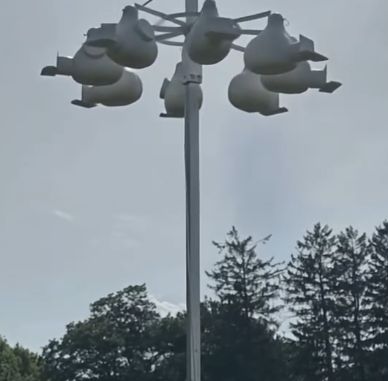
Birdwatchers and nature enthusiasts often notice unusual white, gourd-shaped structures mounted on tall poles in parks and open spaces. These intriguing installations are not surveillance devices or weather instruments as some might assume; instead, they serve an important role in supporting purple martins, a migratory bird species native to North America. This article explores the nature of purple martins, the significance of these artificial nesting houses, and the broader ecological and conservation implications of these structures.
Purple martins (Progne subis) are the largest swallows found across North America, renowned for their aerial agility and striking iridescent plumage. Measuring approximately 7 to 8 inches in length with a wingspan that can reach up to 16 inches, these birds are a delight to observe as they perform swift, graceful maneuvers while hunting flying insects. Their diet primarily consists of various airborne insects such as dragonflies, moths, beetles, and mosquitoes, making them natural pest controllers that contribute positively to local ecosystems.
These birds undertake extensive migrations, spending winters in parts of South America, including Brazil and Argentina, before returning northward to breed during the spring and summer months. Unlike many bird species that build nests individually, purple martins exhibit social nesting behavior, forming colonies that require suitable communal spaces for breeding. Historically, they nested in natural tree cavities, especially within dead or decaying hardwood trees.
However, urban development, deforestation, and changes in land use have significantly reduced the availability of these natural nesting sites. This scarcity has led purple martins to adapt by utilizing man-made structures for nesting. Indigenous peoples and early settlers recognized this behavioral shift and began providing hollowed gourds hung on poles to attract and support the birds. The tradition continues today, with modern purple martin houses designed to emulate these original gourds.
The gourd-shaped birdhouses seen in parks are specially crafted to meet the needs of purple martins. Their rounded shape offers protection against common predators such as snakes, raccoons, and squirrels by making it difficult for these animals to access the nests. Mounted on poles exceeding 12 feet in height, these structures are positioned well above ground level to further enhance safety. Additionally, the design incorporates ventilation and drainage features to maintain a healthy environment for eggs and chicks by preventing excessive moisture and heat buildup.
The installation of these houses in public and private spaces serves multiple purposes. Primarily, they provide safe nesting habitats essential for the breeding success of purple martins. Conservationists and park managers monitor these colonies using pulley or telescoping pole systems that allow safe access for nest inspection and maintenance without disturbing the birds. This monitoring helps track the health and growth of local bird populations.
Beyond supporting bird conservation, these nesting sites contribute to ecological balance by encouraging the presence of an insectivorous species that naturally regulates insect populations. Purple martins consume hundreds of insects daily, offering an environmentally friendly alternative to chemical pest control methods. Their presence benefits both urban and rural communities by reducing the numbers of mosquitoes and other flying insects.
Visitors to parks curious about these unique poles with clustered white gourds can appreciate the thoughtful human intervention that supports wildlife. Each gourd provides a separate nesting chamber, allowing multiple purple martin families to coexist closely, reflecting the birds’ natural social tendencies. The smooth pole guards at the base prevent predators from climbing, adding an extra layer of security.
Understanding the role of these structures highlights the interconnectedness between human activity and wildlife conservation. Providing artificial nesting sites for purple martins is a practical example of how humans can aid species affected by habitat loss. It also offers opportunities for education and community engagement in bird conservation efforts.
For those interested in supporting purple martins, installing suitable birdhouses following recommended guidelines can foster local populations. Ensuring proper placement, height, and maintenance of these houses is crucial to attracting and sustaining purple martin colonies. Moreover, promoting awareness about the ecological benefits of these birds can enhance appreciation for urban biodiversity and encourage environmentally responsible practices.
In summary, the gourd-shaped houses prominently displayed on tall poles in many parks are vital tools for purple martin conservation. They provide secure nesting environments, support the species’ social breeding habits, and contribute to natural insect control. These structures exemplify a successful partnership between humans and wildlife, underscoring the importance of habitat preservation and thoughtful stewardship in maintaining ecological health.
Challenges Facing Purple Martins and Conservation Efforts
Despite the support provided by artificial nesting structures, purple martins continue to face multiple challenges that affect their populations. Habitat loss remains a critical issue, as ongoing urban expansion and changes in land use can reduce suitable foraging areas and safe nesting sites. Additionally, climate change introduces uncertainties in migratory patterns and breeding success by altering seasonal cues and insect availability.
Invasive species and predators also pose threats to purple martins. House sparrows and European starlings, both non-native birds, often compete aggressively for nesting cavities, sometimes evicting purple martins from their nests. Predation from snakes, raccoons, and other mammals can impact nest success, especially when artificial housing is not properly maintained or protected.
To address these challenges, conservation organizations and bird enthusiasts collaborate to monitor purple martin populations and improve nesting conditions. Efforts include educating the public on proper maintenance of martin houses, controlling invasive species around nesting sites, and advocating for the preservation of natural habitats. Citizen science projects often engage communities in tracking sightings and nesting success, contributing valuable data for conservation planning.
The Role of Citizen Science and Community Involvement
Community involvement plays a vital role in sustaining purple martin populations. Birdwatchers and local residents who maintain martin houses contribute significantly by ensuring the nests are clean, safe, and free from invasive species. These individuals often participate in citizen science initiatives, reporting observations to databases that help scientists understand population trends and distribution.
Educational programs in schools and community centers increase awareness about purple martins and the importance of habitat conservation. Such programs often highlight how simple actions, like installing a properly designed birdhouse or protecting local green spaces, can have a meaningful impact on wildlife.
Furthermore, volunteer groups sometimes partner with parks and municipalities to install and maintain martin housing, fostering a sense of stewardship and connection between people and nature. This collaborative approach strengthens conservation outcomes and promotes sustainable coexistence with native bird species.
Design Innovations and Best Practices for Purple Martin Houses
Over time, designs for purple martin houses have evolved to enhance the birds’ safety and comfort. Modern houses often incorporate materials that are durable, weather-resistant, and easy to clean. Some designs include removable gourds or compartments to facilitate maintenance and monitoring without disturbing the birds.
Best practices for installing martin houses emphasize location, height, and accessibility. Poles should be placed in open areas away from dense tree cover to allow easy flight access and reduce predator hiding spots. A height of 10 to 15 feet is generally recommended to minimize predation risks and provide optimal conditions for social interaction among the birds.
Regular maintenance is crucial to prevent parasite buildup and to remove old nesting material, which can harbor mites or disease. It is also important to inspect for damage and ensure that predator guards remain intact. Providing fresh water sources nearby and maintaining insect-friendly environments can further support the health and success of purple martin colonies.
Ecological Importance of Purple Martins Beyond Insect Control
While purple martins are valued for controlling insect populations, their ecological role extends beyond this function. As migratory birds, they contribute to ecosystem connectivity by linking habitats across continents through their seasonal movements. Their presence can indicate the health of local environments, as they rely on abundant insect populations and safe nesting sites.
Additionally, purple martins serve as prey for a variety of raptors and other wildlife, integrating into food webs and supporting biodiversity. Their nesting colonies also provide opportunities for other species, such as certain insects and microorganisms, to thrive in association with bird habitats.
By supporting purple martin populations, humans indirectly contribute to maintaining balanced and resilient ecosystems, highlighting the interconnectedness of species and the importance of protecting migratory bird habitats.
Future Perspectives on Purple Martin Conservation
Looking ahead, the conservation of purple martins will likely depend on continued collaboration among scientists, conservationists, policymakers, and the public. As urban areas expand, integrating wildlife-friendly practices into urban planning and green space management will be crucial. Encouraging the installation of martin houses in appropriate locations and promoting native vegetation can help create supportive environments.
Technological advances, such as remote monitoring systems, may improve the ability to study and protect purple martin colonies with minimal disturbance. Additionally, climate adaptation strategies that consider shifting migratory patterns and breeding timings could enhance conservation efforts.
Ultimately, fostering a culture of environmental stewardship and raising awareness about the role of species like the purple martin will be essential for their long-term survival. These birds not only enrich our natural heritage but also remind us of the positive impact humans can have when we choose to protect and coexist with wildlife.
Best Practices for Monitoring and Maintaining Purple Martin Colonies
Effective stewardship of purple martin colonies involves regular monitoring and maintenance to ensure the health and safety of the birds. Observers and caretakers should conduct inspections at least once during the nesting season, preferably after the fledglings have left, to avoid disturbing active nests. During these checks, old nesting material should be removed to prevent parasite buildup, which can negatively impact future breeding success. Additionally, damaged gourds or housing units should be repaired or replaced to maintain a secure environment.
It is also advisable to monitor for the presence of invasive species such as house sparrows or European starlings, which may attempt to occupy martin houses. Removing these competitors in a humane and timely manner helps preserve nesting opportunities for purple martins. Using predator guards on poles, such as baffles or smooth metal sleeves, continues to be an effective measure to deter climbing predators like snakes and raccoons.
Community Engagement and Educational Opportunities
The presence of purple martin colonies provides an excellent platform for community education and engagement. Parks and nature centers often organize birdwatching events, workshops, and educational signage to inform visitors about the species and their ecological role. Engaging the public in citizen science projects, such as reporting sightings and nesting success through apps and online platforms, fosters a connection between people and local wildlife.
Schools can incorporate lessons on migratory birds, conservation biology, and habitat restoration using purple martins as a case study. Such educational initiatives not only raise awareness but also encourage responsible behaviors, including maintaining birdhouses and protecting local green spaces.
Integrating Purple Martin Conservation into Urban Planning
As urbanization continues to transform landscapes, thoughtful integration of wildlife-friendly elements into urban planning becomes increasingly important. Incorporating purple martin houses into public parks, community gardens, and even residential areas can create stepping stones of habitat that facilitate migratory bird survival.
Urban planners and landscape architects can collaborate with ornithologists and conservationists to identify suitable locations for martin housing that balance human use with wildlife needs. Incorporating native vegetation that supports insect populations benefits purple martins and enhances overall biodiversity. Additionally, minimizing pesticide use in these areas helps maintain healthy food sources for insectivorous birds.
The Role of Technology in Purple Martin Research and Conservation
Advancements in technology offer new tools for studying and protecting purple martin populations. Remote cameras and acoustic monitoring devices can provide insights into nesting behaviors and colony health without intrusive human presence. Data collected through these methods contribute to understanding factors that influence breeding success and migration patterns.
Satellite tracking and banding projects help map migratory routes and identify critical stopover habitats. Such information supports coordinated conservation actions across international borders, given the birds’ long-distance migratory nature.
Future research may also explore the impacts of climate change on purple martin phenology, enabling adaptive management strategies to be developed in response to shifting environmental conditions.
Encouraging Responsible Participation in Purple Martin Conservation
For individuals interested in contributing to purple martin conservation, it is important to follow established guidelines when installing and managing birdhouses. Proper placement involves situating martin houses in open areas with clear flight paths, typically at heights between 10 and 15 feet. Avoiding proximity to dense tree cover reduces predator access and competition from other cavity-nesting species.
Regular cleaning and maintenance, especially outside the breeding season, are critical to provide safe and inviting nesting sites. Using materials that resist weathering and facilitate cleaning extends the lifespan of the houses and reduces disturbance to the birds.
Participation in local birding groups or conservation organizations can provide valuable support and resources for new martin landlords. Sharing experiences and data helps improve collective knowledge and conservation outcomes.
Understanding the Broader Ecological Context
Purple martins are part of a larger web of ecological interactions that sustain healthy ecosystems. Their migratory behavior connects disparate habitats, playing a role in nutrient cycling and food web dynamics across continents. Protecting purple martins contributes to preserving these natural processes.
Furthermore, the success of purple martin colonies can serve as an indicator of environmental quality. Healthy populations suggest abundant insect prey and suitable habitat conditions, reflecting positively on ecosystem health. Conversely, declines may signal broader environmental challenges requiring attention.
By supporting purple martin conservation, communities contribute to maintaining biodiversity and ecological resilience, which ultimately benefit human well-being through ecosystem services such as pest control and pollination.
Summary and Key Takeaways
Purple martin houses represent a tangible example of how human intervention can positively influence wildlife conservation. These structures provide essential nesting sites that compensate for habitat loss and support the species’ social breeding habits. Their role in controlling insect populations offers natural pest management benefits.
Successful purple martin conservation depends on ongoing maintenance, community involvement, and integration with broader environmental stewardship efforts. Educational programs and citizen science initiatives enhance public understanding and foster a culture of appreciation and responsibility toward native wildlife.
Advances in research and technology continue to inform effective conservation strategies, ensuring that purple martins remain a vibrant part of North America’s avian diversity. Through collaborative efforts, humans and purple martins can coexist harmoniously, demonstrating the potential for positive outcomes when conservation and community engagement intersect.
Leave a Reply