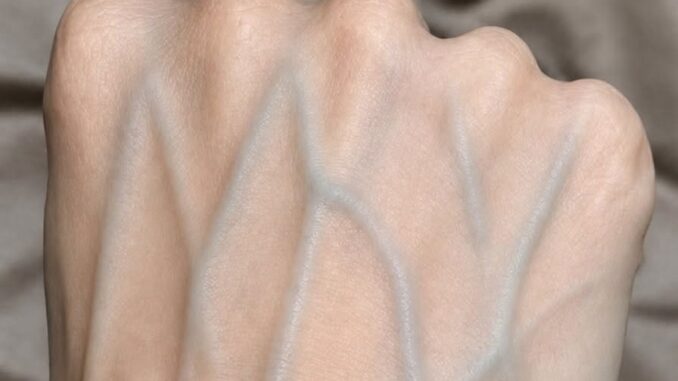
Have you ever looked down at your hands and noticed that your veins suddenly seem more visible than usual?
Prominent veins can sometimes look surprising, especially if you don’t remember noticing them before. This has led to plenty of online claims suggesting that visible veins on the hands could be a warning sign of kidney problems.
But is there actually a connection?
The short answer is that visible hand veins alone are not a reliable way to tell whether your kidneys are healthy. In many people, prominent veins are simply a normal feature influenced by age, body composition, genetics, exercise, temperature, and other everyday factors.
Understanding why veins become more noticeable—and what kidney problems actually look like—can help separate genuine health information from misleading online claims.
Why Do the Veins on Your Hands Become More Visible?
There are several ordinary reasons why veins may stand out more clearly on the hands.
Aging Can Make Veins Easier to See
As we age, the skin gradually becomes thinner and loses some of its elasticity and supporting tissue.
Because the skin on the hands is relatively thin, the veins underneath it may become increasingly noticeable over time.
This is a normal physical change for many people and does not automatically indicate illness.
Body Fat Can Affect Vein Visibility
The amount of tissue beneath the skin also influences how easily veins can be seen.
People with lower levels of subcutaneous fat may naturally have more prominent veins, particularly around the hands and forearms.
This can be especially noticeable in people who are naturally lean or physically active.
Exercise Can Temporarily Increase Visibility
Have you ever noticed your veins standing out more after working out?
Physical activity increases blood flow, and blood vessels can become more prominent during exercise.
Once the body returns to its normal resting state, the veins may become less noticeable again.
Heat Can Make Veins Stand Out
Temperature can also affect the appearance of veins.
When the body becomes warm, blood vessels near the surface of the skin can widen as part of the body’s normal temperature-regulation process.
As a result, your hand veins may look more prominent after a hot shower, during warm weather, or following physical activity.
Genetics Matter Too
Some people simply have more visible veins than others.
The thickness of the skin, the position of blood vessels, body structure, and inherited characteristics can all influence how prominent veins appear.
Two people can have completely different-looking hand veins while both being perfectly healthy.
Can Visible Hand Veins Indicate Kidney Disease?
This is where it’s important to separate fact from speculation.
Prominent veins on the hands are not considered a reliable symptom or diagnostic sign of kidney disease.
The kidneys perform several important functions, including filtering waste from the blood and helping regulate fluid and electrolyte levels.
When kidney function becomes impaired, the effects can involve different parts of the body. However, simply looking at the veins on someone’s hands cannot determine how well their kidneys are functioning.
In fact, some people with kidney disease—particularly in its earlier stages—may have few noticeable symptoms at all.
What Are the More Recognized Signs of Kidney Problems?
Depending on the condition and its severity, kidney problems can sometimes be associated with symptoms such as:
- Swelling in the feet, ankles, legs, hands, or around the eyes
- Changes in urination
- Foamy urine
- Persistent tiredness
- Nausea or reduced appetite
- High blood pressure
- Changes in how often someone urinates
- Shortness of breath in some circumstances
However, these symptoms can have many different causes.
Having one of them does not automatically mean someone has kidney disease, and the absence of symptoms does not necessarily mean the kidneys are completely healthy.
Why Swelling Can Be More Relevant Than Visible Veins
The kidneys help regulate the amount of fluid and minerals in the body.
When certain kidney conditions become advanced enough to affect fluid balance, excess fluid can sometimes accumulate in tissues and cause swelling, also known as edema.
This may affect the ankles, feet, legs, hands, or areas around the eyes.
But swelling is not specific to kidney disease. It can also occur for many other reasons, including certain heart or liver conditions, circulation problems, medications, prolonged inactivity, and other medical issues.
For that reason, swelling should be evaluated in context rather than automatically blamed on the kidneys.
How Is Kidney Health Actually Checked?
If you are concerned about your kidney function, medical testing is far more useful than examining your hands.
Healthcare professionals may use blood tests to measure creatinine and estimate kidney filtration using the eGFR.
Urine testing can also look for substances such as albumin, which can provide important information about possible kidney damage.
Blood pressure is another important part of kidney-health assessment because high blood pressure and kidney disease can influence one another.
Depending on the situation, additional tests or imaging may also be recommended.
These approaches provide meaningful information about kidney function in a way that the appearance of hand veins cannot.
What About Dialysis Patients?
There is one important situation in which veins on the arm can become unusually prominent in someone with advanced kidney disease.
People receiving hemodialysis may have an arteriovenous (AV) fistula created to provide access for treatment.
An AV fistula connects an artery and a vein, usually in the arm. Over time, the vein can become larger and stronger so that it can be used repeatedly for dialysis.
As a result, veins around the fistula may become much more noticeable.
However, this is related to the dialysis access itself—not evidence that ordinary visible hand veins are a symptom of kidney disease.
When Should You Speak With a Doctor?
You generally do not need to worry simply because the veins on your hands are visible.
However, it is worth discussing unusual or persistent changes with a healthcare professional if they occur alongside other symptoms or if something about the change concerns you.
You should also consider kidney-health testing if you have known risk factors such as diabetes, high blood pressure, or a family history of kidney disease.
And if a vein suddenly becomes painful, red, warm, swollen, or significantly different from the surrounding veins, medical advice can help determine what is causing the change.
Don’t Diagnose Kidney Disease by Appearance
It’s easy for health information online to turn an ordinary physical characteristic into something frightening.
A headline might suggest that a particular feature on your hands is revealing what’s happening inside your body.
But human health is rarely that simple.
Visible veins can have perfectly ordinary explanations, and kidney disease cannot be diagnosed by looking at them.
If you’re concerned about your kidneys, the most useful step is to speak with a healthcare professional and, when appropriate, have the relevant blood, urine, and blood-pressure checks performed.
The Bottom Line
Prominent veins on your hands are usually related to normal factors such as aging, genetics, body composition, exercise, temperature, and individual anatomy.
They are not a reliable indicator of kidney disease on their own.
Kidney health is assessed through appropriate medical evaluation and testing rather than by judging the appearance of veins.
So if you notice that the veins on your hands are more visible than before, there is usually no reason to assume that your kidneys are the cause.
Pay attention to your overall health, take persistent or unusual symptoms seriously, and rely on proper medical testing when you have genuine concerns.
Final Thoughts
Our bodies change throughout life, and many of those changes are completely normal.
The veins on your hands may become more noticeable as you age, lose body fat, exercise, spend time in warm conditions, or simply because of your natural anatomy.
While kidney disease is an important health concern, visible hand veins should not be used as a simple test for kidney function.
If you have symptoms that concern you or have risk factors for kidney disease, getting appropriate medical advice is a much more reliable way to find out what is happening.
The appearance of your hand veins may tell you something about your normal anatomy—but it cannot, by itself, tell you whether your kidneys are healthy.
Leave a Reply