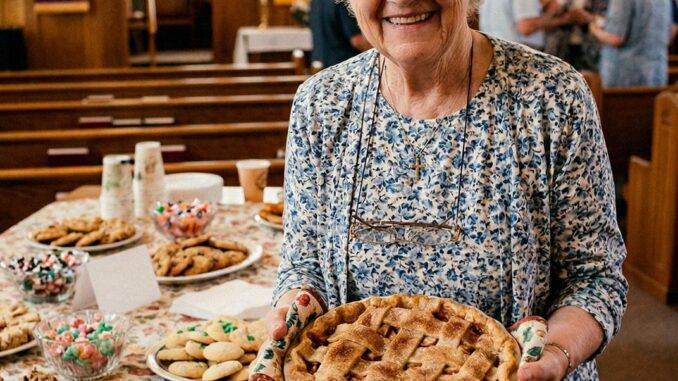
In the quiet, stained-glass world of small-town faith, my grandmother was a constant, shimmering light. For fifty-five years, she was the heartbeat of her congregation—the woman who arrived before the sun to bake pies for holiday fundraisers, the patient hand that guided generations of toddlers through Sunday school, and the silent force behind countless meal trains long before they had a digital name. She was the one who sat in quiet kitchens with new widows and remembered the names of grandchildren who only appeared once a year for the Christmas pageant. For over half a century, the church was her family, and everyone told her she was a saint. I believed them, too, until the day the music stopped and my grandmother actually needed the grace she had spent a lifetime distributing.
The decline was swift and unforgiving. What started as a minor procedure in early 2026 spiraled into a series of surgical complications that left her frail and, eventually, immobile. When the doctor delivered the news that she would never walk again, the world shifted. I put my college education on hold and moved into her house to become her full-time caregiver. We quickly realized that the home she loved had become a labyrinth of obstacles; the bedroom was upstairs, the downstairs bathroom was too narrow for a wheelchair, and the steep front steps were a barrier to the outside world.
With the optimism that had defined her life, she reached out to the person she trusted most: Pastor Thompson. I stood in the kitchen as she made that call, her voice hopeful as she asked for a simple ramp and some help moving her furniture so she could live safely on the ground floor. Through the receiver, I heard the dismissive tone of a busy man—vague promises about “seeing what we can do” and “checking the schedule.” Those promises never materialized. Weeks turned into months of silence. No one from the church came to visit. No one brought a hammer or a meal. Every time a car slowed down in front of the house, I saw the flicker of hope in her eyes, followed by the crushing weight of disappointment when the vehicle kept driving.
The most heartbreaking moment came on a Sunday morning when I found her crying over an open Bible. She was reading a passage about loving through actions and truth rather than just words. It was the moment she finally accepted that the community she had carried for five decades had decided she was no longer worth the effort now that she could no longer serve them. She died two weeks later in her sleep, her spirit broken long before her heart gave out. The betrayal felt complete when I called Pastor Thompson to inform him of the funeral, and he didn’t even bother to attend.
The atmosphere changed entirely a week later in the cold, wood-paneled office of a local estate attorney. To my surprise, Pastor Thompson and his associate, Pastor Barnes, were present for the reading of the will, sitting with their hands folded in a performance of solemnity. It was clear they expected a significant financial windfall. My grandmother was known to be a woman of means, and the pastors’ eyes practically glittered with anticipation as the lawyer, Mr. Klein, announced that she had indeed left a portion of her estate to the church.
But my grandmother was smarter than they gave her credit for. Before the funds could be released, Mr. Klein read a personal letter she had left behind—a letter that detailed her final months of isolation and the specific requests for help that had been ignored. The room grew suffocatingly quiet as her written words laid bare their negligence. Then came the “special surprise.” The money was not a gift; it was a commission. To receive a single cent, the pastors were legally required to “personally complete” a series of manual tasks: building a ramp for a disabled person in the community, moving furniture for those in need, and delivering meals with their own hands. If the work wasn’t finished within ninety days, the entire inheritance would be diverted to a secular charity.
Leave a Reply