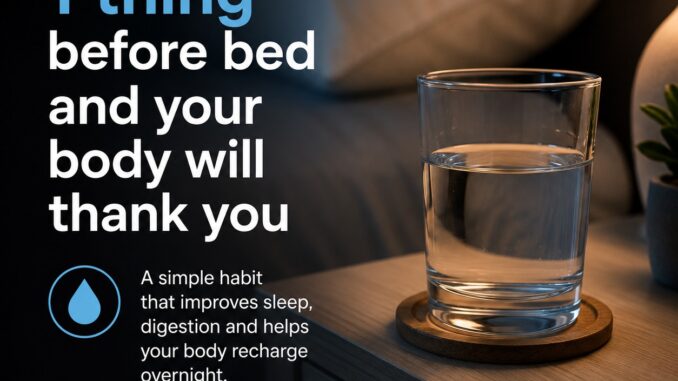
Drinking a glass of water before bed sounds like one of the simplest healthy habits. It takes a few seconds, costs nothing, and feels like an easy way to support your body before sleep. But is it actually a good idea, or can it make your sleep worse?
The honest answer is: it depends on how much water you drink and when you drink it.
Water is important for almost every normal function in the body. It helps with temperature control, digestion, circulation, and overall hydration. Mayo Clinic notes that water is the best choice for helping your body get the fluids it needs.
But drinking a large amount of water right before bed can also lead to more bathroom trips during the night. This is called nocturia, which means waking up at night to urinate. Sleep Foundation explains that drinking too much water before bed can contribute to nighttime urination, especially for some people with certain health conditions or those taking diuretic medicines.
So the goal is not to avoid water at night completely. The goal is to drink the right amount at the right time.
Why Some People Drink Water Before Bed
Many people like drinking water before bed because they do not want to wake up feeling dry, thirsty, or dehydrated. This can be especially common if the room is warm, the air is dry, or someone has eaten salty food in the evening.
A small amount of water before bed may help if you are genuinely thirsty. It can also be a better choice than sugary drinks, soda, or caffeine. Water is simple, calorie-free, and usually the easiest option for staying hydrated.
However, drinking water before bed should not be treated like a magic health trick. It will not “detox” your body overnight, melt fat, or cure health problems. Your body already has natural systems that process waste, including the kidneys and liver. Water supports normal body function, but it does not work like an instant overnight fix.
That is why the healthiest way to talk about this habit is simple: a little water before bed can be helpful for hydration, but too much can interrupt sleep.
The Main Benefit: Staying Hydrated
Hydration matters all day, not only at night. When you are hydrated, your body can function more comfortably. You may feel better during the day, your mouth may feel less dry, and your body can better regulate temperature.
Mayo Clinic recommends drinking water with meals, between meals, around exercise, and when you feel thirsty or notice signs of dehydration such as dry mouth or dark urine.
This means the best hydration habit is not drinking a huge glass right before sleeping. It is drinking enough water throughout the day so you are not trying to catch up at night.
If you often feel very thirsty before bed, it may be a sign that you did not drink enough earlier in the day. Try keeping a water bottle near you during the day and taking small sips regularly.
The Main Downside: Waking Up to Use the Bathroom
The biggest problem with drinking too much water before bed is sleep disruption. Even if water is healthy, waking up multiple times during the night can leave you feeling tired the next morning.
MedlinePlus says drinking too much fluid during the evening can cause more frequent nighttime urination, and caffeine or alcohol after dinner can also contribute to it.
Sleep Foundation also recommends reducing fluids in the two hours before bedtime if nighttime bathroom trips are affecting your sleep.
This does not mean you can never drink water at night. It just means you should avoid drinking a large amount right before lying down.
A few sips or a small glass is usually enough if you are thirsty.
How Much Water Before Bed Is Enough?
There is no perfect amount for everyone, but a practical rule is to keep it small. Instead of drinking a big bottle of water before bed, try a small glass or a few sips.
If you wake up often to use the bathroom, drink most of your water earlier in the day and slow down in the last one to two hours before bed. This gives your body more time to process fluids before you sleep.
A good routine could look like this:
Drink water normally during the day.
Have your last larger glass with dinner.
Take only a few sips before bed if you feel thirsty.
Use the bathroom before going to sleep.
This keeps the habit simple and realistic.
Who Should Be More Careful?
Some people need to be more careful with fluids at night. If you have kidney problems, diabetes, heart issues, bladder problems, sleep apnea, or you take medications that affect urination, it is better to follow medical advice from a healthcare professional.
Frequent nighttime urination can sometimes be linked to health conditions, not just drinking too much water. Cleveland Clinic lists medications, health conditions, and drinking too much fluid before bed as possible causes of nocturia.
If you suddenly start waking up many times at night to urinate, or if it comes with pain, extreme thirst, swelling, or unusual tiredness, it is a good idea to speak with a doctor.
The Best Time to Drink Water at Night
The best time to drink water is usually earlier in the evening, not right before your head hits the pillow.
Try drinking water with dinner or about one to two hours before bed. Then, if you are still thirsty later, take small sips instead of drinking a full glass.
This gives you the benefits of hydration without increasing the chance of waking up all night.
Also, avoid caffeine close to bedtime. Coffee, energy drinks, some teas, and cola can make sleep worse and may also increase bathroom trips. Alcohol can also disturb sleep and increase urination, so it is not a good “sleep drink.”
Simple Final Answer
So, should you drink water before bed?
Yes, you can — but keep it moderate.
A small amount of water before bed can be perfectly fine, especially if you are thirsty. But drinking too much right before sleep may lead to bathroom trips and lower sleep quality.
The best habit is to stay hydrated during the day, drink your last larger amount of water earlier in the evening, and keep bedtime water small.
A glass of water before bed is not a miracle cure, but when done the right way, it can be a simple and healthy part of your nighttime routine.
Leave a Reply