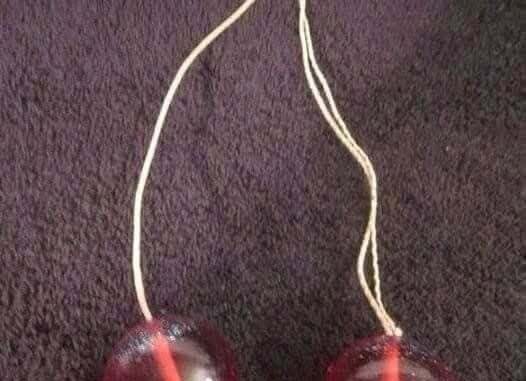
What began as an ordinary cleaning project turned into an unexpected trip down memory lane.
While going through an old storage box that had been left untouched for years, a family discovered an unusual object that immediately caught everyone’s attention.
There was no label.
No packaging.
And nobody in the family could remember what it was used for.
The object consisted of two small, solid balls attached to strings and connected to a central loop. Its appearance suggested that it had once been a familiar household or children’s item, but to the younger members of the family, it looked completely unfamiliar.
Naturally, everyone started guessing.
Everyone Had a Theory
The family began passing the object around and examining it from different angles.
Some thought it might have been part of an old toy. Others suggested that it could have been a simple exercise device or even a decorative novelty item.
Once photographs were shared online, the number of theories grew.
People suggested everything from forgotten toys to unusual household gadgets.
The problem was that none of the suggestions seemed certain.
The object was simple enough to understand visually, yet its purpose was surprisingly difficult to identify without someone having seen one before.
That is one of the interesting things about objects from previous generations. Something that was once immediately recognizable can become almost impossible to identify after a few decades.
The family decided not to stop with online guesses.
They began looking through photographs of vintage toys, old catalogs, collector websites, and images from previous decades.
Eventually, they found the answer.
The strange object was a pair of vintage clacker balls, also known as click-clacks.
Suddenly, its unusual design made perfect sense.
A Simple Toy With a Surprisingly Challenging Skill
Clacker balls were made with two hard balls connected by strings to a small loop.
The player placed a finger through the loop and moved the hand in a controlled rhythm.
As the balls gained momentum, they would swing upward and downward, striking each other on opposite sides of the hand.
The repeated impacts produced the characteristic clicking or clacking sound.
The concept was remarkably simple.
Mastering it was not.
Getting the timing right required coordination, patience, and practice. A beginner could easily lose control of the balls, while someone experienced could maintain a steady rhythm and sometimes perform different movements.
That challenge was part of the appeal.
Like a yo-yo or a hula hoop, clacker balls were more than something to simply hold. They gave children a physical skill to practice.
Why Were Clacker Balls So Popular?
During their period of popularity, clacker balls appealed to children partly because they were inexpensive and required no batteries or complicated equipment.
They could be carried almost anywhere.
A child could practice at home, outside, or with friends.
The toy also created a small sense of competition. Children could compare how long they could keep the balls moving or attempt different techniques.
For those who grew up with them, the sound of clacker balls hitting together could immediately bring back memories of childhood.
For someone born decades later, however, the same object might look completely mysterious.
That generational difference helps explain why an ordinary vintage toy could create such a long discussion online.
The Safety Concerns
Clacker balls also have a less nostalgic side.
Some versions were made from hard materials that could crack or break when repeatedly struck together. Concerns about injuries eventually contributed to increased scrutiny surrounding certain versions of the toy.
Manufacturers responded over time by changing materials and designs, while the toy eventually became much less common.
As new forms of entertainment appeared, clacker balls gradually disappeared from everyday childhood life.
Electronic toys, home video games, and eventually smartphones and digital entertainment changed the way children spent their free time.
The clacker ball became something many people remembered rather than something they regularly saw.
When an Object Becomes a Memory
The most interesting part of the discovery wasn’t necessarily the toy itself.
It was what happened after the family learned what they had found.
Older relatives who recognized the object began sharing memories.
Some remembered playing with clacker balls after school. Others recalled watching friends practice with them or trying to master the rhythm themselves.
The object that had initially confused the younger members of the family suddenly became a connection to another generation.
It showed how everyday objects can carry personal history.
A toy sitting quietly inside an old box may appear meaningless to someone who has never encountered it before. But to someone who grew up with it, the same object can instantly bring back a particular period of life.
Why Vintage Objects Become So Difficult to Recognize
Technology and culture change quickly.
Products disappear from stores. Toys are replaced by newer versions. Household items are redesigned. Packaging changes, advertising disappears, and eventually the original context is lost.
Once that happens, an object can become surprisingly difficult to identify.
This is especially true for simple objects.
Modern products often contain recognizable branding, electronic components, screens, or distinctive shapes. Older objects were sometimes much simpler, meaning their purpose isn’t always obvious to someone unfamiliar with them.
That is why vintage-object mysteries continue to attract attention online.
A photograph of an unfamiliar item can lead to dozens of guesses before someone with the right experience recognizes it immediately.
More Than Just an Old Toy
The discovery of the clacker balls ultimately became more than a question of identification.
It became a reminder of how quickly everyday life changes.
A toy that was once familiar to millions of children can eventually become something that younger generations have never seen.
Yet these objects don’t completely disappear.
They remain in attics, garages, drawers, storage boxes, antique shops, and family collections.
Sometimes they are rediscovered during a routine cleaning project.
And sometimes that discovery leads to something even more valuable than the object itself: a conversation.
A parent may explain what the toy was.
A grandparent may remember using one.
Someone may tell a story about learning a trick or competing with friends.
Suddenly, an old object becomes a doorway into the past.
A Mystery With a Nostalgic Answer
The family initially thought they had discovered something unusual and perhaps completely unknown.
After searching and comparing old photographs, they learned that the object was not a mysterious invention or rare artifact.
It was a vintage pair of clacker balls.
But that doesn’t make the discovery any less interesting.
In fact, the ordinary nature of the object may be what makes the story so relatable.
The past is filled with things that once seemed completely normal but now feel unfamiliar.
And sometimes, the simplest objects can tell the most interesting stories.
What looked like an unexplained object in an old storage box turned out to be a small piece of childhood history — one that had been waiting quietly for someone to recognize it again.
Leave a Reply