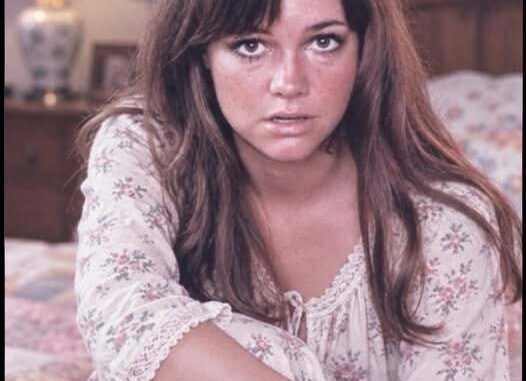
Sally Field has spent decades playing characters who feel remarkably human, but one of her most memorable Hollywood stories involves a moment that was supposed to look romantic on screen and instead felt surprisingly uncomfortable.
Field has spoken candidly about filming romantic scenes with Burt Reynolds in Smokey and the Bandit. Although the two had a relationship away from the cameras, Field later described their on-screen kiss as one of the least enjoyable of her career.
Her explanation offered a revealing look at how different movie romance can be from real-life intimacy.
When Movie Romance Doesn’t Feel Romantic
Audiences watching a romantic scene may see only the finished few seconds on screen. Behind the camera, however, the experience can be much more complicated.
Actors have to work around cameras, lighting equipment, crew members, blocking instructions, and repeated takes. Even something as simple as a kiss can require precise positioning and coordination.
Field’s comments about working with Reynolds highlighted that contrast.
Despite their personal history, the scene did not necessarily translate into effortless movie chemistry. Technical requirements and the circumstances of filming could make the moment feel awkward rather than natural.
Her honesty became memorable because it challenged the assumption that two people who share a real-life connection will automatically create perfect romance on screen.
A Career That Refused to Stay in One Category
The story is only one small part of Field’s much larger career.
She first became widely known through television, appearing in shows such as Gidget and The Flying Nun. Those early roles established her as a recognizable television performer, but Field eventually worked hard to move beyond the lighter characters that had initially defined her.
Her career took a major turn as she began taking on more serious dramatic roles.
That transition became particularly important with films such as Norma Rae, in which she played a working woman who becomes involved in a labor-organizing effort. The performance earned Field the Academy Award for Best Actress and helped demonstrate the depth she could bring to dramatic material.
She later won another Academy Award for Places in the Heart, further establishing herself as one of the most respected actresses of her generation.
From Television Stardom to Film Success
Field’s filmography continued to expand across several decades.
She appeared in Steel Magnolias, Forrest Gump, and numerous other films, often choosing characters that allowed her to explore family, loss, determination, and complicated relationships.
Her role as Mrs. Gump in Forrest Gump introduced her to another generation of movie audiences. Although the character had a supporting role in the story, Field brought warmth and emotional depth to the part.
Her ability to move between television and film also became an important part of her career.
Rather than remaining associated with the television roles that first made her famous, she continually reinvented herself.
Speaking Honestly About Her Own Life
Field has also been open about difficult experiences in her personal and professional life.
Her memoir, In Pieces, gave readers a more personal look at her childhood, career, relationships, and the challenges she encountered along the way.
That willingness to discuss uncomfortable subjects has become an important part of how audiences understand her.
Hollywood careers are often presented as a collection of glamorous moments, successful films, awards, and red-carpet appearances. Field’s reflections have shown another side of that experience—one involving uncertainty, personal struggles, professional expectations, and the effort required to establish an identity beyond the roles an audience initially associates with an actor.
A Legacy Built Over Generations
What makes Field’s career particularly notable is its longevity.
She has remained part of popular culture across multiple generations, moving from classic television comedies to award-winning dramas, major Hollywood productions, and later television projects.
Her later appearances have included roles in productions such as Dispatches From Elsewhere and Winning Time, demonstrating that her career has continued to evolve rather than simply relying on nostalgia.
For audiences who first encountered her decades ago, seeing Field continue to take on new roles offers a reminder of just how long her career has lasted.
The Human Side Behind the Hollywood Image
The story about the uncomfortable kiss with Reynolds may sound like a small anecdote compared with Field’s larger body of work, but it reveals something important about filmmaking.
What looks effortless on screen can require considerable work behind the scenes.
Actors are performers, and romantic scenes are carefully constructed pieces of a production. The emotions audiences see may be convincing, but the circumstances surrounding the performance can be highly technical and sometimes awkward.
Field’s willingness to talk about that reality adds a more human dimension to an industry often associated with glamour and perfection.
From Gidget and The Flying Nun to Norma Rae, Places in the Heart, Steel Magnolias, and Forrest Gump, Sally Field has built a career defined by change and reinvention.
Her story is ultimately bigger than one famous movie kiss. It is the story of an actress who continued challenging expectations, taking on demanding roles, and allowing audiences to see both the performer and the person behind the Hollywood image.
Leave a Reply