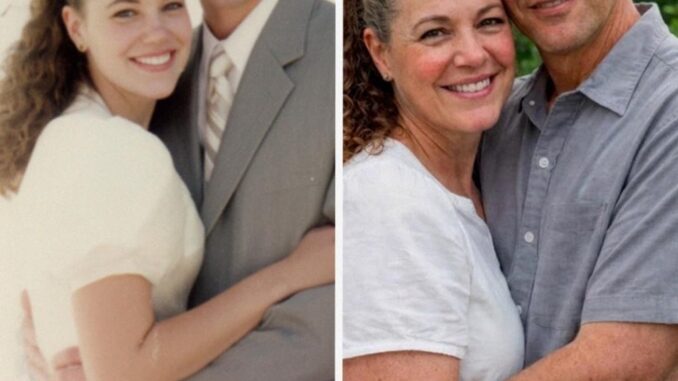
The fragility of a long marriage often doesn’t announce itself with arguments or fights. It reveals itself quietly, in the shadows of a life you thought you knew. For Junie, that moment arrived on one of the most harrowing nights of her thirty-one-year union with Mark.
It began with the wail of ambulance sirens and the harsh, sterile lights of a hospital corridor. Mark had been rushed into emergency surgery. Junie sat alone in the waiting room, the antiseptic and coffee mingling into an anxious haze. When the surgeon emerged to report that the procedure had been successful, but Mark would remain unconscious for hours, Junie’s relief was brief. The domestic storm she hadn’t expected was waiting at home.
The nurse suggested she gather some of Mark’s personal items for an extended stay at the hospital. Her own car in the repair shop, Junie returned home, scanning the familiar rooms that suddenly felt alien. She searched counters, bowls, jacket pockets—everywhere—until exhaustion drove her to the dreaded “junk drawer” in Mark’s dresser. Three decades of clutter, trinkets, and forgotten receipts filled the drawer, and yet one object stood apart.
It was a worn leather wallet, not the one he carried daily. Inside, there were no bills—just a collection of keys. One in particular caught her eye: a heavy metal key with a plastic tag from a local storage facility, the unit number scribbled in black marker. Junie’s chest tightened. Thirty-one years together, and Mark had never mentioned a storage unit. They shared everything—or so she thought.
Propelled by hurt and a fierce determination, Junie drove to the facility that night. The industrial row of metal doors looked cold and unforgiving under flickering lights. Her hand shook as she slid the key into the lock of the designated unit. The door groaned open.
Inside lay a life she didn’t recognize. Stacks of boxes, meticulously labeled in Mark’s handwriting, emitted the smell of dust and forgotten years. In the first box she opened, photographs stared back—Mark, vibrant and smiling, arm draped around a woman Junie had never seen. Wedding invitations for “Mark and Elaine,” a joint lease, even a death certificate—all pointing to a past he had kept secret.
The trail led further. Letters from a woman named Susan, sharing Elaine’s surname, directed Junie to a small, rundown house an hour away. There, the last piece of the puzzle came into view: a young boy, around eight, with Mark’s eyes, brow, and quiet intensity. Sewing patterns
The truth hit like ice: Mark had vanished after his first wife’s accidental death, unable to face the scrutiny and whispers of a neighborhood convinced he was at fault. Years later, before marrying Junie, he had returned for a night of grief and whiskey. The boy—Eddie—was the result. Mark had provided for him financially, quietly through the storage unit, but had refused to claim him publicly, terrified it would unravel the life he’d built with Junie.
Returning to the hospital, Junie waited for Mark to awaken. She didn’t greet him gently. She told him where she had been. The silence afterward was heavy, filled with thirty-one years of omissions. Mark’s defenses crumbled. He wept, confessing his cowardice and fear, admitting that he had run not just from responsibility, but from the truth.
Yet Junie did something unexpected. She stayed—not to condone his choices, but to protect the boy who had never asked to be born into secrecy. She demanded Mark face his past. She orchestrated a neutral meeting in the park, watching as he finally introduced himself to Eddie.
The marriage could not return to what it had been. But the hidden truths were no longer shadows. The “junk drawer” had been emptied. Mark began calling Eddie every Sunday, learning to be a father in the twilight of his life. They integrated Susan and Eddie into their lives carefully, painfully, but with necessity and love.
Months later, Mark apologized for his deception. Junie’s reply was steady, calm, and unyielding:
“Love isn’t a reward for being perfect. It’s a choice we make to be steady when the world shows its darker side.”
She had found a key in an old wallet—but in doing so, she unlocked the possibility for her husband to stop running, for a child to finally meet his father, and for their fractured family to begin the slow, complicated work of healing.
Leave a Reply