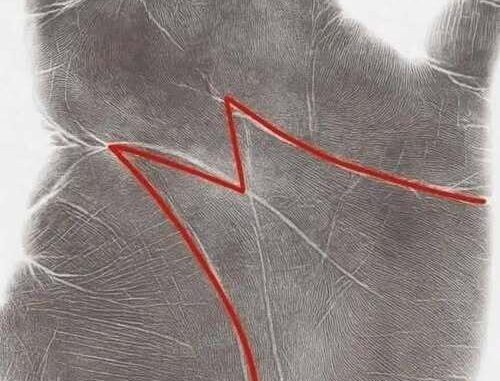
It’s a claim that shows up often online and tends to spread quickly:
“If you have an ‘M’ shape on your palm, it means you’re destined for success, highly intuitive, or naturally talented.”
For many people, this idea sparks immediate curiosity. It’s simple, intriguing, and easy to check—you just look at your hand. Sometimes, you might even notice lines that seem to form the letter “M,” which can make the claim feel surprisingly convincing.
But what does this shape actually represent? Is it a meaningful sign, or simply a natural pattern in the skin?
To answer that properly, it helps to take a balanced approach—looking at both traditional beliefs and modern scientific understanding.
How the “M” Shape Appears on the Palm
The “M” shape is not a separate marking that develops on its own. Instead, it forms when several natural lines in the palm intersect in a particular way.
These lines are part of normal human anatomy and include:
- The heart line, located near the top of the palm beneath the fingers
- The head line, which runs across the middle of the palm
- The life line, curving around the base of the thumb
- The fate line, a vertical line that is not present in every hand
When these lines align or cross at certain angles, they may create a pattern that resembles the letter “M.” In some hands, this shape appears clearly, while in others it may be faint or incomplete.
It’s important to understand that these lines are natural features of the skin. They develop before birth as the hand forms and may change slightly over time due to movement and growth.
Traditional Interpretations and Cultural Beliefs
The idea that palm lines hold meaning comes from palmistry, a practice that has existed for centuries across different cultures.
Within palmistry, various lines and shapes are believed to reflect personality traits, tendencies, or life paths. In this context, the “M” shape is often associated with positive characteristics such as:
- Strong awareness and perception
- Leadership qualities
- Determination and resilience
- Practical thinking and decision-making
In traditions like Jyotish Shastra, such patterns may be interpreted as symbols of potential or favorable traits.
However, it’s important to note that these interpretations are based on long-standing cultural beliefs rather than scientific validation.
What Science Says About Palm Lines
From a scientific point of view, palm lines are known as flexion creases.
These creases form during early development in the womb and are influenced by:
- Genetics
- Hand movement before birth
- Natural skin structure
Science does not support the idea that specific shapes—like an “M”—can determine personality, predict success, or reveal future outcomes.
Instead, the presence of an “M” is simply a variation in how these lines intersect. It’s a visual pattern, not a predictive feature.
Why the “M” Idea Feels So Convincing
Even without scientific backing, many people find these claims believable. There are a few reasons why:
1. Natural Pattern Recognition
Humans are wired to recognize shapes and patterns. When we see something familiar—like the letter “M”—it can feel meaningful, even if it’s coincidental.
2. Positive Associations
The traits linked to the “M” (such as intelligence or leadership) are appealing. People are naturally drawn to interpretations that reflect well on them.
3. Cultural Influence
Practices like palmistry have been passed down for generations. Even today, they influence how people interpret physical features.
4. Social Media Trends
Simple, shareable ideas spread quickly online. The “M” shape is easy to explain and easy to check, which makes it popular.
Is It Harmful to Believe in It?
In most cases, seeing meaning in palm patterns as a form of curiosity or entertainment is harmless. It can even be an interesting way to explore cultural traditions.
However, problems can arise if such interpretations are taken too seriously—especially when making important life decisions.
- Your experiences
- Your environment
- Your choices
- Your effort and consistency
These elements have a far greater impact than any pattern on your hand.
Leave a Reply