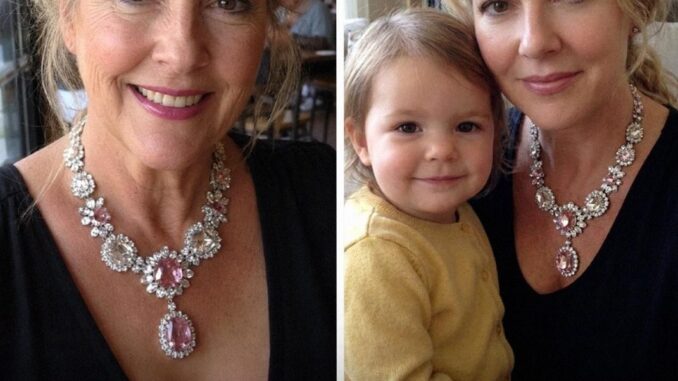
The crushing weight of financial desperation is a silent predator that stretches a person to their absolute breaking point, forcing them to contemplate choices they once swore they would never make. For Claire, that breaking point had arrived in the form of a brightly colored eviction notice sitting directly next to a complex medical pill organizer on her cramped kitchen table. Returning home from yet another grueling double shift at the local diner, with fresh coffee stains on her faded uniform and an all-consuming exhaustion pressed deep into her bones, she looked at her six-year-old daughter, Emily. Emily lay fast asleep on the worn fabric of the couch, one tiny hand curled beneath her soft cheek, looking entirely too fragile for the monumental battle her physical body had been fighting since the day she was born.
Three years earlier, right after Emily’s first major cardiology appointment, medical professionals had assured Claire that her daughter’s congenital heart defect was stable and merely required routine monitoring. Claire had built her entire existence around those comforting words, finding the strength to keep pushing forward. However, the fragile illusion of safety was completely shattered when the cardiologist closely examined Emily’s latest imaging scans, looked up with a somber expression, and announced that critical open-heart surgery could no longer wait. When Claire desperately inquired about the timeline, the doctor explained that the operation would proceed the exact moment they cleared the hospital’s strict financial authorization. Though Claire pleaded, hoping her insurance policy would absorb the catastrophic costs, the doctor lowered his gaze, quietly revealing that the coverage was nowhere near enough to save the little girl’s life.
Claire immediately threw herself into a relentless cycle of survival, working every single available shift at the diner, carrying heavy plates with a forced smile for strangers, and meticulously counting her meager tip money after midnight like sacred prayer money. Despite her exhausting efforts, the financial gap remained impossibly wide. When she desperately begged her manager for extra hours, she was gently told that she had already pushed her body past its physical limits. When she spent hours on hold with the insurance company, a cold voice on the other end simply repeated standard policy guidelines, confirming that her plan would only cover a minor fraction of the medical bills. Left with absolutely no one to call for assistance, Claire found herself cornered by her strict landlord outside the apartment complex. Clutching his accounting ledger tightly against his chest, he ignored her tears and cold-bloodedly informed her that if the outstanding rent was not fully paid by the following morning, he would immediately initiate formal eviction proceedings.
Faced with the terrifying reality of losing both her home and her daughter’s life, a hard, practical determination took over Claire’s grief. She walked up the stairs to her apartment, opened a dusty drawer, and carefully unwrapped a stunning heirloom necklace, the single remaining physical item left to her by her deceased mother, Evelyn. The next morning, keeping her fist closed so tightly around the jewelry that the delicate metal edges dug deep into her skin, Claire walked toward the local pawnshop, praying the item possessed enough value to purchase one more chance at survival. Stepping through the front door, she braced herself to face cold eyes and rigid numbers, but she was instead greeted by a warm shop that smelled faintly of old dust and fresh lemon polish. An elderly, kind-looking man around seventy years old stepped out from behind the glass counter, inviting her to take her time.
With a trembling hand, Claire placed the precious heirloom onto the glass counter, whispering that she desperately needed to sell it. The elderly man lifted the piece with immense care, noting instantly that the jewelry had been deeply loved. When Claire explained that it had belonged to her late mother, the man nodded understandingly and examined the piece under a bright desk lamp. At first, Claire expected standard appraisal talk, but she watched in confusion as the man suddenly turned completely pale. He stared intently at the back of the piece for an extended, breathless silence, his fingers beginning to shake violently. When a panicked Claire asked if a visible scratch on the metal had completely ruined its value, the man looked up, his eyes suddenly welling with tears, and stated that the mark had actually changed the value completely, making it worth far more than she could ever comprehend.
Leave a Reply