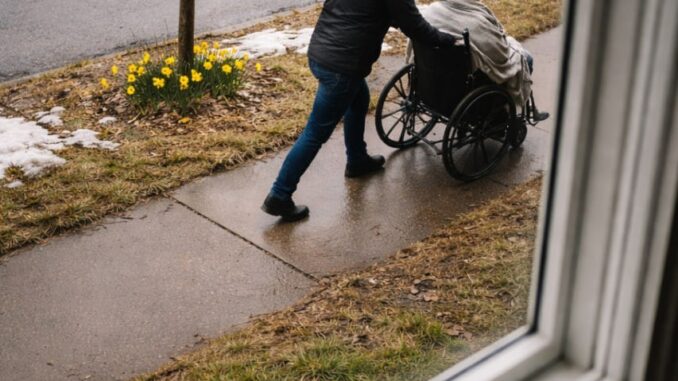
The six-month mark is a deceptive milestone in any family crisis. In a tragedy, it is usually the quiet moment when the supportive neighbors stop bringing comforting casseroles, the sympathetic phone calls dry up, and you are forced to face a bleak, altered reality entirely alone. For my family, this period marked a strange, grafted-together dynamic where the polite veneer finally began to crack, exposing the raw and jagged edges underneath. Alyssa was no longer just the paid caregiver wiping my eighty-three-year-old mother’s chin after a devastating stroke, but she wasn’t fully embraced as a sister yet either. She existed in a liminal space that confused our small town and absolutely terrified my accountant. Family game night
The first massive hurdle we faced wasn’t emotional, but deeply bureaucratic. Three weeks after a startling DNA test flipped our lives upside down, Mom insisted we visit our long-time family attorney, Mr. Abernathy. His office smelled of rich lemon polish and old leather, a room where our family history had been codified into law for forty years. We sat in a tense semicircle: Mom resting in her wheelchair, me sitting stiffly in a wingback chair, and Alyssa perched nervously on the edge of a sofa, looking as though she expected security guards to escort her from the premises. When Mr. Abernathy peered over his spectacles and asked if we truly intended to amend the family trust to include a third beneficiary, Mom spoke up with a fierce strength I hadn’t heard in months, declaring that Alyssa was my late father’s biological daughter and deserved her rightful share.
Alyssa quietly spoke up, her voice trembling but clear, stating that she didn’t want the valuable farm shares, the land, or anything that would disrupt my own inheritance. She explained that she only desired basic acknowledgment and a bit of assistance paying off her heavy student loans, trying desperately to minimize the inherent disruption of her presence. But a fierce, protective instinct suddenly surged within me. I firmly looked at her and insisted that she could not pick and choose her inheritance based on misplaced guilt. If she was his daughter, she was a rightful heir, and we would willingly sell the south pasture if necessary to make things right. Walking out of that office into the blinding sunlight, I realized I had actively aligned myself with her against the skepticism of the old guard.
While the legal side of our new reality was a matter of complex math, navigating the social side felt like absolute warfare. In a town of eight thousand residents, secrets never stay buried; they simply compost until they sprout wicked weeds. For months, local gossips assumed Alyssa was merely hired help, but as she began attending Sunday dinners, driving Mom’s Buick, and sitting proudly in our family church pew, the whispers intensified. The tension finally erupted in the produce aisle of the local grocery store when Mrs. Higgins, the town’s chief gossip, cornered me, aggressively using polite small talk like a weapon. She pointedly questioned Alyssa’s background, lowered her voice to a conspiratorial whisper, and labeled her a suspicious drifter with no local family.
Feeling the heat rise rapidly up my neck, I noticed Alyssa freeze a few feet away, clutching a bunch of kale, bracing herself for me to distance myself from her. Instead, I dropped a large cantaloupe into my cart with a heavy thud, looked directly at the town gossip, and announced loudly enough for the entire aisle to hear that Alyssa wasn’t a drifter at all, but my sister. Calling Alyssa over, I wrapped my arm tightly around her shoulders, formally introducing her as my father’s daughter. Watching the color completely drain from the gossip’s face as she stared at the undeniable family resemblance, I felt a wave of profound relief. By choosing to control the narrative publicly, we stripped the town of the power to use our secret against us.
As summer shifted into a crisp autumn, Mom decided to enter a phase of aggressive decluttering, commanding us to clear my late father’s junk out of the dusty attic. On a rainy Saturday afternoon, Alyssa and I climbed the pull-down stairs into the gloomy, insulation-scented space. Working in a comfortable rhythm, we eventually dragged a rusted, military-green metal footlocker out from beneath the dark eaves. Prying the lock open with a heavy screwdriver, we didn’t find old military gear, but a vast archive of cheap, spiral-bound notebooks dating back decades. Opening the first ledger, my breath hitched as I realized it wasn’t a business document, but a detailed, secret record of financial transactions.
For decades, my father had secretly sent thousands of dollars to Alyssa’s mother, carefully documenting money orders for heating bills, medical expenses, and childhood braces, while fabricating stories to keep my mother in the dark. Deep within the chest, we discovered a heartbreaking stack of unsent letters addressed directly to Alyssa, alongside grainy, long-distance photographs of her at school bus stops, playgrounds, and her own high school graduation. My father, whom I had always viewed as a stoic, unemotional farmer, had spent his life trapped in a torturous double life of intense shame, watching the daughter he loved through a telescope of cowardice. Clutching a letter close to her chest, Alyssa wept openly on the dusty floorboards, realizing she had never been discarded or forgotten; she was a secret treasure her father simply lacked the courage to claim.
This newfound solidarity was tested during a chaotic Thanksgiving dinner when my judgmental Aunt Linda arrived from Florida, loudly proclaiming that Alyssa was a manipulative grifter who had likely falsified the DNA results to steal an inheritance. When Linda slammed her hand on the table and screamed that Alyssa was nothing more than a forgotten mistake, a protective rage consumed me. I stood up, fiercely defended my sister’s dedication to our mother, and ordered my husband to immediately escort my aunt out of the house. By publicly defending her against my own flesh and blood, Alyssa was no longer a temporary guest; she was fully protected by the family pack.
The ultimate test of our bond arrived in the dark of January when Alyssa called me at two in the morning, her clinical nursing instincts kicking in as she correctly identified that Mom was suffering a stroke. Because of Alyssa’s swift medical intervention, immediate administration of aspirin, and precise emergency communication with the neurologists, Mom’s brain function was entirely preserved. Standing in the sterile emergency room watching Alyssa stroke my mother’s hair, I realized that without her presence, my mother likely would have passed away completely alone.
Today, our life has transformed into a beautiful, patchwork village of mutual care. Sitting out on the porch on a bright spring afternoon, watching Alyssa and Mom laugh together in the garden, I no longer feel the heavy ghost of my father’s secrecy or the sharp sting of old jealousy. When a notification from a genealogy website flashed across my phone screen signaling a new distant relative match, I calmly swiped it away without a second thought. I didn’t need to look any further for answers. The unexpected crack in our family foundation hadn’t shattered our lives; it had simply let the light in, allowing us to build something entirely resilient, beautifully real, and forever unbreakable.
Leave a Reply