Dining out should be an enjoyable experience, but for some customers, one common problem can make ordering a meal unnecessarily difficult: restaurant portions are simply too large.
While generous servings are often considered a sign of good value, not everyone wants or needs a full-sized plate of food.
Some diners have smaller appetites. Others prefer lighter meals, want to spend less, or dislike leaving food behind.
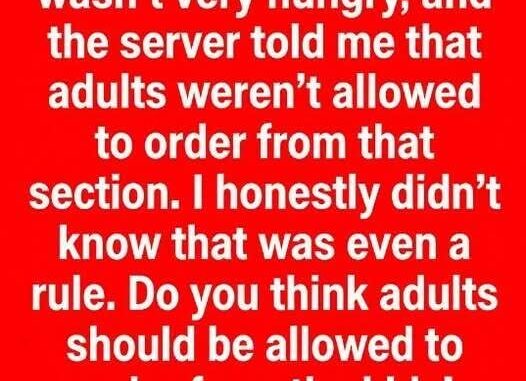
For these customers, ordering from the children’s menu can seem like a practical solution.
But many restaurants restrict those meals to younger customers, leaving adults with fewer options.
This raises an important question: Why shouldn’t adults be able to order smaller portions when that’s what they actually want?
The issue goes beyond personal preference. It touches on affordability, customer satisfaction, food waste, and how restaurants accommodate different dining needs.
Not Everyone Wants a Large Restaurant Meal
Restaurant portions vary widely depending on the establishment, cuisine, and type of dish.
Some restaurants serve modest meals, while others are known for generous plates designed to leave customers feeling completely satisfied.
For people with larger appetites, these servings may be ideal.
But for others, they can feel excessive.
A customer might want to enjoy a small lunch without feeling overly full afterward.
Someone dining in the evening may prefer a lighter meal.
Another person may simply have a naturally smaller appetite.
None of these preferences should make ordering food more complicated.
Yet when a menu offers only one serving size, customers often have to choose between ordering more than they want or skipping the meal altogether.
Why Adults Sometimes Prefer Children’s Menu Portions
Children’s menus typically feature smaller servings at lower prices.
For adults who don’t want a large meal, these options can be appealing.
A smaller plate may provide enough food to satisfy their appetite without creating unnecessary leftovers.
It can also make dining out more affordable.
The appeal isn’t necessarily about the specific dishes offered to children.
It’s about having access to a reasonable portion size.
For some customers, a smaller serving of pasta, chicken, rice, or another familiar dish would be more than enough.
The problem arises when restaurants limit these options strictly by age.
A customer may be willing to pay for a smaller meal, but the restaurant’s ordering policy prevents them from doing so.
That can create frustration over something that seems relatively simple.
The Problem With Age Restrictions on Smaller Meals
Restaurants may have legitimate reasons for limiting children’s menu items to younger diners.
Some use discounted children’s meals as a family-oriented promotion.
Others price them differently because they expect adults to purchase regular menu items.
These business considerations are understandable.
However, restricting children’s meals doesn’t necessarily mean restaurants must leave adults without smaller alternatives.
An establishment could offer half portions, lighter plates, or small versions of popular dishes at appropriately calculated prices.
That would allow restaurants to maintain their pricing structure while giving customers more flexibility.
The goal doesn’t have to be allowing every adult to purchase a discounted children’s meal.
It can simply be making smaller portions available to anyone who wants them.
Smaller Appetites Are a Normal Part of Dining Preferences
People have different appetites for many reasons.
Some naturally prefer smaller meals.
Others may have eaten recently or simply not feel particularly hungry.
A person might be meeting friends for lunch and want something light rather than a full entrée.
Another diner may want to enjoy an appetizer and dessert without ordering a large main course.
These are ordinary preferences.
They don’t require an explanation or justification.
Just as restaurants offer vegetarian options, different spice levels, or customizable ingredients, portion flexibility can help accommodate a wider range of customers.
Dining out becomes more comfortable when people can order according to their actual needs.
Why Large Portions Aren’t Always Better Value
Many restaurants emphasize generous serving sizes because customers often associate more food with better value.
A large plate can create the impression that diners are receiving more for their money.
But quantity isn’t the only factor that determines value.
For someone who eats only half a meal, a large serving may not feel like a bargain.
They may have paid for food they didn’t want.
If they don’t take the leftovers home, the unused portion may be discarded.
Even when leftovers are available, customers may not always have a convenient way to store or transport them.
A smaller meal at a fair price could offer better value for someone with a lighter appetite.
Ultimately, value depends on how well a meal meets the customer’s expectations, not simply how much food is placed on the plate.
Smaller Portions Could Help Reduce Food Waste
Food waste is another important part of the discussion.
When customers receive more food than they can comfortably eat, leftovers become more likely.
Some diners take their remaining food home.
Others leave it behind.
In restaurants, uneaten food can represent wasted ingredients, preparation time, energy, and money.
Offering smaller portions could help reduce some of that waste.
Customers would have the option to order an amount closer to what they expect to finish.
Restaurants might also benefit from using ingredients more efficiently, depending on how their menus and kitchen operations are organized.
Smaller portions won’t eliminate food waste entirely.
But they can be one practical way to address the problem.
The Financial Benefits of Having More Choices
Restaurant meals can be expensive, especially for customers who dine out regularly.
A full-sized entrée may cost more than someone wants to spend on a light meal.
For diners who need less food, paying the full price can feel unnecessary.
Smaller portions at appropriately reduced prices could make restaurants more accessible to budget-conscious customers.
They might also encourage people to dine out more often.
A customer who doesn’t want to spend money on a large meal may be more willing to visit a restaurant that offers smaller alternatives.
From a business perspective, flexible serving sizes could appeal to people who might otherwise choose a café, snack, or meal prepared at home.
Of course, smaller portions don’t always cost proportionally less to prepare.
Restaurants still have labor, rent, service, and operating expenses.
But thoughtful pricing can help balance affordability with business sustainability.
How Smaller Meals Could Improve the Dining Experience
Dining out is about more than satisfying hunger.
It’s also about spending time with others, enjoying the atmosphere, and choosing food that feels right for the occasion.
A customer shouldn’t have to order a large meal simply because everyone else at the table wants one.
Imagine a group of friends meeting for dinner.
Some are hungry enough for a full entrée.
Others want something smaller.
If the restaurant offers flexible portions, everyone can order comfortably.
Without that flexibility, lighter eaters may feel pressured to choose a dish they don’t really want.
Providing more options can make the experience feel more welcoming.
And customers who feel their preferences are respected may be more inclined to return.
Smaller Portions Don’t Have to Mean Smaller Quality
One concern restaurants might have is that smaller meals could be perceived as less satisfying.
But portion size and food quality are separate considerations.
A smaller plate can still contain carefully prepared ingredients, balanced flavors, and attractive presentation.
In fact, some diners may prefer a modest serving of a high-quality dish over a large plate they cannot finish.
Restaurants could offer smaller versions of their most popular meals without changing the recipes.
The ingredients, preparation methods, and presentation could remain consistent.
Only the quantity would differ.
This approach would allow customers to enjoy the same dining experience in a portion that better suits them.
Restaurants Could Offer Half Portions of Popular Dishes
One straightforward solution would be to introduce half portions.
Rather than creating an entirely separate menu, restaurants could identify dishes that are practical to serve in smaller quantities.
Pasta dishes, rice bowls, salads, and certain main courses may be suitable candidates.
Customers could choose between a regular serving and a smaller version.
The restaurant would determine prices based on ingredients, preparation costs, and profitability.
Not every dish would necessarily be suitable.
Some meals are prepared as individual portions, and dividing them may create operational difficulties.
But even a limited selection of half-sized options could make a meaningful difference.
Customers wouldn’t need to ask for exceptions.
The choice would already be available.
A Dedicated Light-Meals Menu Could Be Another Solution
Another approach would be to create a menu section specifically for lighter appetites.
Rather than labeling these meals as children’s portions, restaurants could offer smaller dishes to customers of any age.
A light-meals menu might include modest servings of popular entrées, soups, salads, sandwiches, or simple combinations.
This would give customers an alternative without changing the restaurant’s children’s menu policy.
It could also help diners who prefer to eat smaller amounts throughout the day.
The wording matters.
A menu described as offering “light meals” or “smaller plates” feels inclusive.
It allows customers to make choices without having to explain why they want less food.
Why Flexibility Matters More Than One Perfect Portion Size
There is no single serving size that works for everyone.
What feels generous to one customer may feel insufficient to another.
Appetite, meal timing, personal preference, and dining habits all influence how much food someone wants.
This is why flexibility can be more useful than simply making all portions smaller.
Restaurants don’t need to abandon their regular serving sizes.
Customers who enjoy large meals should still be able to order them.
The idea is to offer alternatives.
A restaurant with regular and smaller portions can serve a wider range of preferences than one that provides only a single size.
Choice allows customers to decide what works for them.
Why Customers Shouldn’t Feel Embarrassed About Ordering Less
Some people hesitate to ask for smaller portions because they worry their request will seem unusual.
They may feel uncomfortable ordering from a children’s menu or asking whether a dish can be divided.
Others may worry that restaurant staff will question their appetite.
But wanting less food is a perfectly reasonable preference.
Customers shouldn’t need to justify it.
Restaurants can help normalize smaller meals by including them directly on the menu.
When an option is clearly available, diners can order it without feeling that they’re requesting special treatment.
This creates a more comfortable experience for everyone.
The Business Perspective: Why Restaurants May Hesitate
Although smaller portions offer potential benefits, restaurants also face practical challenges.
Kitchen operations are often designed around standardized recipes and serving sizes.
Introducing new portions may require adjustments to preparation, inventory, and pricing.
Certain dishes may be difficult to divide efficiently.
Labor and overhead costs also remain relatively constant, even when less food is served.
This means a half portion may not be financially viable at exactly half the regular price.
Restaurants need to account for these factors when designing their menus.
Still, those challenges don’t make portion flexibility impossible.
They simply mean businesses need to approach it thoughtfully.
Offering a few smaller dishes may be more manageable than redesigning the entire menu.
Smaller Portions Could Attract Different Types of Customers
A more flexible menu could appeal to a broader audience.
People who prefer light lunches may appreciate smaller entrées.
Older adults with modest appetites may find them convenient.
Customers who want to sample several dishes might enjoy ordering multiple small plates.
Budget-conscious diners may welcome less expensive alternatives.
And people who dislike wasting food could choose quantities they are more likely to finish.
These groups don’t necessarily have identical needs.
But they share an interest in having more control over how much food they order.
For restaurants, meeting that demand could create opportunities to improve customer satisfaction.
The Growing Appeal of Customizable Dining
Many diners already expect some flexibility when ordering.
Restaurants frequently allow customers to modify ingredients, choose side dishes, or request certain preparation methods.
Some establishments offer different serving sizes for beverages, appetizers, and desserts.
Extending that flexibility to main courses could be a natural next step.
It doesn’t require every restaurant to offer every dish in multiple sizes.
Even a few carefully selected options could help.
The key is recognizing that customers value choice.
A menu that accommodates different preferences can feel more thoughtful and accessible.
How Customers Can Ask for Smaller Portions Politely
Until smaller servings become more widely available, customers may still need to ask about alternatives.
A simple question can often help.
“Do you offer a smaller portion of this dish?”
Or:
“Would it be possible to order a half serving?”
Some restaurants may be able to accommodate the request.
Others may have fixed portions or pricing policies that make it difficult.
Customers can also ask about appetizers, side dishes, or other lighter options.
The important thing is to communicate preferences respectfully while understanding that restaurants may have operational limitations.
A polite request can sometimes lead to a solution that works for both sides.
Why This Conversation Is Really About Customer Choice
At its heart, the debate over smaller restaurant portions isn’t about whether large meals are good or bad.
It’s about recognizing that diners have different needs.
Some customers love generous portions.
Others prefer something lighter.
Both preferences are valid.
A restaurant that offers only large servings may unintentionally make dining less convenient for people who want smaller meals.
Providing alternatives can make the experience more inclusive.
It also gives customers greater control over what they order and how much they spend.
The conversation is ultimately about flexibility rather than restriction.
Could Smaller Portions Benefit Restaurants in the Long Run?
Restaurants that respond to customer preferences may be able to build stronger relationships with diners.
When customers feel that a business understands their needs, they may be more likely to return.
Smaller portions could also encourage different ordering habits.
Some diners might choose a smaller main course and add an appetizer or dessert.
Others may visit more frequently because they can enjoy a meal without purchasing more food than they want.
These outcomes aren’t guaranteed.
They depend on pricing, menu design, and customer demand.
But they demonstrate why smaller portions deserve consideration as a business opportunity rather than simply an inconvenience.
A Small Change Could Make Dining Out More Welcoming
Sometimes improving a customer experience doesn’t require a major transformation.
A restaurant doesn’t necessarily need to redesign its dining room, introduce an entirely new cuisine, or expand its menu dramatically.
It may simply need to offer an additional serving size.
For someone with a smaller appetite, that option could make the difference between enjoying a meal and feeling uncomfortable afterward.
For someone watching their spending, it could make dining out more affordable.
For someone concerned about food waste, it could reduce unnecessary leftovers.
And for a restaurant, it could demonstrate a willingness to listen to customers.
Small adjustments can sometimes create meaningful improvements.
Final Thoughts: Why Smaller Restaurant Portions Deserve More Attention
Ordering a smaller meal should not have to be complicated.
People have different appetites, budgets, and preferences.
Some enjoy large restaurant servings, while others would be perfectly satisfied with less.
For customers who find traditional portions excessive, children’s meals may seem like an appealing alternative.
But rather than relying on age-restricted menus, restaurants could consider offering smaller servings specifically designed for adults.
Half portions, lighter entrées, and flexible menu options could make dining more convenient while potentially helping reduce food waste.
Restaurants would still need to price these meals appropriately and account for operational costs.
But the broader principle is simple.
Customers should have more freedom to choose the amount of food that suits them.
A generous portion can be wonderful when someone wants it.
A smaller portion can be equally satisfying when that’s all they need.
And perhaps the best restaurant experience isn’t about receiving the biggest plate possible.
It’s about being able to order the right amount of food, at a fair price, and enjoy every bite without unnecessary waste.
Leave a Reply