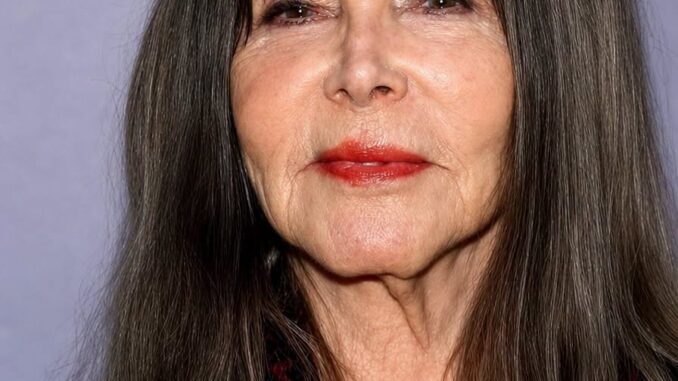
In the early 1950s, Lee Grant was considered one of Hollywood’s most promising young actresses. With her striking appearance, remarkable dramatic talent, and commanding screen presence, she appeared destined for a successful career in the entertainment industry.
Her breakthrough performance in Detective Story brought widespread recognition and an Academy Award nomination, establishing her as an actress capable of delivering emotionally powerful performances.
But just as her career was beginning to flourish, everything changed.
Grant became a target of Hollywood’s political blacklist, an era when accusations and suspicions could destroy careers almost overnight.
For approximately twelve years, the industry that had once celebrated her talent largely shut her out.
Yet her story did not end there.
Decades later, Grant would return to the spotlight, win an Academy Award, become a respected filmmaker, and prove that the industry had never succeeded in taking away her artistic voice.
A Promising Beginning in Hollywood
Lee Grant’s early career suggested that she had everything necessary to become a major Hollywood star.
Her performance in the 1951 film Detective Story attracted critical praise and earned her an Academy Award nomination for Best Supporting Actress.
The recognition was particularly significant for an actress still establishing herself in the film industry.
Grant demonstrated an ability to portray complicated emotions with authenticity, bringing depth and vulnerability to her characters.
Her talent distinguished her from many performers of the era.
At a time when Hollywood placed enormous importance on physical beauty and carefully managed public images, Grant possessed both a memorable screen presence and exceptional acting ability.
The future seemed filled with opportunities.
However, political tensions in the United States were beginning to transform the entertainment industry.
And Grant would soon discover how quickly professional success could disappear.
The Hollywood Blacklist That Changed Her Life
During the late 1940s and 1950s, Hollywood became deeply affected by investigations into suspected communist influence.
The House Un-American Activities Committee questioned actors, writers, directors, and other entertainment professionals about their political associations.
Individuals were often pressured to identify colleagues who might have connections to communist organizations.
Refusing to cooperate could have devastating professional consequences.
Studios, concerned about political controversy and public backlash, frequently avoided employing artists whose names had become associated with the investigations.
As a result, numerous talented performers and filmmakers found themselves unable to work.
Grant became one of those affected.
Her career, which had appeared so promising, was suddenly interrupted by circumstances that had little to do with her acting ability.
Why Lee Grant Became a Target
Grant’s political difficulties were connected partly to her personal relationships and public statements.
Her husband at the time, screenwriter Arnold Manoff, was associated with left-wing political circles.
That connection placed her within an environment already attracting attention from investigators.
But another event contributed to the scrutiny surrounding her.
Following the death of actor J. Edward Bromberg, Grant publicly criticized the atmosphere of intimidation created by congressional investigations.
She suggested that the pressure surrounding those investigations had contributed to the emotional strain he experienced.
Her remarks challenged the political climate that had taken hold of Hollywood.
At a time when many entertainers feared speaking openly, her willingness to criticize the investigations carried considerable professional risk.
Soon afterward, opportunities began disappearing.
Twelve Years of Lost Opportunities
For an actress whose career had just begun gaining momentum, the consequences were enormous.
Film offers became scarce.
Professional opportunities vanished.
Studios that might once have welcomed her talent were reluctant to employ her.
The blacklist effectively interrupted her screen career for approximately twelve years.
Those years represented an especially important period in an actress’s professional life.
Grant had entered Hollywood with extraordinary promise, only to find herself excluded during what could have been some of her most productive years.
The experience affected more than her finances.
It also damaged her confidence and created uncertainty about whether she would ever be able to rebuild her career.
For someone who had dedicated her life to acting, being denied the opportunity to practice her profession was deeply painful.
Nevertheless, she refused to abandon her artistic ambitions.
How She Continued Working Despite the Blacklist
Although Hollywood largely closed its doors to her, Grant continued pursuing acting wherever opportunities remained available.
Theater became an important outlet for her creativity.
Working onstage allowed her to maintain her skills and remain connected to the profession she loved.
At the same time, she was navigating the responsibilities of family life and the emotional challenges created by professional exclusion.
The experience demanded considerable resilience.
She had no guarantee that the blacklist would eventually end or that the film industry would welcome her back.
Still, she continued developing her craft.
Her determination would later become one of the defining qualities of her career.
The Pressure of Aging in an Industry Obsessed With Youth
When Grant eventually began rebuilding her Hollywood career, she faced another challenge.
The entertainment industry had changed during her absence.
And so had she.
Hollywood had long placed intense pressure on actresses to maintain youthful appearances.
For Grant, the situation was especially difficult because she had lost years of professional opportunity through circumstances beyond her control.
The industry had prevented her from working during a significant portion of her career, yet she still faced expectations surrounding age and appearance when she returned.
Grant later spoke candidly about undergoing cosmetic surgery.
Her openness highlighted the complicated relationship between aging, self-image, and professional survival in Hollywood.
For actresses, physical appearance could influence the roles they were offered and the way studios perceived their marketability.
Grant’s experience demonstrated how unfair those expectations could become, particularly for women whose careers had already been interrupted.
Her Remarkable Return to the Screen
As the Hollywood blacklist gradually lost its influence, Grant began finding opportunities in film and television again.
Her return demonstrated that the talent recognized in Detective Story had never disappeared.
She continued delivering memorable performances and working with respected filmmakers.
Rather than allowing her earlier exclusion to define the remainder of her career, she established herself as a versatile and accomplished actress.
Her performances reflected the emotional intelligence and dramatic strength that had first attracted attention in the 1950s.
Over time, her professional reputation recovered.
And eventually, she achieved one of Hollywood’s highest honors.
Winning an Academy Award After Years of Exclusion
In 1976, Grant won the Academy Award for Best Supporting Actress for her performance in the film Shampoo.
The achievement marked an extraordinary moment in her career.
More than two decades had passed since her first Oscar nomination.
During that time, she had endured years of professional exclusion, uncertainty, and the struggle to regain her place in the entertainment industry.
Winning the award represented recognition of her enduring talent.
It also demonstrated that the blacklist had failed to permanently silence her.
For an actress who had once been treated as unemployable, standing among Hollywood’s celebrated performers was a powerful reversal.
Her comeback became an important part of her legacy.
But Grant was not finished exploring new creative possibilities.
From Acclaimed Actress to Respected Director
Grant eventually expanded her career beyond acting.
She began directing documentaries and television productions, allowing her to take greater control over the stories she wanted to tell.
This transition was especially meaningful considering her earlier experiences.
For years, other people had determined whether she could work.
As a director, she gained the opportunity to shape projects according to her own artistic interests.
Her documentary work frequently explored social issues and the experiences of people whose stories received limited mainstream attention.
These subjects reflected her longstanding interest in justice, inequality, and the consequences of institutional power.
Rather than focusing exclusively on entertainment, she used filmmaking to examine important human experiences.
Her work behind the camera demonstrated that her creative abilities extended well beyond acting.
A Personal Life That Continued Beyond Hollywood’s Expectations
Grant’s personal life also evolved throughout the decades.
After her marriage to Arnold Manoff, she later married producer Joseph Feury, who was younger than she was.
Their relationship developed into a long-lasting partnership.
Together, they shared personal and professional experiences that extended beyond the period of political controversy that had once dominated her career.
Grant continued reflecting on her experiences through interviews, writing, and public appearances.
Her memoir and later discussions provided insight into the emotional and professional consequences of Hollywood’s blacklist.
By speaking openly about what happened, she helped preserve an important part of entertainment history.
Her story became valuable not only because of her achievements but also because of her willingness to describe the injustices she had experienced.
Why Her Appearance Then and Now Tells Only Part of the Story
Photographs comparing Grant’s youthful appearance in the 1950s with images from her later years can attract attention.
Like anyone who has lived through many decades, her appearance naturally changed over time.
But focusing only on those physical differences overlooks the most remarkable transformation in her life.
The young actress who once seemed destined for immediate stardom became a performer excluded from the industry during a period of political fear.
She then rebuilt her career, won an Academy Award, and established herself as a filmmaker.
Those accomplishments reveal far more about her journey than any comparison between old and recent photographs.
Her story is not simply about how a Hollywood star looked in her youth.
It is about the determination required to continue pursuing a creative life after years of professional rejection.
What Lee Grant’s Experience Reveals About Hollywood
Grant’s career remains an important example of how political pressure can influence cultural institutions.
During the blacklist era, talented artists could lose their livelihoods because of accusations, associations, or a refusal to cooperate with investigations.
The consequences extended far beyond individual careers.
The atmosphere of fear affected what stories could be told, which voices could be heard, and how freely artists could express their opinions.
Grant’s experiences illustrate the human cost of those restrictions.
She lost opportunities that could never be fully recovered.
Yet her eventual success also demonstrated the limitations of attempts to silence artistic expression.
Her performances continued reaching audiences long after the blacklist began fading into history.
A Legacy Built on Talent, Courage, and Perseverance
Lee Grant’s contribution to entertainment extends across acting, directing, documentary filmmaking, and personal storytelling.
Her career includes acclaimed performances, major awards, and creative projects addressing meaningful social issues.
But perhaps the most powerful aspect of her legacy is the way she continued working after experiencing such a significant professional setback.
She entered Hollywood as a promising young actress.
She endured years of exclusion during one of the industry’s most controversial periods.
And she returned to establish a career that reached far beyond her early achievements.
Her story challenges the idea that success must follow a straightforward path.
Sometimes, extraordinary accomplishments come after years of uncertainty and disappointment.
The Hollywood Star Who Refused to Be Forgotten
Looking back at Grant’s life, it becomes clear that her greatest transformation was never simply physical.
It was the journey from celebrated newcomer to blacklisted performer, and eventually to Academy Award-winning actress and director.
The entertainment industry took away valuable years of her career.
But it did not permanently take away her talent, determination, or willingness to speak.
Her later reflections ensured that the experiences of blacklisted artists would not be forgotten.
And her body of work continues to demonstrate the importance of creative freedom.
Lee Grant’s story is a reminder that a person’s legacy should never be reduced to their appearance or the obstacles they faced.
What matters is how they continued, what they created, and the impact they left behind.
For Grant, the most remarkable part of her Hollywood journey was not simply that she returned after twelve years of exclusion.
It was that she came back with enough determination to build an extraordinary career on her own terms.
Leave a Reply