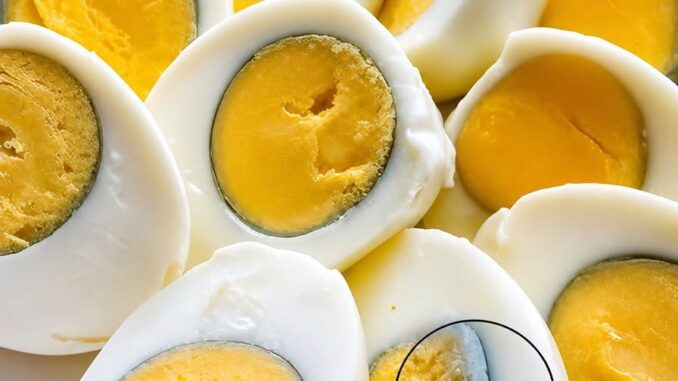
Have you ever peeled a hard-boiled egg, sliced it in half, and discovered an unexpected greenish-gray ring surrounding the yolk?
Instead of the bright golden center you were expecting, you’re greeted by a strange discoloration that makes you wonder whether something went wrong.
Your first instinct might be to throw the egg away.
After all, green isn’t usually the color people associate with a perfectly cooked egg.
But before you discard your breakfast, there’s something important you should know.
A green ring around a hard-boiled egg yolk usually doesn’t mean the egg is spoiled or unsafe to eat.
In most cases, the unusual color is simply the result of a natural chemical reaction caused by cooking the egg for too long or exposing it to excessive heat.
The good news is that this reaction is easy to understand, and preventing it is relatively simple.
Here’s what causes egg yolks to turn green, whether they’re safe to eat, and how to achieve beautifully cooked golden yolks.
Why Does a Hard-Boiled Egg Yolk Turn Green?
The appearance of a green or gray-green ring around a hard-boiled egg yolk is a common cooking phenomenon.
It happens because of a chemical reaction involving substances naturally present inside the egg.
Egg whites contain sulfur-containing compounds, while egg yolks contain iron.
When an egg is heated, its proteins undergo changes that transform the liquid white and yolk into a firm, cooked structure.
However, if the egg remains exposed to high temperatures for too long, additional chemical reactions can occur.
One of these reactions causes sulfur from the egg white to interact with iron in the yolk.
The result is the formation of iron sulfide, a compound responsible for the greenish-gray discoloration.
This reaction typically occurs near the outer edge of the yolk, where it meets the egg white.
That’s why the unusual color often appears as a ring rather than affecting the entire yolk evenly.
The Science Behind the Green Ring
Although the green discoloration may look alarming, the chemistry behind it is surprisingly straightforward.
As an egg cooks, heat causes its proteins to change structure and become firm.
This process is responsible for the familiar texture of a boiled egg.
But prolonged heating can also encourage the formation of sulfur-containing gases from compounds in the egg white.
These substances can interact with iron found in the yolk.
When they react, iron sulfide forms near the boundary between the two parts of the egg.
Iron sulfide has a gray-green appearance.
The longer an egg is exposed to excessive heat, the more noticeable this discoloration may become.
In some eggs, the ring is barely visible.
In others, it can appear thick and dark.
The degree of discoloration depends on factors such as cooking temperature and duration.
The important thing to remember is that this is a chemical reaction associated with cooking, not necessarily a sign of food spoilage.
Does a Green Egg Yolk Mean the Egg Is Overcooked?
In most cases, yes.
A green ring is commonly associated with hard-boiled eggs that have been cooked longer than necessary.
When eggs remain in hot water after the yolk has already become firm, the additional heat encourages further chemical reactions.
This can lead to discoloration around the yolk.
Overcooking can also affect the egg’s texture.
The white may become firmer or rubbery.
The yolk may become dry, crumbly, or chalky.
Instead of a tender, evenly cooked center, you may end up with a yolk that feels powdery when cut or mashed.
These changes are often more noticeable than the green color itself.
While the discoloration may not make the egg unsafe, it can indicate that the cooking process went beyond the ideal point.
Are Green-Yolked Eggs Safe to Eat?
This is the question most people ask when they first notice the unusual color.
Fortunately, a green ring caused by overcooking is generally harmless.
If the egg was safe before cooking, was cooked appropriately, and has been handled and stored correctly, the discoloration alone is not a reason to throw it away.
The greenish color does not automatically mean bacteria are present.
It also does not indicate that the egg has become poisonous.
The iron sulfide responsible for the discoloration is formed through a normal cooking-related chemical reaction.
However, it’s important to distinguish overcooking from actual spoilage.
An egg may still be unsafe if it has been stored improperly, left at room temperature for too long, or shows other concerning signs.
The appearance of the yolk should never be the only factor used to determine food safety.
How to Tell the Difference Between Overcooking and Spoilage
A green ring around the outside of an otherwise normal hard-boiled yolk is typically associated with excessive cooking.
Spoilage is a different issue.
Signs that an egg may no longer be suitable for eating can include an unpleasant rotten odor, unusual sliminess, or a history of improper storage.
Foodborne pathogens may also be present without producing obvious changes in appearance or smell.
For this reason, proper handling and refrigeration are essential.
A freshly cooked egg with a green ring is very different from an egg that has been left unrefrigerated for an extended period.
If you are uncertain about how an egg was stored or whether it is safe, discarding it is the safer choice.
But if the egg was properly prepared and refrigerated, a green ring alone is generally not a cause for concern.
Why Cooking Time Makes Such a Big Difference
Eggs continue responding to heat as long as their internal temperature remains elevated.
When an egg is placed in hot water, heat gradually moves through the shell and into the white and yolk.
The outer portions cook first.
The center takes longer to reach the desired firmness.
Once the yolk is fully cooked, leaving the egg in hot water can continue changing its texture.
This additional heating increases the likelihood of a green ring developing.
That’s why cooking time matters.
A few extra minutes can sometimes make the difference between a tender golden yolk and one that appears dry or discolored.
The ideal timing depends on several factors, including egg size, starting temperature, and the cooking method.
Rather than leaving eggs boiling indefinitely, using a consistent method and monitoring the time can help produce better results.
Why Excessive Heat Can Affect Egg Quality
It may seem logical that boiling eggs at the highest possible temperature would produce the best results.
However, more heat doesn’t necessarily mean better cooking.
Extremely vigorous boiling can cause eggs to move around and strike one another or the sides of the pot.
This may increase the likelihood of cracked shells.
Excessive cooking can also produce tougher whites and drier yolks.
A controlled cooking temperature makes the process easier to manage.
A gentle boil or carefully maintained simmer can help reduce unnecessary agitation.
The goal is to cook the egg thoroughly without exposing it to more heat than needed.
For hard-boiled eggs, consistency is often more useful than intensity.
How to Prevent the Green Ring Around Egg Yolks
Preventing green yolks doesn’t require expensive equipment or complicated cooking techniques.
A few simple adjustments can make a noticeable difference.
1. Avoid Cooking Eggs Longer Than Necessary
The most important step is controlling the cooking time.
Eggs should remain in hot water long enough for the whites and yolks to reach the desired firmness.
However, continuing to cook them after that point increases the chance of discoloration.
Using a timer can help prevent accidental overcooking.
The exact cooking duration will vary depending on the method and the size of the eggs.
Following a reliable recipe consistently is usually more effective than guessing.
2. Use a Controlled Cooking Temperature
A strong, rolling boil is not always necessary.
Maintaining a gentler cooking temperature can make the process easier to control.
It can also reduce the movement of eggs inside the pot.
The important thing is to use a method that cooks the eggs thoroughly while avoiding unnecessary exposure to excessive heat.
3. Cool the Eggs Promptly
Once the eggs have finished cooking, remove them from the hot water.
Leaving them in the pot can allow residual heat to continue cooking the yolks.
Cooling them promptly helps limit this carryover cooking.
One popular method is transferring the eggs into a bowl filled with ice water.
The cold water helps reduce their temperature quickly.
This can improve the final texture and lower the likelihood of additional discoloration.
4. Use the Same Method Consistently
If you find a cooking method that produces good results, continue using it.
Changing the water temperature, cooking time, or egg size can affect the outcome.
Consistency makes it easier to identify what works best in your kitchen.
With practice, achieving evenly cooked hard-boiled eggs becomes much more predictable.
Why an Ice Bath Helps After Boiling Eggs
An ice bath is one of the simplest ways to improve the results of hard-boiled eggs.
Even after eggs are removed from boiling water, their internal temperature remains high.
This means the cooking process doesn’t stop immediately.
Residual heat can continue affecting the proteins in the yolk and white.
Placing the eggs in ice water helps cool them more rapidly.
This limits additional cooking and can help preserve a more desirable texture.
An ice bath also makes the eggs easier to handle once they have cooled.
Depending on the cooking method and the eggs themselves, cooling may also help with peeling.
For food safety, hard-boiled eggs should be refrigerated promptly after preparation and kept cold until needed.
What Color Should a Perfect Hard-Boiled Egg Yolk Be?
A properly cooked hard-boiled egg typically has a yellow or golden-yellow center.
However, the exact shade can vary naturally.
Some egg yolks are pale yellow.
Others are a deeper golden or orange color.
These differences can be influenced by the hen’s diet.
A darker yolk does not automatically mean an egg is fresher or safer than one with a lighter color.
When evaluating a hard-boiled egg, texture is also important.
An ideal yolk should be fully set while remaining reasonably tender.
It should hold its shape without becoming excessively dry or crumbly.
The white should be firm without feeling unnecessarily rubbery.
A prominent green ring is usually a sign that the egg has been exposed to more heat than necessary.
Does a Green Ring Affect the Taste of an Egg?
The green discoloration itself doesn’t necessarily create a major change in flavor.
However, the overcooking associated with it can affect the overall eating experience.
Hard-boiled eggs that have been cooked too long may develop a stronger sulfur-like aroma.
Their whites can become firmer and less pleasant to chew.
The yolks may lose moisture and develop a chalky texture.
This can make the egg seem less appetizing, even if it remains safe to eat.
For many people, the texture is a bigger concern than the appearance.
A tender yolk is generally more enjoyable than one that crumbles into dry pieces.
That’s why improving the cooking method can make such a difference.
Can the Entire Yolk Turn Green?
The most familiar discoloration appears as a ring around the outer edge of the yolk.
However, the appearance can vary.
In some cases, the greenish-gray color may be more extensive.
The amount of discoloration depends partly on how long the egg was cooked and how much heat it received.
A faint ring may be difficult to notice.
A heavily overcooked egg may have a more prominent gray-green area.
The underlying explanation remains the same when the discoloration is caused by the reaction between sulfur and iron.
However, unusual colors or textures that do not resemble ordinary overcooking should not automatically be dismissed.
If the egg’s condition or storage history raises concerns, it is better not to eat it.
Can Green Discoloration Happen in Other Egg Dishes?
Hard-boiled eggs are not the only egg preparation that can develop unusual colors.
Certain chemical reactions involving sulfur compounds can also contribute to discoloration in other cooked egg dishes.
For example, scrambled eggs or omelets may occasionally develop a gray-green tint under particular cooking conditions.
Excessive heat can be one contributing factor.
The ingredients and cooking equipment used may also influence the appearance of some egg dishes.
This is another example of how ordinary kitchen chemistry can affect food.
Although the color may be unexpected, it doesn’t always indicate spoilage.
The important distinction is whether the change resulted from cooking or from unsafe handling and storage.
What Should You Do With Eggs That Already Have Green Yolks?
If you’ve already cooked a batch of eggs and discovered green rings around the yolks, you don’t necessarily need to throw them away.
Provided they were prepared and stored safely, they can still be used in many dishes.
The appearance may be less attractive when the eggs are served whole or sliced in half.
However, chopping or mashing them can make the discoloration much less noticeable.
This makes green-yolked eggs particularly suitable for recipes where the yolk is mixed with other ingredients.
Instead of wasting food, consider incorporating the eggs into a meal.
Make a Simple Egg Salad
Egg salad is one of the easiest ways to use hard-boiled eggs with slightly discolored yolks.
Start by peeling and chopping the eggs.
Place them in a bowl and add mayonnaise, mustard, and seasonings according to your preference.
You can also include fresh herbs, black pepper, or finely chopped vegetables.
Mix the ingredients until they reach your preferred consistency.
Because the yolks are mashed together with the other ingredients, a thin green ring becomes much less noticeable.
The finished egg salad can be served in sandwiches, wraps, or alongside vegetables.
This is a practical option for eggs that are safe to eat but not visually perfect.
Add Them to Salads and Sandwiches
Hard-boiled eggs work well in many everyday dishes.
They can be chopped and added to green salads for extra protein.
They also pair well with potato salads, pasta salads, and grain-based meals.
For sandwiches, sliced or mashed eggs can be combined with vegetables, herbs, and spreads.
If the yolk has a slight green ring, the discoloration is unlikely to stand out once the egg is mixed with other ingredients.
The most important consideration is that the eggs have been handled and stored safely.
A small cosmetic imperfection doesn’t necessarily prevent them from being useful in cooking.
Try Green-Yolked Eggs With Avocado Toast
If you enjoy avocado toast, slightly overcooked eggs can still make a convenient topping.
Mash a ripe avocado and spread it over toasted bread.
Add chopped or mashed hard-boiled egg.
Season with salt, pepper, or other preferred ingredients.
The creamy avocado can help balance the drier texture of an overcooked yolk.
It also makes the greenish color less noticeable.
This simple combination can turn an imperfect batch of eggs into a satisfying breakfast or snack.
The result may not look exactly like the hard-boiled eggs you originally planned, but it can still be enjoyable.
Why Food Color Can Sometimes Be Misleading
People naturally use appearance to judge whether food is fresh or safe.
Color changes can be useful clues, but they don’t always tell the entire story.
For example, a sliced apple may turn brown because of oxidation.
A banana may develop dark spots as it ripens.
And a hard-boiled egg yolk may develop a green ring because of prolonged heating.
These changes have different causes.
Not every unusual color means food has spoiled.
At the same time, normal-looking food isn’t automatically safe.
Proper storage, preparation, and handling remain essential.
When deciding whether something is suitable to eat, it’s important to consider the full situation rather than relying only on appearance.
How to Store Hard-Boiled Eggs Safely
Even a perfectly cooked egg can become unsafe if it isn’t stored properly.
After cooking and cooling, hard-boiled eggs should be refrigerated promptly.
They should not be left at room temperature for more than two hours, or more than one hour when temperatures exceed 90°F (32°C).
Hard-boiled eggs can generally be kept refrigerated for up to one week.
This applies whether they remain in their shells or have been peeled.
Store them in a clean, covered container when appropriate, and keep the refrigerator at 40°F (4°C) or below.
Proper storage is more important for food safety than whether the yolk has a green ring.
If you are unsure how long the eggs have been sitting out or whether they were refrigerated correctly, the safer option is to discard them.
Common Mistakes That Lead to Overcooked Eggs
Several everyday cooking habits can increase the likelihood of green yolks.
One common mistake is leaving eggs boiling while attending to other tasks.
Without a timer, it’s easy to lose track of how long they have been cooking.
Another mistake is allowing eggs to remain in hot water after the intended cooking time has ended.
Even if the burner is turned off, the water and eggs may remain hot enough to continue cooking.
Using excessively vigorous heat can also make the process more difficult to control.
Finally, assuming every egg requires exactly the same cooking time can lead to inconsistent results.
Egg size and cooking methods can influence the outcome.
Avoiding these mistakes can help produce better hard-boiled eggs more consistently.
Why Cooking Eggs Is Really a Matter of Chemistry
Eggs are a familiar food, but the changes that occur during cooking are surprisingly complex.
Heat transforms the structure of proteins in both the white and yolk.
These changes create the textures we associate with boiled, scrambled, and fried eggs.
Cooking temperature and duration influence how firm or tender those proteins become.
When heating continues for too long, additional reactions can affect color, aroma, and texture.
The formation of a green ring around a hard-boiled yolk is one visible example.
Understanding this process can make cooking feel less mysterious.
Instead of seeing the discoloration as a strange accident, you can recognize it as a predictable result of heat and time.
Final Thoughts: A Green Egg Yolk Usually Isn’t a Reason to Panic
Discovering a greenish-gray ring around a hard-boiled egg yolk can be surprising, especially when you’re expecting a bright yellow center.
Fortunately, the explanation is usually simple.
The green ring forms when sulfur-containing compounds from the egg white react with iron in the yolk during prolonged heating, producing iron sulfide.
This discoloration is commonly associated with overcooking.
It does not, by itself, mean the egg has spoiled or become unsafe.
If the egg was properly cooked, handled, and refrigerated, it is generally safe to eat despite the unusual color.
To prevent green yolks in the future, pay attention to cooking time, avoid unnecessary heat, and cool the eggs promptly once they’re done.
And if you accidentally overcook a batch, there’s no need to waste otherwise safe eggs.
They can still be chopped into salads, mashed into sandwiches, or mixed into other recipes.
The next time you slice open a hard-boiled egg and notice that familiar green ring, you’ll know exactly what caused it.
Sometimes, even the simplest kitchen surprises have a fascinating scientific explanation.
Leave a Reply