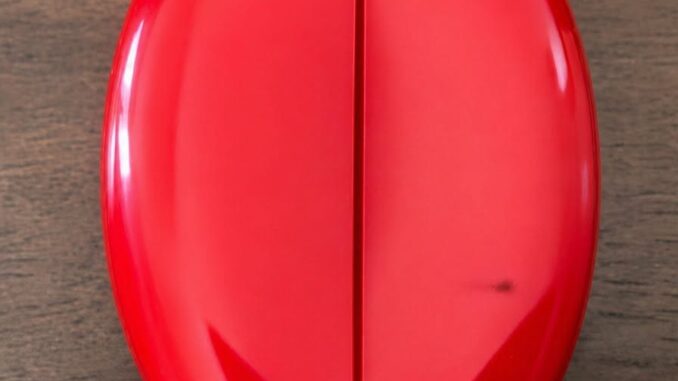
Long before digital wallets, contactless payments, and smartphones changed the way people handled money, a small rubber accessory was an essential part of everyday life.
It was simple, lightweight, and surprisingly practical.
At first glance, the brightly colored oval object might look like an old-fashioned makeup case, a miniature storage container, or even a modern gadget.
But anyone who grew up using one would probably recognize it immediately.
This unusual little accessory is known as a rubber squeeze coin purse, sometimes called a Quikey or oval squeeze purse.
For decades, it helped people keep their loose change organized without the need for zippers, buttons, or complicated closures.
Today, these vintage coin holders are remembered not only for their usefulness but also for the nostalgia they bring.
Their clever design is a reminder that some of the most practical inventions are also the simplest.
What Is a Rubber Squeeze Coin Purse?
A rubber squeeze coin purse is a small, flexible container designed to hold coins and other tiny objects.
Its most recognizable feature is its oval shape, often made from brightly colored rubber or soft vinyl.
Many vintage examples were produced in red, although other colors were also available.
Unlike traditional wallets, these coin purses do not have zippers, snaps, or metal clasps.
Instead, they feature a narrow opening along the center of the flexible material.
When the purse is not being squeezed, the opening remains closed.
Applying pressure to the ends causes the center to open, allowing the user to access the contents.
The entire process takes only a moment.
This straightforward mechanism made the accessory particularly convenient for people who needed to handle coins frequently throughout the day.
The Surprisingly Clever Design Behind the Little Oval
One of the most interesting things about the rubber squeeze purse is how little effort it takes to operate.
The design relies on the natural flexibility of its material rather than separate mechanical components.
When the purse is resting in its normal shape, the rubber maintains enough tension to keep the central opening closed.
To open it, the user simply holds the two ends between their fingers and squeezes inward.
This pressure causes the sides to bend outward, creating an opening in the center.
Coins can then be removed or placed inside.
Once the pressure is released, the material returns to its original position.
The opening closes automatically.
There is no zipper to pull, no button to press, and no clasp to fasten.
The flexible body performs all of these functions on its own.
It is an excellent example of how thoughtful design can solve an everyday problem without unnecessary complexity.
Why the Squeeze Mechanism Was So Practical
Traditional coin purses often relied on metal frames, zippers, or snap closures.
Although these designs worked well, they sometimes required both hands to operate.
The rubber squeeze purse offered a convenient alternative.
Its opening mechanism could be operated with one hand, making it useful when someone needed to retrieve change quickly.
For example, a person standing beside a parking meter could open the purse, remove a coin, and close it almost instantly.
The same convenience applied when paying for public transportation or using a vending machine.
The purse was also compact enough to fit comfortably inside a pocket or handbag.
Its flexible material helped prevent coins from spilling out during ordinary use.
Because it contained no separate moving components, there were fewer parts that could become loose or stop functioning.
These qualities helped make the design popular for many years.
A Familiar Accessory During the Mid-20th Century
Rubber squeeze coin purses became especially recognizable during the middle decades of the twentieth century.
From approximately the 1950s through the 1980s, they were commonly associated with everyday activities that required carrying loose change.
During those years, coins played a much larger role in daily transactions than they do for many people today.
Public services and small purchases frequently required exact change.
Carrying a few coins was not simply convenient.
In many situations, it was necessary.
The rubber squeeze purse provided an inexpensive and practical way to keep those coins together.
Its popularity reflected a period when simple accessories could make ordinary routines noticeably easier.
When Coins Were Essential for Everyday Life
Today, many people can complete an entire day of purchases using a smartphone or payment card.
Decades ago, the situation was very different.
Coins were needed for numerous everyday activities.
Public Telephones
Before mobile phones became widespread, public telephones were an important way to communicate while away from home.
Making a call often required inserting coins into a payphone.
A small coin purse made it easier to keep the necessary change available.
Public Transportation
Buses and streetcars frequently required passengers to pay fares using coins.
Having the correct amount ready could make boarding faster and more convenient.
Parking Meters
Drivers often needed coins to pay for parking.
A squeeze purse could be kept in a vehicle or pocket so change was available when needed.
Vending Machines
Snacks, drinks, and other small purchases were commonly made using coins.
The purse helped prevent loose change from becoming scattered inside bags or pockets.
Laundromats
Coin-operated washing machines and dryers were another reason people needed a reliable way to carry change.
For individuals who regularly visited laundromats, a small coin holder could be particularly useful.
These everyday situations explain why such a simple accessory became so familiar.
The Problem With Carrying Loose Change
Anyone who has carried several coins in a pocket knows how inconvenient they can become.
Loose change can create noise when walking.
Coins may fall out when removing other items.
They can also collect at the bottom of a handbag, making it difficult to find the correct amount when needed.
Traditional wallets do not always provide an ideal solution, particularly when their coin compartments are small or difficult to access.
The rubber squeeze purse addressed many of these problems.
It kept coins together in one compact container.
Its soft material reduced the rattling associated with loose change.
And the simple opening made it easy to retrieve money without searching through a larger wallet.
For such a small object, it offered a surprising amount of everyday convenience.
Why Businesses Loved Giving Them Away
Rubber squeeze coin purses were not only useful personal accessories.
They also became popular promotional products.
During the mid-twentieth century, businesses frequently distributed small branded items to customers.
These giveaways were intended to keep a company’s name visible while providing something practical.
The rubber coin purse was particularly well suited to this purpose.
Its smooth exterior offered space for printed logos, names, addresses, and telephone numbers.
Businesses could customize the purse with their branding and distribute it as a promotional gift.
Because the accessory was inexpensive to produce and useful in daily life, it became an appealing advertising tool.
A Tiny Advertisement That Could Last for Years
Banks, gas stations, insurance agencies, hardware stores, and car dealerships were among the businesses that used promotional coin purses.
A local company might print its name and telephone number on the rubber surface before giving the item to customers.
Unlike a paper advertisement that might quickly be discarded, a practical coin holder could remain in someone’s possession for years.
Every time the customer reached for change, the business name would be visible.
This gave the small accessory an advertising advantage.
It combined usefulness with repeated brand exposure.
Some people continued carrying these promotional purses long after receiving them.
Others stored them in drawers, vehicles, or keepsake boxes.
Today, surviving examples with old business logos can provide a glimpse into the advertising styles and local businesses of earlier decades.
Why Vintage Promotional Coin Purses Are Interesting Today
Collectors often appreciate vintage objects because they preserve details about everyday life.
A promotional rubber coin purse may appear insignificant, but its printed design can reveal information about the period in which it was distributed.
Old telephone numbers, company names, logos, and advertising slogans can reflect the business culture of a particular era.
Some purses feature simple lettering.
Others display colorful graphics or distinctive typography.
The condition of the rubber and the clarity of the printed design may also vary.
For collectors interested in vintage advertising, these details can make individual examples appealing.
Even people who do not collect promotional items may enjoy discovering a familiar company name on an old coin purse.
It can bring back memories of neighborhood businesses, family routines, or places that have changed over time.
The Nostalgia Behind the Classic Red Coin Purse
For many people, seeing a rubber squeeze purse brings back memories of childhood.
Perhaps a parent or grandparent carried one.
Maybe it was kept in the family car for parking meters.
Some people remember receiving one as a free gift from a local business.
Others recall playing with the opening mechanism simply because it was satisfying to squeeze.
These memories help explain why the accessory remains recognizable.
It was not a luxury item or an expensive invention.
It was an ordinary object that became part of everyday routines.
And ordinary objects often hold surprisingly powerful memories.
A familiar color, texture, or movement can remind someone of a completely different period in life.
The little red oval is one of those objects.
A Design That Did Not Need Complicated Technology
One reason the rubber squeeze purse remains interesting is its mechanical simplicity.
Modern accessories often include electronic components, magnetic closures, or multiple moving parts.
The squeeze purse accomplishes its purpose through the shape and flexibility of a single molded body.
There are no batteries.
No electronic circuits.
No complicated locking systems.
The user applies pressure, the opening expands, and the contents become accessible.
Releasing the pressure closes the purse again.
This makes the design easy to understand and intuitive to operate.
Its simplicity also reduces the number of components that might require repair.
Although rubber and vinyl can deteriorate with age, the basic mechanism remains an impressive example of practical product design.
Why Flexible Materials Made the Design Possible
The success of the squeeze purse depends largely on the properties of its material.
Rubber and flexible vinyl can bend under pressure and return toward their original shape when that pressure is removed.
This characteristic allows the purse to open and close without separate hardware.
The oval shape helps distribute pressure in a way that causes the central slit to widen.
When the ends are squeezed, the sides flex outward.
When released, the material’s resilience brings the opening back together.
The design turns a basic physical property into a useful everyday function.
It demonstrates how understanding materials can lead to clever solutions.
Rather than adding more components, the designers made the material itself perform the work.
Are Rubber Squeeze Coin Purses Still Useful Today?
Although cashless payments have reduced the need for carrying coins in many situations, the rubber squeeze purse has not completely lost its usefulness.
Its compact size and flexible opening make it suitable for storing various small objects.
People continue to find creative ways to use vintage and newly manufactured versions.
Instead of limiting the accessory to loose change, it can serve as a miniature organizer.
Its simple construction makes it easy to carry in a pocket, handbag, backpack, or equipment case.
For anyone who frequently handles small items, the design can still be convenient.
Modern Ways to Reuse a Vintage Squeeze Purse
The classic rubber coin holder can be repurposed for several everyday needs.
Guitar Picks
Musicians often need a convenient place to store guitar picks.
Because picks are small and easy to misplace, a squeeze purse can help keep them together.
The opening allows quick access without requiring a zipper or clasp.
Small Accessories
Tiny adapters, small connectors, or other compact accessories may fit inside a squeeze purse.
The exact usefulness depends on the size of the objects and the purse.
Screws and Washers
People working on small household projects may find the purse useful for temporarily organizing screws, washers, or similar hardware.
Keeping these items together can help prevent them from being misplaced.
Tokens and Spare Change
Even today, some machines, lockers, and services require coins or tokens.
A squeeze purse remains a practical way to store them.
Small Keepsakes
The accessory can also hold tiny sentimental items that might otherwise become lost in a drawer.
These modern uses demonstrate how an older design can remain relevant even when the original need becomes less common.
The Appeal of Simple Everyday Carry Accessories
People often look for ways to keep small belongings organized.
Keys, coins, adapters, and other compact objects can quickly create clutter.
A good organizer does not necessarily need to be large or complicated.
Sometimes, a small container that performs one function well is enough.
The rubber squeeze purse fits this idea.
It is lightweight, easy to operate, and compact.
Its flexible opening offers quick access to whatever is stored inside.
Although it cannot replace larger wallets or protective cases, it remains useful for certain small items.
This continued practicality helps explain why the design has survived changes in technology and consumer habits.
What Makes Vintage Squeeze Purses Collectible?
Not every old coin purse is particularly valuable, but many are interesting as nostalgic or decorative objects.
Collectors may be attracted to specific colors, designs, or promotional markings.
Some prefer examples featuring vintage company logos.
Others enjoy finding purses associated with businesses or locations they remember.
The condition of the material can also influence interest.
Older rubber may become stiff, cracked, or discolored.
Printed graphics may fade with handling and age.
Well-preserved examples can be appealing because they retain more of their original appearance.
For many enthusiasts, however, sentimental value matters more than monetary worth.
An inexpensive coin purse associated with a childhood memory may be far more meaningful than a rare collectible.
A Reminder of How Shopping and Payments Have Changed
The history of the rubber squeeze purse also reflects broader changes in everyday life.
During the decades when these accessories were common, coins were an essential part of many transactions.
People carried change for public telephones, transportation, parking, and small purchases.
Over time, new payment technologies changed those habits.
Credit and debit cards became more widely used.
Mobile phones replaced public payphones.
Contactless payments made many purchases faster and more convenient.
Digital wallets further reduced the need to carry physical money.
As a result, accessories designed specifically for coins became less central to everyday routines.
But they remain useful reminders of how people once navigated ordinary activities.
Why Old Household Objects Can Bring Back Powerful Memories
Nostalgia is not always connected to major historical events.
Sometimes, it comes from small objects that were once part of daily life.
A familiar kitchen tool can remind someone of a grandparent.
An old telephone can bring back memories of childhood conversations.
A vintage coin purse can recall trips to the store, parking meters, or family outings.
These objects connect people to experiences that may otherwise feel distant.
The rubber squeeze purse is especially memorable because of its distinctive shape and unusual opening mechanism.
Simply holding one and pressing its sides can recreate a familiar physical experience.
That tactile connection makes the object more than a visual reminder of the past.
It becomes something people can interact with again.
The Lasting Value of Clever Product Design
The rubber squeeze purse offers an important lesson about practical design.
An invention does not need to be technologically advanced to be effective.
Sometimes, the most successful products solve a common problem using the fewest possible components.
The squeeze purse does exactly that.
It provides storage.
It opens easily.
It closes automatically.
And it fits comfortably in the palm of a hand.
Its usefulness comes from a clear understanding of what the user needs.
Rather than adding complicated features, the design focuses on convenience and simplicity.
That approach remains relevant to modern product development.
A well-designed object should make an everyday task easier without creating unnecessary difficulties.
Final Thoughts: A Small Red Oval With a Surprisingly Big Legacy
The classic rubber squeeze coin purse may look like an ordinary vintage accessory, but its history reveals a clever invention that once played a useful role in everyday life.
Popular during the middle decades of the twentieth century, these compact holders helped people organize the coins they needed for public telephones, transportation, parking meters, vending machines, and other routine activities.
Their flexible construction eliminated the need for zippers, snaps, or complicated closures.
Businesses also recognized their usefulness, turning them into promotional giveaways that could keep company names visible for years.
Today, vintage squeeze purses continue to attract attention for their nostalgic appearance, clever mechanics, and potential as small organizers.
The little red oval reminds us that innovation does not always require advanced technology. Sometimes, all it takes is a simple idea, a flexible piece of rubber, and one clever squeeze.
For anyone who remembers carrying one, the object represents more than a place to store loose change.
It is a small piece of everyday history, preserved in the palm of a hand.
Leave a Reply