When my grandmother passed away, I knew that returning to her house would be difficult.
For as long as I could remember, her home had been the place where our family gathered for birthdays, holidays, and ordinary Sunday afternoons.
It was where we shared meals, celebrated milestones, and listened to stories about relatives we had never met.
Every room seemed to hold a memory.
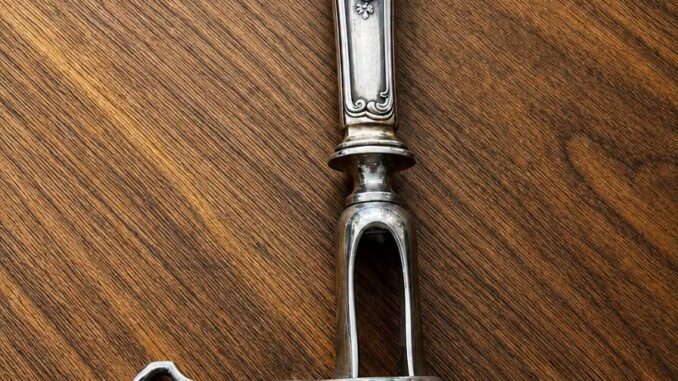
But none of us expected that a small, unfamiliar object hidden inside an old dresser would become one of the most meaningful discoveries of the day.
What began as a simple effort to organize Grandma’s belongings gradually turned into a family experience we would remember for years.
And it all started with something none of us could identify.
Returning to a House Filled With Memories
We arrived at Grandma’s house on a quiet Saturday morning.
My parents, cousins, siblings, and a few other relatives had agreed to spend the day sorting through her belongings.
There was plenty to do.
Closets were filled with clothing, kitchen cupboards held dishes collected over decades, and shelves were crowded with books and family photographs.
The house still felt familiar.
There was a faint scent of lavender in the hallway.
The wooden furniture carried the comforting smell of cedar.
And someone had already prepared a pot of coffee in the kitchen, just as Grandma always did when family visited.
For a moment, it almost felt like an ordinary gathering.
I half expected her to appear in the doorway and ask whether everyone had eaten.
Of course, things were different now.
We were there to organize the home she had cared for over so many years.
None of us knew exactly how emotional the experience would become.
Sorting Through a Lifetime of Belongings
We began with the living room.
There were photo albums stacked inside a cabinet, decorative plates arranged on shelves, and knitted blankets folded neatly over the sofa.
Every object seemed to remind someone of a different moment.
My cousin found a photograph from a family vacation and immediately began laughing.
My mother discovered a birthday card she had written as a child.
An aunt picked up a ceramic bowl and remembered how Grandma used it whenever she prepared her favorite holiday recipe.
We spent almost as much time talking as we did packing.
Sometimes we laughed.
Other times, we became quiet as familiar memories returned.
It was strange to realize how much of a person’s life could be reflected in everyday possessions.
A simple kitchen utensil could remind someone of childhood.
An old blanket could bring back memories of winter evenings.
And a handwritten note could make a moment from decades earlier feel surprisingly close.
The Discovery in the Bottom Drawer
Later that morning, we moved into Grandma’s bedroom.
An old wooden dresser stood against the wall.
It had been there for as long as any of us could remember.
The upper drawers contained neatly folded clothing, scarves, and small personal items.
But when my cousin opened the bottom drawer, she noticed something unusual.
Beneath several carefully folded linens was a small object wrapped and stored away.
She lifted it out and called us over.
“Does anyone know what this is?”
We gathered around.
The object appeared to be an older household item, but none of us immediately recognized its purpose.
It wasn’t particularly decorative.
There were no gemstones, elaborate engravings, or obvious signs that it was valuable.
Yet its unfamiliar appearance caught everyone’s attention.
Why had Grandma kept it?
And why had she stored it so carefully?
Everyone Had a Different Theory
Within minutes, the entire family was offering suggestions.
My aunt thought the object might have belonged to an antique sewing set.
One cousin wondered whether it was part of an old kitchen appliance.
Someone else suggested it might be a tool used for gardening or household repairs.
The guesses became increasingly imaginative.
We laughed as everyone tried to defend their theory.
But the mystery also made us curious.
Grandma had always been careful about organizing her belongings.
She rarely kept things without a reason.
If an object was important enough to store beneath folded linens, we assumed it must have held some significance.
We examined it from different angles, looking for markings or details that might help identify it.
There was nothing obvious.
For the moment, the little keepsake remained a mystery.
Why the Object Felt Important
I found myself thinking about Grandma’s habits.
She had never been particularly interested in expensive possessions.
She preferred practical things that lasted.
If something could be repaired, she repaired it.
If an item still had a useful purpose, she kept it.
She also enjoyed saving objects connected to meaningful experiences.
Birthday cards were stored in envelopes.
Old photographs were placed carefully inside albums.
Recipes were written by hand and kept in a small box near the kitchen.
Because of those habits, I wondered whether the object had a story behind it.
Perhaps it had belonged to someone in her family.
Maybe it reminded her of an important occasion.
Or perhaps it was simply something she had used many years earlier.
We couldn’t know for certain.
But the possibility encouraged us to keep looking.
Searching for Clues
We returned to the dresser and examined the other drawers.
There were old letters, small notebooks, and several photographs.
Some pictures showed Grandma as a young woman.
Others featured relatives whose names we recognized but whose stories we barely knew.
We began looking through the albums.
In one photograph, Grandma stood beside a group of friends outside a house none of us recognized.
Another showed her holding a basket in a garden.
There were pictures of family celebrations, school events, and ordinary afternoons.
We hoped one of them might reveal something about the mysterious object.
But as we searched, something unexpected happened.
The mystery became less important than the conversations it inspired.
Remembering Grandma’s Everyday Habits
Someone mentioned how Grandma always insisted that visitors take food home.
That reminded my brother of the containers she used to prepare for us after Sunday dinners.
My cousin remembered how she kept extra blankets ready whenever anyone stayed overnight.
An aunt recalled her habit of writing small reminders on pieces of paper and placing them beside the telephone.
We began sharing stories that hadn’t come up in years.
Some were funny.
Others were touching.
Most involved ordinary moments that seemed unremarkable at the time.
Grandma’s life had been filled with small gestures of care.
She remembered birthdays.
She checked on relatives who were unwell.
She prepared favorite meals when family members visited.
And she always seemed to find time for a conversation, even when she had a long list of things to do.
Those memories reminded us that a person’s influence often comes from everyday kindness rather than grand achievements.
The Photographs We Had Almost Forgotten
As the afternoon continued, we discovered several more albums.
Some contained pictures from holidays and family gatherings.
Others held photographs from decades before many of us were born.
We passed them around the room.
My mother pointed out relatives I had only heard about in stories.
An uncle remembered the family car that appeared in one picture.
Someone recognized a house that had been sold many years earlier.
Each photograph became an opportunity to learn something new.
I realized how little I knew about certain parts of Grandma’s life.
I knew her as the person who made our favorite meals and welcomed us into her home.
But before becoming a grandmother, she had been a young woman with friendships, ambitions, responsibilities, and experiences of her own.
The photographs offered glimpses of that earlier life.
And I wished I had asked her more questions about it.
A Collection of Handwritten Memories
In a small cabinet near the kitchen, we found another collection of keepsakes.
There were recipe cards written in Grandma’s familiar handwriting.
Some were stained from years of use.
Others contained little notes about ingredients or cooking times.
One recipe included an instruction to add a little more flour if the dough felt too soft.
Another had a family member’s name written in the corner.
We also found old greeting cards, letters, and a gardening notebook.
The notebook contained reminders about planting seasons and notes about which flowers had grown well in different parts of the yard.
None of these items was particularly expensive.
But they revealed how much attention Grandma had given to the details of everyday life.
Her handwriting appeared throughout the house.
It felt like another way of hearing her familiar voice.
Finally Identifying the Mysterious Object
Eventually, we returned to the object from the dresser.
By comparing its shape and features with examples of older household tools and vintage items, we were able to identify the type of object and its original purpose.
The discovery answered our practical question about what it was.
However, it didn’t explain exactly when Grandma had acquired it or why she had chosen to keep it.
Those details remained unknown.
We could only imagine the experiences that might have been connected to it.
Still, everyone seemed satisfied.
The object had given us a reason to explore family photographs, examine old letters, and talk about memories we might otherwise have overlooked.
In a way, finding its original purpose had become the least important part of the afternoon.
The conversations mattered much more.
The Questions We Wish We Had Asked
As we continued packing, I thought about the questions I had never asked Grandma.
What was her childhood like?
Which family traditions did she enjoy most?
What was the first home she remembered living in?
How had she met some of her oldest friends?
What advice had she received from her own parents?
I knew parts of those stories.
But there were many details I had never thought to ask about.
When we are young, we often see grandparents primarily through their role in our lives.
We know their routines, favorite foods, and familiar expressions.
We may not think about the many experiences they had before we were born.
And because family gatherings happen so regularly, it’s easy to assume there will always be another opportunity to hear their stories.
That Saturday reminded me how valuable those conversations can be.
Why Ordinary Objects Can Hold Special Meaning
Every family home contains items that may seem ordinary to outsiders.
An old key.
A faded photograph.
A favorite coffee mug.
A well-used cookbook.
A small ornament that appears on the same shelf every year.
Their financial value may be limited.
But their personal significance can be considerable.
A mug might remind someone of morning conversations with a parent.
A cookbook could contain recipes prepared for generations.
A photograph might preserve a family gathering that would otherwise be difficult to remember.
Objects often become meaningful because of the experiences associated with them.
They help people remember familiar places, important relationships, and moments from earlier stages of life.
This is why sorting through a loved one’s belongings can feel like much more than organizing household items.
Family Stories Connect Generations
One of the most meaningful parts of the day was hearing different generations describe the same memories.
My mother remembered Grandma as a young parent.
My aunt recalled growing up alongside her.
My cousins and I knew her through family celebrations and childhood visits.
Each of us had experienced a different part of her life.
When we shared those perspectives, the picture became more complete.
Stories that seemed ordinary to one person were completely new to someone else.
A family vacation my uncle remembered clearly was something I had never heard about.
A holiday tradition I thought Grandma had invented turned out to have started with her own mother.
Those conversations helped us understand how family customs develop and continue over time.
They also reminded us that everyone carries a different piece of a shared history.
A Different Way to Think About Inheritance
When people discuss inheritance, they often focus on property, savings, jewelry, or valuable possessions.
Those things can certainly matter.
But families also pass down traditions, knowledge, values, and stories.
Grandma had taught us many things without necessarily describing them as lessons.
She showed us the importance of welcoming visitors.
She encouraged us to stay connected with relatives.
She believed in taking care of belongings rather than replacing them unnecessarily.
She shared recipes and practical advice.
And she made ordinary gatherings feel special.
Those habits continued to influence our family long after we had grown up.
Looking around her home, I realized that her legacy wasn’t limited to the objects we were packing.
It was also reflected in the way we treated one another.
The Value of Preserving Family History
Our discovery encouraged us to think more carefully about preserving family memories.
Photographs are especially meaningful when the people and places in them can be identified.
A picture may be easy to recognize today, but future generations might not know who appears in it.
Adding names, dates, and short descriptions can help preserve that information.
The same is true of letters, recipes, and personal notebooks.
Even a few sentences explaining an item’s history can make it more meaningful to someone years later.
We began discussing ways to organize Grandma’s photographs and family documents.
Some relatives wanted to create digital copies of older pictures.
Others suggested writing down stories associated with important keepsakes.
The goal wasn’t to preserve every single object.
It was to protect the memories and information that mattered most.
Making Time for Family Conversations
The experience also changed how I thought about spending time with older relatives.
It’s easy to fill family visits with conversations about work, school, weather, and daily responsibilities.
Those subjects are part of staying connected.
But occasionally asking about earlier experiences can lead to meaningful discussions.
A simple question about someone’s childhood may reveal a story that has never been shared.
Asking about a family recipe might lead to memories of holidays from decades earlier.
Even discussing an old photograph can help connect different generations.
These conversations don’t need to be formal.
They can happen naturally during meals, celebrations, or quiet afternoons together.
What matters is showing interest and making time to listen.
The Afternoon Comes to an End
By late afternoon, boxes were stacked in several rooms.
The kitchen cupboards were nearly empty.
Furniture had been moved, and the dresser drawers had been organized.
We had accomplished much of what we planned.
But no one seemed eager to leave.
Instead, we gathered in the living room with another round of coffee.
Someone mentioned Grandma’s favorite song.
Another relative recalled a family road trip.
Soon, we were laughing about childhood memories and familiar family traditions.
The atmosphere felt different from when we had arrived.
We still missed Grandma.
But the day had given us an opportunity to remember her together.
The mysterious object sat nearby, no longer the center of everyone’s attention.
It had already served a meaningful purpose.
It had brought us into the same room and encouraged us to share stories.
What We Decided to Keep
Before leaving, we discussed which belongings should remain in the family.
Some items had practical value.
Others were important because of their history.
We agreed that certain photographs and handwritten documents deserved special care.
Family recipes would be copied so everyone could use them.
A few sentimental objects would go to relatives who had particular memories associated with them.
We also decided to preserve the unusual item from the dresser.
Not because it was rare or expensive.
But because it had become part of a new family memory.
Whenever someone mentioned it, we would remember the afternoon we spent searching for answers and sharing stories about Grandma.
The object had acquired a meaning of its own.
Remembering the Small Things
In the weeks that followed, I found myself thinking about Grandma’s house.
I remembered the sound of dishes being arranged in the kitchen.
The familiar blankets on the sofa.
The way she greeted everyone at the door.
The notes she wrote in the margins of her recipes.
Those details had once seemed so ordinary that I barely noticed them.
Now they were among the things I remembered most clearly.
I began paying more attention to similar moments with the people still in my life.
A familiar family tradition.
A story told over dinner.
A recipe someone prepares every holiday.
These experiences may seem small while they are happening.
But over time, they become part of the memories that connect us.
What the Mysterious Keepsake Taught Our Family
Looking back, I don’t think the most important discovery was identifying the object.
It was realizing how many family stories were waiting to be shared.
The afternoon reminded us that people are more than the roles we know them by.
Grandma had been a daughter, a friend, a young woman, a parent, and eventually a grandmother.
Each stage of her life had included experiences worth remembering.
We had known many of those stories.
Others were new to us.
And some would probably remain unanswered.
That was all right.
We didn’t need to know every detail to appreciate the life she had lived.
The keepsake simply encouraged us to look more closely at the memories she left behind.
Final Thoughts: The Meaning Behind a Simple Discovery
When our family gathered to organize Grandma’s home, we expected a day filled with practical tasks and emotional memories.
We didn’t expect an unfamiliar object in a dresser drawer to inspire hours of conversation.
Yet that small discovery helped us reconnect with stories from different generations.
It encouraged us to examine photographs, preserve handwritten recipes, and remember the everyday habits that made Grandma special.
Most importantly, it reminded us to appreciate family stories while we still have opportunities to hear them.
The most valuable things passed from one generation to another aren’t always expensive possessions. Sometimes, they are memories, traditions, and the conversations that help keep a family’s history alive.
We may never know every detail about why Grandma saved that particular object.
But we know what it means to us now.
It represents a Saturday afternoon spent together.
A collection of stories we almost forgot.
And a reminder that even the simplest belongings can help us remember the people who shaped our lives.
Leave a Reply