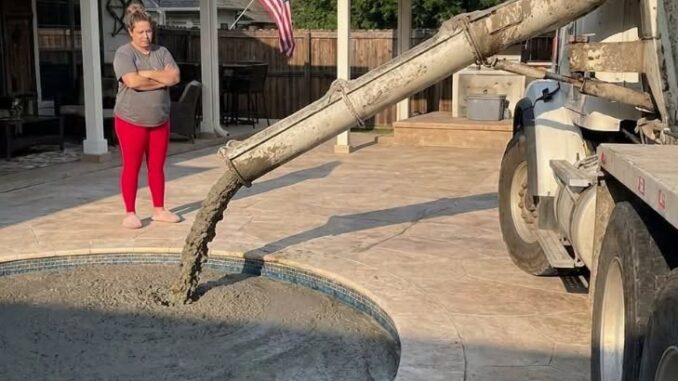
A family swimming pool can be much more than a place to cool off during the summer. It can hold years of memories, from children’s first swimming lessons to quiet evenings spent together.
For one family, a carefully maintained backyard pool represented years of effort, shared experiences, and pride in their home.
When the pool was unexpectedly damaged, the situation brought disappointment and uncertainty. The family faced difficult decisions about repairs, responsibility, and how to address the disagreement without making matters worse.
Instead of reacting impulsively, they chose to document the damage, seek appropriate guidance, and focus on finding a fair solution.
Their experience became a reminder that restoring something meaningful often requires more than repairing what is physically broken.
A Backyard Filled With Family Memories
For years, the swimming pool had been one of the family’s favorite gathering places.
During warm afternoons, the children played in the water while relatives relaxed nearby.
On weekends, the backyard became a welcoming space for family celebrations and conversations with friends.
The pool had been carefully designed and maintained.
Its decorative tiles were particularly meaningful because of the craftsmanship involved in their installation.
Every detail reflected the family’s investment in creating a comfortable outdoor environment.
Over time, the pool became closely connected to their memories.
It was where the children learned to swim, where birthdays were celebrated, and where countless ordinary summer afternoons became special.
That emotional connection made the unexpected damage especially difficult.
Discovering the Damage
When the family discovered that the pool had been damaged, their first reaction was disbelief.
The space they had maintained so carefully no longer looked the same.
Some of the decorative features required attention, and the family needed to determine the extent of the repairs.
The situation was frustrating.
Repairing a pool can involve significant expenses, especially when specialized materials or craftsmanship are needed.
Beyond the financial concerns, the family felt disappointed that a cherished part of their home had been affected.
They also had questions about how the damage occurred and who was responsible.
It would have been easy for the disagreement to become more confrontational.
Instead, they decided to approach the situation carefully.
Choosing a Calm and Practical Response
The family understood that their immediate emotions, while understandable, would not solve the problem.
They wanted the pool restored, but they also wanted the matter handled fairly.
Their first step was to assess the visible damage.
Rather than making quick decisions or entering into arguments, they focused on collecting accurate information.
They took photographs of the affected areas and recorded what they knew about the incident.
They also began organizing relevant communications and repair information.
This approach helped them separate their emotional response from the practical steps needed to move forward.
Remaining calm did not mean that the damage was unimportant.
It meant giving themselves the opportunity to make informed decisions.
Why Documentation Became Important
One of the most useful steps the family took was creating a detailed record of the damage.
Photographs helped preserve the condition of the pool before repairs began.
Written notes provided a timeline of events and recorded relevant observations.
The family also kept information about repair estimates and communications concerning responsibility for the damage.
These records became valuable when the matter required formal consideration.
Instead of relying entirely on memory, the family could refer to information collected close to the time of the incident.
Documentation also helped them communicate more clearly with the people involved in evaluating and repairing the pool.
Although record-keeping could not immediately restore the damaged area, it gave the family a practical way to manage the uncertainty.
Seeking a Fair Resolution
As the situation developed, the family recognized the importance of using appropriate channels to resolve the disagreement.
Property damage can raise questions about responsibility, repair costs, and compensation.
The answers depend on the circumstances and, where legal issues arise, the rules that apply in the relevant location.
Rather than attempting to settle everything through emotional conversations, the family relied on documentation and established procedures.
This helped keep the focus on the facts.
It also created an opportunity for the situation to be reviewed fairly.
The family’s goal was not to prolong the disagreement.
They wanted the damage addressed and their home restored.
By taking a measured approach, they reduced the likelihood of additional misunderstandings.
The Emotional Impact of Property Damage
The physical condition of the pool was only one part of the experience.
The family also had to manage the emotional disappointment of seeing something meaningful damaged.
Homes often contain spaces that hold personal significance.
A garden may remind someone of a loved one.
A dining table may represent years of family celebrations.
A backyard pool may be connected to childhood memories and time spent together.
When these spaces are damaged, the emotional response can be greater than the monetary value of the repairs.
For this family, the pool represented both their investment and the experiences they’d shared.
Recognizing that emotional connection helped them understand why the situation had been so upsetting.
It also reminded them that restoring their sense of comfort would take time.
The Role of Emotional Awareness
Throughout the process, the family tried to remain aware of how frustration could influence their decisions.
They acknowledged their disappointment without allowing it to determine every response.
This kind of emotional awareness can be helpful during disagreements.
It creates space to consider different options, communicate clearly, and avoid unnecessary escalation.
The family did not pretend the situation was easy.
They simply chose to address it in a way that aligned with their priorities.
They wanted fairness, accountability, and a constructive outcome.
Their response demonstrated that patience can be an active decision rather than a passive one.
An Apology Opens the Door to Progress
As the matter moved toward resolution, the person responsible for the damage offered an apology.
The family appreciated the acknowledgment.
An apology could not reverse what had happened, and it did not eliminate the practical need for repairs.
However, it represented an important step toward accountability.
The family had wanted their concerns to be taken seriously.
Hearing an acknowledgment helped make further communication possible.
They accepted the apology while continuing to focus on restoring the pool.
This distinction mattered.
Forgiveness did not require them to ignore the damage or abandon reasonable expectations.
It allowed them to move forward without allowing the disagreement to dominate their lives.
Beginning the Restoration Process
Once the necessary arrangements were made, attention turned toward repairing the pool.
Restoration required planning and care.
The family wanted the repaired areas to match the original design as closely as possible.
The decorative tiles were especially important.
Their appearance and craftsmanship had contributed to the pool’s character for years.
The family understood that rushing the work could lead to disappointing results.
They wanted a lasting repair rather than a temporary improvement.
As the project progressed, they began to see familiar details return.
The pool slowly regained the appearance they remembered.
Each completed section represented another step toward restoring the backyard.
Preserving the Original Character
The family viewed the restoration as an opportunity to preserve the craftsmanship that made their pool special.
Repairing a meaningful feature of a home often involves more than selecting replacement materials.
It may require careful attention to color, texture, design, and durability.
In this case, the decorative tilework was an important part of the pool’s identity.
The family wanted to maintain that character rather than completely change the space.
Their approach reflected a broader principle of restoration: whenever practical, repairs should respect the features that give a place its personal significance.
The goal was not simply to make the pool functional again.
It was to bring back the familiar setting where so many family memories had been created.
Seeing the Pool Restored
When the repairs were complete, the family stood beside the water and admired the results.
The restored tiles reflected the sunlight.
The backyard looked welcoming again.
For the first time since discovering the damage, the family felt they could fully enjoy the space without thinking about the disagreement.
Soon, the children returned to swimming.
Their laughter once again filled the backyard.
Relatives gathered around the pool, and ordinary summer routines resumed.
The experience had been stressful, but it had not permanently changed what the space meant to them.
In some ways, the restoration made them appreciate it even more.
What the Experience Taught Them About Conflict
Looking back, the family recognized that their response had influenced the outcome.
They had experienced frustration, uncertainty, and disappointment.
But they had chosen not to respond through retaliation or unnecessary confrontation.
Instead, they documented the damage, sought appropriate guidance, and worked toward a fair resolution.
They also remained open to an apology when the responsible person acknowledged what had happened.
The experience reinforced several important lessons.
A calm response can create room for clearer thinking.
Reliable documentation can make difficult conversations more productive.
And accountability can help people move forward after a disagreement.
None of these steps guarantees an easy resolution.
But together, they can support a more constructive process.
Why Community Support Matters
The family also came to appreciate the importance of having supportive people around them.
Friends, neighbors, and community resources can provide valuable assistance during stressful experiences.
Sometimes that support is practical, such as helping someone identify reliable repair professionals.
Other times, it is emotional, such as listening when someone needs to discuss a difficult situation.
Community support can help people feel less isolated.
It may also encourage cooperation when disagreements affect relationships between neighbors or other members of a community.
For this family, the experience highlighted the value of approaching challenges with fairness and respect.
They wanted their home restored without creating unnecessary divisions.
Practical Lessons for Handling Property Damage
Although every situation is different, several general principles can help people respond thoughtfully when their property is damaged.
1. Assess the Situation Before Acting
Take time to understand what has happened.
If there are immediate safety concerns, address those first.
Avoid beginning repairs that could be unsafe or that might interfere with necessary inspections.
2. Keep Accurate Records
Photographs, written notes, dates, and relevant communications can help establish the condition of damaged property.
Keep copies of repair estimates and receipts.
Clear records may be useful for insurance claims, legal discussions, or future maintenance.
3. Understand the Available Options
Depending on the circumstances, resolving a dispute may involve direct communication, insurance providers, mediation, or legal advice.
Rules vary by location, so professional guidance may be helpful when responsibility or compensation is disputed.
4. Communicate Respectfully
Clear communication can reduce misunderstandings.
Focus on specific facts and practical solutions rather than personal accusations.
When direct discussions become difficult, a neutral third party may help.
5. Plan Repairs Carefully
Consider the quality of materials, the experience of repair professionals, and the long-term condition of the property.
For distinctive features such as handcrafted tiles, specialized restoration may be appropriate.
6. Allow Time for Emotional Recovery
Even after repairs are completed, feelings of frustration may remain.
Recognizing those emotions and seeking support when needed can make it easier to move forward.
The Value of Patience During Restoration
One of the family’s most important lessons was that meaningful restoration rarely happens immediately.
Some problems require careful assessment.
Others involve scheduling repairs, reviewing documents, or resolving disagreements.
Trying to rush the process may create additional complications.
Patience allows people to make decisions based on reliable information rather than immediate frustration.
The family learned that progress could be gradual and still be worthwhile.
Each step brought them closer to enjoying their backyard again.
Over time, the focus shifted from the original incident to the future.
They began planning family gatherings and looking forward to another summer.
Rebuilding More Than a Swimming Pool
The restored pool became a reminder of the family’s ability to navigate a difficult experience.
The damage had disrupted a space they loved.
The disagreement had tested their patience.
But the process also encouraged them to communicate thoughtfully and focus on practical solutions.
They discovered that restoring peace of mind could be just as important as completing physical repairs.
The family didn’t forget what happened.
They simply chose not to let the experience define their future.
The pool remained a place for connection, relaxation, and shared memories.
Its restored appearance represented a new beginning.
Final Thoughts
The family’s experience shows how an unexpected setback can become an opportunity to practice patience, responsibility, and resilience.
When their cherished swimming pool was damaged, they faced understandable frustration.
Rather than escalating the disagreement, they documented the situation, followed appropriate resolution procedures, and focused on restoring what mattered to them.
An apology helped create space for accountability, while careful repairs brought the pool back to its familiar appearance.
Eventually, the backyard once again became a place filled with family gatherings and children’s laughter.
The experience offered a lasting reminder that physical damage can often be repaired, but the way people respond to conflict can have an equally important impact.
True resilience is not about avoiding difficult situations. It is about responding thoughtfully, protecting what matters, and finding a constructive path forward.
Leave a Reply