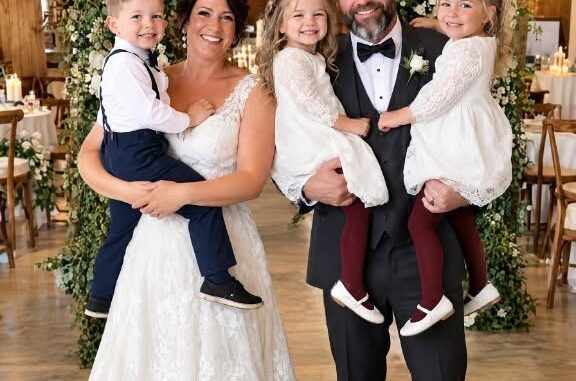
An original fictional story about trust, financial independence, family relationships, and the importance of making informed decisions before marriage.
I had spent months planning what I thought would be one of the happiest days of my life.
The flowers were arranged, the invitations had been sent, and the wedding venue was ready. My three children were excited about the celebration, especially my son Harry, who had been looking forward to wearing his new suit.
I was supposed to marry Oliver, a man I believed would become a loving partner and a dependable presence in our family.
But the evening before our wedding, I overheard a conversation that made me question everything.
Oliver had accidentally left our video call connected.
At first, I assumed he was speaking casually with his mother, Sarah.
Then I heard them discussing my house, my savings, and the financial documents Oliver wanted me to sign after the wedding.
What troubled me most was hearing him suggest that once certain financial arrangements were in place, he might not need to remain in the marriage.
I sat motionless, listening.
For months, I had believed we were planning a future together.
Now I was wondering whether Oliver saw our marriage as a relationship or a financial opportunity.
By the following morning, I had made a decision.
The wedding would not go ahead as planned.
A New Beginning for My Family
My name is Sharon, and I am a mother of three.
My oldest child, Harry, has always been thoughtful and protective of his younger sisters, who are twins.
After my previous relationship ended, I spent several years rebuilding our lives.
I worked hard to create a stable home, maintain our routines, and make sure the children felt secure.
It wasn’t always easy.
There were school expenses, household responsibilities, and countless decisions I had to make on my own.
But over time, we found our rhythm.
Our house became a place where the children could relax, invite friends over, and feel comfortable.
I was proud of what we had built.
When Oliver entered our lives, I was hopeful about the possibility of sharing that happiness with someone new.
Meeting Oliver
Oliver was charming, attentive, and easy to talk to.
He remembered small details about my day and often asked about the children.
When Harry had a school project, Oliver offered to help.
When the twins wanted to visit the park, he volunteered to take us.
He seemed genuinely interested in becoming part of our family.
I appreciated that he didn’t initially rush our relationship.
He understood that my children came first.
Over time, they became comfortable around him.
Harry began asking whether Oliver would join us for family outings.
The girls enjoyed showing him their drawings and schoolwork.
Watching them together made me believe that we might be ready for a new chapter.
When Oliver proposed, I said yes.
Planning Our Wedding
We chose a beautiful venue with a garden ceremony area and a spacious reception hall.
I wanted the celebration to feel warm and welcoming.
There would be flowers, music, and a dinner where our relatives could spend time together.
The children helped with the preparations.
Harry chose his suit.
The twins were excited about their dresses.
Oliver’s mother, Sarah, also became involved.
She had strong opinions about nearly everything, from the seating arrangements to the decorations.
At first, I interpreted her enthusiasm as excitement about the wedding.
But as the date approached, her involvement became increasingly difficult to manage.
She often suggested that Oliver and I should make decisions based on what was best for the entire extended family.
I believed we could work through those differences.
After all, families sometimes need time to adjust to new relationships.
Conversations About Money
Several weeks before the wedding, Oliver began bringing up our finances.
He suggested combining our savings accounts after we married.
He also mentioned adding his name to certain property documents.
I wasn’t immediately comfortable with the idea.
My house had been purchased before our relationship.
It represented years of work and was the home where my children felt secure.
I told Oliver that I preferred to keep some assets separate.
He said he understood.
But the subject kept returning.
Sometimes he described combining finances as a sign of trust.
Other times, he suggested that keeping accounts separate might make him feel excluded.
I tried to explain that financial independence didn’t mean I loved him less.
I simply believed that marriage should involve thoughtful decisions, especially when children and existing property were involved.
Eventually, I told him I wanted to consult an attorney before signing anything.
He appeared disappointed.
But he agreed to wait.
At least, that was what I believed.
The Call That Stayed Connected
The evening before our wedding, Oliver and I spoke over video.
We discussed the next day’s schedule, confirmed the arrival time for the photographer, and talked about how excited the children were.
He told me he loved me.
I said it back.
Then he told me he needed to speak with his mother.
I assumed the call had ended.
But the connection remained active.
I could hear voices in the background.
At first, I wasn’t paying attention.
Then Sarah mentioned my house.
I looked at the screen.
Oliver was speaking with her about the financial arrangements he wanted us to make after the wedding.
He referred to my savings and the possibility of sharing ownership of certain assets.
Sarah asked whether I had agreed to sign the documents.
Oliver said I was hesitant but that he expected things would become easier once we were married.
Then the conversation took a turn I hadn’t anticipated.
What I Heard
Sarah asked Oliver what he planned to do if the marriage didn’t work out.
His response unsettled me.
He suggested that once our finances were combined and the property arrangements were settled, he would have more options.
He also spoke about my children in a way that made me uncomfortable.
Rather than discussing their feelings or well-being, he described his role in their lives as something that could help him gain my trust.
I felt sick with disappointment.
I had introduced Oliver to my children because I believed he cared about them.
I had imagined us building a family together.
Now I was hearing a conversation that seemed to place financial considerations ahead of our relationship.
I didn’t interrupt.
I didn’t confront him immediately.
I ended the call and sat quietly for a long time.
I needed to understand what I had heard and decide how to respond.
A Sleepless Night
That night, I walked through the house while the children slept.
Harry’s suit was hanging on his bedroom door.
The twins’ dresses were laid out neatly.
On the dining table were the wedding favors we had prepared together.
Everything reminded me of the celebration we had planned.
I felt heartbroken.
Part of me wanted to believe there had been a misunderstanding.
Perhaps Oliver had spoken carelessly.
Perhaps the conversation sounded worse than he intended.
But I couldn’t ignore the repeated pressure about my finances or the way he had discussed my children.
I realized that even if there were explanations, I no longer felt comfortable proceeding with the wedding.
Marriage required trust.
And I had serious questions that needed answers before making a legal commitment.
Asking for Professional Advice
The next morning, I contacted my attorney.
I explained what I had overheard and described the documents Oliver had previously asked me to consider.
My attorney reminded me that I should never sign financial or property agreements without understanding their consequences.
We reviewed the arrangements I had already made and discussed practical steps to protect my existing assets.
I also confirmed that no property transfers or changes to ownership had been completed.
That gave me some peace of mind.
I understood that marriage and property laws vary depending on where people live.
I also knew that a conversation alone couldn’t establish every detail of Oliver’s intentions.
But I didn’t need to prove what he had been planning in order to decide that I wasn’t ready to marry him.
The decision belonged to me.
Changing the Wedding Plans
I contacted the wedding planner and explained that the ceremony would not proceed.
I asked her to help me handle the arrangements discreetly.
Much of the reception had already been paid for.
The food was prepared, the decorations were installed, and several guests had traveled to attend.
After discussing the available options, I decided to keep the gathering as a family celebration.
I wanted the children to have an enjoyable day despite the change.
The planner helped update the schedule.
We also changed the decorative sign behind the ceremony area.
Instead of displaying our names and a wedding message, it would read:
Today We Celebrate Family, Honesty, and New Beginnings.
It felt appropriate.
I wasn’t ready to explain everything publicly.
But I wanted the day to reflect the values that mattered most to me.
Arriving at the Venue
When I arrived, the venue looked beautiful.
The flowers were arranged along the aisle.
Soft music played in the background.
Guests were beginning to take their seats.
Oliver stood near the front, speaking with his best man.
He looked toward the decorative sign.
Then he looked at me.
I could tell he was confused.
He approached and asked whether something had changed.
I told him we needed to talk before the ceremony.
He seemed concerned.
I suggested that we step into a private room.
I didn’t want to turn a deeply personal decision into a public confrontation.
The wedding planner quietly informed the officiant that the ceremony was on hold.
Confronting the Conversation
Once we were alone, I told Oliver about the video call.
I explained that the connection had remained active and that I had overheard his conversation with Sarah.
He looked surprised.
Then he said I had misunderstood.
I asked him to explain.
He told me that he and his mother had been discussing possible financial arrangements for our future.
I acknowledged that couples often discuss finances before marriage.
That wasn’t the problem.
The problem was the way he had spoken about my property, my savings, and the possibility of leaving after those arrangements were completed.
I also told him how hurt I felt by his comments about the children.
Oliver tried to reassure me.
He said he loved us.
But I couldn’t reconcile those assurances with what I had heard.
Why I Couldn’t Continue
I explained that I no longer felt confident about marrying him.
He asked whether we could postpone the ceremony and discuss everything later.
I considered the suggestion.
But I knew that the trust between us had changed.
I wasn’t prepared to enter a marriage while feeling uncertain about his intentions.
I told him I had decided to cancel the wedding.
Oliver became upset.
He said the decision would embarrass him in front of our families.
I understood that the situation was difficult.
It was difficult for me too.
But I couldn’t make a lifelong commitment simply to avoid disappointing people.
I had to consider what was right for my children and myself.
Speaking With Sarah
Sarah approached us shortly afterward.
She wanted to know why the ceremony had been canceled.
I explained that I had overheard the financial discussion.
She said the matter should have remained private.
I agreed that financial conversations between family members could be personal.
But I also believed that decisions affecting my property and children required my informed participation.
I told her that I had never agreed to the arrangements she and Oliver were discussing.
She suggested that I was making the situation more serious than necessary.
I responded calmly.
“Marriage is a serious commitment. That’s why I need to feel certain before proceeding.”
I didn’t want to argue.
I simply wanted my decision to be respected.
Telling the Guests
With the wedding planner’s help, we informed our guests that the ceremony would not take place.
We didn’t share the details of the disagreement.
Instead, we explained that the couple had decided not to proceed with the marriage.
Some guests were surprised.
Others were concerned.
A few close relatives asked whether I needed support.
I thanked them.
The reception space was already prepared, so I invited anyone who wished to stay for a meal.
It was an unusual gathering.
But gradually, the atmosphere became more relaxed.
People talked, shared food, and spent time with one another.
The children were able to enjoy parts of the day without being placed at the center of the adult disagreement.
Harry’s Question
Later, Harry approached me.
He looked worried.
“Mom, are we still going to be a family?”
His question brought tears to my eyes.
I knelt beside him.
“Of course we are,” I said.
He looked toward the reception hall.
“But Oliver isn’t going to live with us?”
“No, sweetheart. Oliver and I have decided not to get married.”
Harry was quiet for a moment.
Then he asked whether he had done something wrong.
I hugged him.
“Absolutely not. This is an adult decision. You and your sisters haven’t done anything wrong.”
He held onto me.
I reminded him that our family would always be important and that he could ask questions whenever he needed to.
I knew the children would need time to adjust.
I also knew they deserved clear, age-appropriate explanations rather than confusion or blame.
A Different Kind of Celebration
The reception continued as a family gathering.
The children enjoyed the music.
Relatives shared stories.
My brother helped keep Harry occupied while I spoke with a few close friends.
At one point, the twins asked whether they could still have cake.
I smiled.
“Of course.”
They were delighted.
We cut the cake and served it to the guests.
It wasn’t the day I had imagined.
But it wasn’t entirely unhappy either.
There were still people who loved us.
There was still laughter.
And there was still a future ahead of us.
I began to realize that a canceled wedding did not mean I had failed.
It meant I had recognized that something important needed to change.
The Messages That Followed
Later that afternoon, Oliver sent several messages.
He apologized for the conversation.
He said his mother had influenced some of his thinking.
He also insisted that he had never intended to hurt me.
In another message, he acknowledged that he had hoped we would combine our finances after the wedding.
He maintained that his feelings for me were genuine.
I read the messages carefully.
I didn’t respond immediately.
I needed time away from the situation.
Eventually, I asked my attorney to handle any remaining contractual or financial matters related to the canceled wedding.
I also made it clear to Oliver that I did not intend to resume the relationship.
I didn’t want to continue a cycle of arguments.
I wanted to focus on rebuilding a peaceful routine for my children.
Sarah’s Final Message
Several weeks later, Sarah contacted me.
She said I had misunderstood the conversation and that Oliver was devastated.
She believed I had made a decision too quickly.
I understood that she was concerned about her son.
But I also knew that I had spent a great deal of time thinking about what happened.
The decision had not been easy.
I had considered the relationship, the financial pressure, the comments about my children, and the trust I felt had been damaged.
I replied briefly that I wished them well but would not reconsider the wedding.
Then I ended the conversation.
I didn’t need everyone to agree with my choice.
I needed to be able to live with it.
Returning to Our Routine
The first few weeks were emotional.
The children asked questions.
Some evenings felt unusually quiet.
I had to adjust to the future looking different from what I had planned.
But gradually, life became familiar again.
Harry returned to his school activities.
The twins spent their afternoons drawing, reading, and playing together.
We resumed our weekend traditions.
Sometimes we baked cookies.
Sometimes we watched movies.
Sometimes we simply sat around the kitchen table talking about our day.
I made sure the children knew that changes in adult relationships were not their responsibility.
I also reminded myself that stability wasn’t about keeping every plan unchanged.
Sometimes it meant making a difficult decision to protect the life we already had.
Learning to Trust Myself Again
For a while, I questioned my judgment.
How had I failed to recognize the warning signs?
Why had I dismissed my discomfort when Oliver repeatedly raised the subject of my finances?
Eventually, I realized that trusting someone wasn’t necessarily a mistake.
People enter relationships hoping for honesty and mutual care.
What mattered was how I responded when new information challenged my understanding.
I had listened to my concerns.
I had sought professional advice.
And I had made a decision before entering an arrangement I wasn’t comfortable with.
That helped me regain confidence.
I also became more deliberate about discussing financial expectations early in relationships.
I wanted any future partner to understand that my independence and responsibilities as a parent were not negotiable.
A Conversation With Harry
Several months later, Harry came into the kitchen while I was preparing dinner.
“Mom, can I ask you something?”
“Of course.”
He sat at the table.
“How did you know canceling the wedding was the right thing to do?”
I thought about his question.
I didn’t want to tell him that relationships should end whenever people disagree.
Healthy relationships involve difficult conversations, compromise, and occasional misunderstandings.
But they also require trust.
“I knew I wasn’t ready to make that promise anymore,” I told him.
He looked thoughtful.
“Because Oliver wasn’t honest?”
“Because I had serious questions about whether we wanted the same things, and I didn’t feel those questions had been answered.”
Harry nodded.
Then he asked whether I was sad.
“Sometimes,” I admitted. “But I also feel peaceful about my decision.”
He stood up and hugged me.
I held him for a long moment.
What the Experience Taught Me
Before that wedding day, I believed that changing my plans would mean disappointing everyone.
I worried about the guests, the money already spent, and the expectations our families had built.
But I eventually understood that a wedding is one day.
Marriage is a much longer commitment.
It involves legal responsibilities, financial decisions, emotional trust, and the lives of everyone in the household.
Those things deserve careful consideration.
I also learned that financial independence can coexist with love.
Couples can share responsibilities while maintaining clear agreements about property and savings.
What matters is that both people understand and freely accept those arrangements.
No one should feel pressured to sign documents or surrender control over important assets as proof of affection.
Final Thoughts
I never expected an accidentally connected video call to change my future.
I had imagined walking down the aisle, exchanging vows, and beginning a new chapter with Oliver.
Instead, I found myself making a decision I hadn’t anticipated.
It was painful.
It was disappointing.
But it also reminded me that I had a responsibility to myself and my children.
I didn’t need to proceed with a marriage simply because the invitations had been sent or the venue was ready.
I could change my mind when important questions remained unresolved.
And I could move forward without turning the experience into a public battle.
Today, our home is peaceful.
The children are growing, learning, and enjoying their lives.
I am still hopeful about the future.
But I am more thoughtful about the promises I make and the trust I place in others.
A wedding celebrates a commitment. Trust is what makes that commitment meaningful.
Sometimes the most important decision isn’t whether to say yes.
It’s recognizing when you need to say no.
Leave a Reply