
Modern vehicles come equipped with numerous features designed to improve convenience and make everyday driving more enjoyable. From advanced entertainment systems to parking assistance and keyless ignition, automotive technology continues to evolve.
Keyless entry is particularly popular because it allows drivers to unlock their vehicles and start their engines without removing the key fob from a pocket or handbag.
However, wireless technology also introduces certain security considerations that vehicle owners should understand.
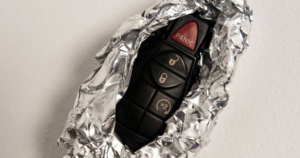
One commonly discussed precaution involves storing electronic car keys in aluminum foil or a specially designed signal-blocking pouch.
Although wrapping a car key in aluminum foil may seem unusual, the suggestion is based on an established scientific principle.
Understanding how these protective materials work can help drivers make more informed decisions about vehicle security.
Understanding How Keyless Entry Works
Traditional car keys generally require drivers to insert a physical key into a door lock or ignition.
Many modern vehicles operate differently.
Electronic key fobs communicate wirelessly with the vehicle, allowing authorized drivers to unlock doors and start the engine when the key is nearby.
This technology offers considerable convenience, particularly when carrying groceries, luggage, or other belongings.
However, because these systems depend on wireless communication, manufacturers must also consider potential security vulnerabilities.
Different vehicle models use different authentication technologies, meaning their security features and levels of protection can vary considerably.
Understanding the system installed in your particular vehicle is an important first step toward protecting it.
What Is Relay Theft?
Relay theft is a vehicle security concern associated with certain keyless entry systems.
It involves the unauthorized manipulation of wireless communication between a vehicle and its electronic key.
Unlike traditional vehicle theft, this type of security breach does not necessarily require physical possession of the original key.
Automotive manufacturers have introduced various improvements to address these concerns, including enhanced authentication systems and motion-sensitive key fobs.
However, not every vehicle includes the same protective technology.
For this reason, owners of keyless vehicles may benefit from adopting additional security precautions and reviewing their manufacturer’s recommendations.
Why Aluminum Foil May Help Protect Electronic Car Keys
Aluminum foil is commonly used in kitchens for food preparation and storage.
However, its conductive properties also make it relevant to certain electronic shielding applications.
The scientific concept behind this suggestion is related to a Faraday cage.
A Faraday cage is an enclosure made from conductive materials that can reduce or block certain electromagnetic signals.
When an electronic device is completely surrounded by suitable shielding material, its wireless communication may be reduced.
In the case of a car key fob, this could provide an additional layer of protection against certain unauthorized wireless interactions.
Nevertheless, aluminum foil should not be considered a guaranteed vehicle security solution.
Small openings, damaged material, and incomplete coverage can affect its performance.
Its effectiveness also depends on the wireless technology used by the vehicle.
What Is a Faraday Pouch?
A Faraday pouch is a specially designed storage accessory intended to reduce or block wireless signals.
These pouches typically contain conductive shielding materials incorporated into their fabric or interior lining.
They are available in various sizes, with many designed specifically for electronic car keys.
Some resemble small wallets, while others look like compact protective cases.
When functioning correctly, a Faraday pouch can help prevent certain wireless signals from reaching or leaving an enclosed key fob.
For drivers seeking a reusable and convenient storage option, a purpose-designed pouch may be more practical than ordinary aluminum foil.
However, product quality varies, and owners should check that their chosen pouch works with their particular vehicle.
How to Check Whether a Signal-Blocking Pouch Works
A protective pouch is only useful if it provides adequate shielding for the electronic device stored inside.
Vehicle owners can perform a straightforward check using their own car.
-
Place the electronic key inside the protective pouch.
-
Ensure that the pouch is completely closed.
-
Approach your vehicle while keeping the key inside.
-
Check whether the passive keyless entry system recognizes the key.
-
If the vehicle unlocks normally, the pouch may not be providing sufficient protection.
Make sure any spare key is not nearby during the test, as it could affect the result.
Always consult the vehicle manufacturer’s instructions when checking security accessories.
It is also advisable to repeat the test periodically, particularly if the pouch shows signs of wear.
A successful test indicates that the pouch blocks the signals needed for that particular keyless entry function, but it does not guarantee protection against every type of vehicle theft.
Additional Ways to Improve Vehicle Security
Although signal-blocking accessories can be helpful, combining several security precautions is generally a more practical approach.
1. Store Your Keys in a Secure Location
Avoid leaving electronic car keys immediately beside exterior doors or windows.
Instead, choose a designated storage location farther inside your home.
While distance alone does not guarantee protection, thoughtful key storage can form part of a broader security routine.
Remember to store spare electronic keys securely as well.
2. Consider a Reliable Signal-Blocking Pouch
A properly tested Faraday pouch can provide a convenient place to store your keys when they are not being used.
Choose a product with suitable shielding materials and follow its care instructions.
Regularly checking its effectiveness can help identify problems caused by everyday wear.
3. Learn About Your Key Fob’s Sleep Mode
Some modern electronic key fobs include motion-sensitive technology.
These devices may reduce certain wireless activity when they remain stationary for a specified period.
The availability of this feature depends on the vehicle’s manufacturer, model, and production year.
Your owner’s manual or authorized dealership can provide information about whether this technology is available for your vehicle.
4. Review Your Vehicle’s Built-In Security Features
Many vehicles include additional security systems beyond their standard keyless entry functions.
Depending on the model, these may include:
-
Vehicle alarm systems.
-
Electronic immobilizers.
-
Motion-sensitive key fobs.
-
Smartphone security notifications.
-
Vehicle tracking services.
-
Additional authentication features.
Familiarizing yourself with these options can help you make better use of the security technology already available in your vehicle.
5. Choose Secure Parking Locations
Whenever possible, park your vehicle inside a locked garage or in a well-lit, secure area.
A steering wheel lock may also provide an additional visible deterrent.
Remember to confirm that your vehicle is properly locked before walking away.
Avoid leaving valuable personal belongings visible inside the car.
6. Check for Manufacturer Software Updates
Modern vehicles increasingly depend on software to manage various electronic functions.
Manufacturers may release updates that improve system performance, address technical issues, or strengthen security features.
Contact your dealership or visit the manufacturer’s official website to learn whether any recommended updates are available for your particular vehicle.
Keeping vehicle software up to date can be a worthwhile part of regular maintenance.
Are All Keyless Vehicles Equally Vulnerable?
Not all vehicles equipped with keyless entry use identical security technology.
Some manufacturers have introduced advanced authentication methods designed to improve protection against unauthorized access.
Others use motion-sensitive key fobs that reduce wireless activity when the device is not being used.
Newer digital technologies may also offer additional security improvements.
However, the presence of keyless entry does not automatically indicate that a vehicle is vulnerable or completely protected.
Security performance depends on the specific system, its design, and the protective features available.
If you are uncertain about your vehicle’s security capabilities, an authorized dealership can help explain the technology installed in your model.
Aluminum Foil vs. Faraday Pouches
Both aluminum foil and Faraday pouches rely on the general principle of electromagnetic shielding.
However, they differ in terms of convenience, durability, and everyday usability.
| Feature | Aluminum Foil | Faraday Pouch |
|---|---|---|
| Cost | Generally inexpensive | Depends on the product |
| Availability | Common household material | Available from automotive accessory retailers |
| Convenience | Requires careful wrapping | Designed for regular use |
| Durability | Can tear or develop openings | Generally reusable |
| Shielding effectiveness | Depends on complete coverage | Depends on construction and material quality |
| Maintenance | May require frequent replacement | Requires periodic testing |
Aluminum foil may offer temporary shielding under suitable conditions, but it can be inconvenient to use consistently.
A well-designed Faraday pouch is generally a more practical option for everyday key storage.
Neither method should be assumed to provide complete protection without appropriate testing.
Common Misunderstandings About Keyless Vehicle Security
As automotive technology becomes more advanced, several misunderstandings about electronic vehicle security have become common.
Aluminum Foil Guarantees Complete Protection
Although aluminum has useful shielding properties, ordinary household foil is not a certified vehicle security system.
Its performance depends on several factors, including coverage and material condition.
Every Keyless Vehicle Has the Same Security System
Manufacturers use different technologies and protective features.
A security concern associated with one vehicle model may not apply in the same way to another.
A Signal-Blocking Pouch Prevents Every Type of Vehicle Theft
A Faraday pouch addresses certain risks involving wireless communication.
It does not replace other important security measures, such as locking your vehicle, using secure parking facilities, and maintaining its built-in security systems.
Understanding these distinctions can help vehicle owners develop realistic expectations about protective accessories.
What to Do if You Notice Unusual Vehicle Activity
If you discover unexpected damage, unfamiliar security notifications, or signs of unauthorized access, take appropriate precautions.
Review any available information from your vehicle’s connected security application and contact the manufacturer or dealership if you have concerns about its electronic systems.
If you suspect someone has attempted to enter your vehicle without permission, report the incident to the appropriate authorities.
If your vehicle is missing, contact the police and your insurance provider promptly.
Avoid confronting anyone you suspect may be involved.
Keeping relevant documentation and vehicle information readily available may also assist with reporting and insurance procedures.
Developing a Consistent Vehicle Security Routine
Protecting a vehicle does not necessarily require complicated or expensive arrangements.
Several simple habits can contribute to better everyday security.
Storing electronic keys in a designated location, checking that doors are locked, reviewing available security settings, and maintaining protective accessories are all practical considerations.
Drivers may also benefit from periodically reviewing their vehicle’s owner manual to stay familiar with its features.
As automotive technology continues to develop, manufacturers may introduce additional security improvements and recommendations.
Staying informed can help owners enjoy the convenience of modern vehicles while taking reasonable precautions.
Final Thoughts: Is Wrapping Your Car Keys in Aluminum Foil Worth Considering?
Keyless entry systems offer considerable convenience, but understanding their security features remains important.
Aluminum foil may reduce certain wireless signals because of its conductive properties. However, its effectiveness can vary, and it should not be relied upon as a complete security solution.
For regular use, a reputable and properly tested Faraday pouch may offer a more convenient alternative.
Combining secure key storage with manufacturer-recommended security features, appropriate parking choices, and regular vehicle maintenance can provide a more comprehensive approach.
Ultimately, vehicle security is about developing sensible habits and understanding the technology you use every day.
A few thoughtful precautions can help improve vehicle security while allowing you to continue enjoying the convenience of modern automotive technology.
Leave a Reply