Lorraine had recently purchased a pearl-white Buick with tan leather seats. The vehicle had cost $64,000 and was the first brand-new car she had ever owned.
At sixty-three, she took considerable pride in keeping it in excellent condition. Her stepdaughter, Marnie, understood how much the purchase meant to her and was genuinely happy for her.
However, an unexpected family emergency would soon encourage everyone to reconsider what mattered most.
An Ordinary Visit to the Family Farm
It was a Friday in October when Marnie arranged for her children, thirteen-year-old Tess and nine-year-old Owen, to spend the day at their grandfather’s farm.
The children had a day off from school, while Marnie had several appointments scheduled at the dental office where she worked.
Both children enjoyed visiting the farm. Tess liked helping her grandfather with everyday tasks, while Owen enjoyed spending time with his favorite barn cat.
That morning, their grandfather left to attend a livestock sale.
Owen had originally planned to accompany him but mentioned that he wasn’t feeling well. His grandfather asked Lorraine to look after him before leaving.
At first, nobody realized that Owen’s condition would require immediate medical attention.
An Unexpected Telephone Call
Shortly after noon, Marnie received a telephone call from Tess.
Her daughter explained that Owen had been feeling increasingly unwell throughout the morning. He had developed a fever and was experiencing significant abdominal discomfort.
Concerned by the symptoms, Marnie asked Tess to bring the phone to Lorraine.
She explained that Owen might need urgent medical evaluation and requested that Lorraine take him to the hospital.
However, Lorraine believed that he was experiencing a common seasonal illness and suggested waiting until his grandfather returned.
She also expressed concerns about transporting an unwell child in her recently purchased vehicle.
Marnie offered to cover any necessary cleaning expenses, emphasizing that Owen’s well-being was her immediate priority.
When they could not reach an agreement, Marnie asked a colleague to contact emergency services.
Emergency Services Respond
Because the farm was located in a rural area, emergency responders needed additional time to reach the property.
Marnie remained in contact with her daughter while her colleague communicated with the emergency dispatcher.
An ambulance was arranged to meet them near a highway junction.
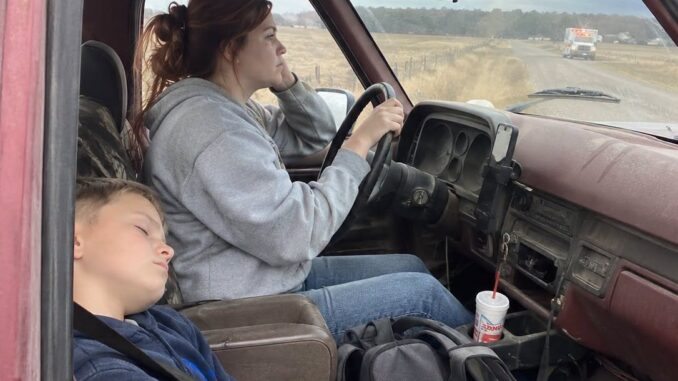
Under these unusual circumstances, Tess used her grandfather’s old farm pickup to transport her brother toward the meeting location.
Although Tess had previously operated the vehicle on private farmland, she had never driven it on a public road.
The situation was exceptionally stressful and involved considerable risks.
A local driver noticed the pickup and followed it toward the junction, where emergency personnel were waiting.
Once they arrived, the medical team immediately took responsibility for Owen’s care.
Tess was understandably overwhelmed after the experience, and an emergency responder remained beside her until she felt more comfortable.
Arriving at the Hospital
Owen was transported to a hospital in Hays, where Marnie was waiting for him.
Her colleagues had rearranged their appointments so she could leave work and be with her children.
Tess arrived shortly afterward with assistance from a local sheriff’s deputy.
The deputy documented the circumstances and asked Marnie to explain why an adult had not transported Owen.
Meanwhile, medical professionals examined the young boy and determined that he required urgent surgery for appendicitis.
Marnie completed the necessary paperwork and remained at the hospital with Tess while the medical team prepared for the procedure.
Their Grandfather Learns What Happened
When Marnie’s father returned to the farm, he noticed that his old pickup was missing and that the mailbox had been damaged.
He contacted his daughter to understand what had happened.
Marnie explained Owen’s condition, her conversation with Lorraine, and the circumstances surrounding the children’s journey to meet the ambulance.
After hearing the details, he immediately arranged to travel to the hospital with his wife.
When they arrived, his first priority was comforting Tess.
He embraced his granddaughter and reassured her that the family was there to support her.
Together, they waited for an update from Owen’s medical team.
Encouraging News From the Surgeon
Later that afternoon, the surgeon informed the family that Owen’s procedure had been successful.
His appendix had ruptured, and he would need several days of hospital care and medication while recovering.
The doctor emphasized that receiving timely medical treatment had been important.
Everyone was relieved to learn that Owen was recovering.
However, the experience also prompted his grandfather to have a serious conversation with Lorraine about the decisions made earlier that day.
A Conversation About Family Priorities
Marnie’s father reminded Lorraine how happy he had been to help her purchase her first new vehicle.
He understood that she valued the car, particularly after spending many years relying on older possessions.
Nevertheless, he explained that protecting a vehicle’s condition should never take priority over a child’s medical needs.
Lorraine acknowledged that she had initially misunderstood the seriousness of Owen’s symptoms.
She also admitted that her desire to keep the vehicle in excellent condition had influenced her judgment.
Recognizing the importance of what had happened, her husband asked her to reconsider her priorities.
He temporarily took possession of the vehicle’s keys while they discussed how to move forward.
Tess, meanwhile, apologized to her grandfather for accidentally damaging his mailbox.
He reassured her that replacing a mailbox was a simple matter and that her well-being was far more important.
Owen Begins His Recovery
Owen remained in the hospital for five days.
During the first part of his recovery, he needed close medical supervision. As his condition improved, he gradually regained his appetite and energy.
Tess spent much of her time beside him, offering companionship and reassurance.
The hospital staff also provided encouragement and support to both children.
During their stay, a hospital social worker met with Marnie to discuss the family’s childcare arrangements.
Marnie explained that she intended to establish clearer boundaries regarding future visits to the farm.
She decided that her children would only stay there when their grandfather was present.
The conversation helped her establish a more dependable arrangement for their care.
Managing the Medical Expenses
Several weeks later, the medical bills began arriving.
The ambulance service cost approximately $1,870, while the hospital’s total billed charges exceeded $41,000.
Fortunately, Marnie’s health insurance covered a substantial portion of the expenses.
Her remaining responsibility amounted to $4,500, which she initially arranged to pay through a payment plan.
When her father learned about the outstanding balance, he visited the hospital’s billing department and paid it in full.
He did not immediately tell Marnie about his contribution.
She discovered what he had done when she received a payment confirmation in the mail.
His thoughtful gesture provided welcome financial relief during an already challenging period.
Reviewing the Family’s Property Arrangements
The experience also encouraged Marnie’s father to reconsider some of his long-term estate plans.
The family farm had been passed down through generations, with the original homestead remaining in the family since 1906.
Before Owen’s medical emergency, he had been considering adding Lorraine’s name to the property’s deed.
However, after consulting his attorney, he decided to establish a trust instead.
According to the arrangement described in the story, Lorraine would retain the right to live in the family home throughout her lifetime if she survived him. Financial provisions were also established to support her continued residence.
The farmland would eventually pass to Marnie and subsequently to Tess and Owen.
Before finalizing the documents, he arranged for his attorney to explain the provisions to Lorraine.
He wanted everyone involved to understand the arrangements and their future responsibilities.
Lorraine Makes a Personal Decision
In early November, Lorraine decided that she no longer wanted to keep the new Buick.
She asked her husband to return it to the dealership.
Because the original purchase could not simply be reversed, the dealership agreed to buy the vehicle back as a used car.
The transaction resulted in a financial loss of approximately $9,000.
Lorraine returned to driving her previous vehicle.
Although the decision could not change what had happened, it reflected her desire to reconsider the importance she had placed on material possessions.
An Unexpected Visit Before Thanksgiving
Shortly before Thanksgiving, Lorraine visited Marnie’s home carrying a homemade dish and an envelope.
Inside the envelope was a check for $1,870, the amount originally charged for Owen’s ambulance transportation.
Lorraine had saved the money through selling eggs and providing clothing alteration services.
Marnie explained that her father had already covered the outstanding medical expenses.
However, Lorraine asked her to keep the money for the children.
She also acknowledged that her earlier decision had been wrong and expressed regret about how she had handled the situation.
Marnie accepted the gesture and agreed to deposit the money into the children’s savings.
Although rebuilding trust would require time, the visit represented an initial effort to acknowledge responsibility.
Spending Thanksgiving Together
The family returned to the farm for Thanksgiving at their grandfather’s invitation.
Owen was particularly excited to see his favorite barn cat again.
Lorraine prepared the holiday meal and made a small pumpkin pie especially for him.
Owen thanked her and enjoyed spending time with his family.
Tess remained polite but was not yet ready to have a more personal conversation with Lorraine.
Marnie respected her daughter’s feelings and understood that rebuilding their relationship could not be rushed.
Everyone was adjusting to the experience in their own way.
A Meaningful Reminder at the Farm
After Thanksgiving dinner, their grandfather invited the children outside to show them something.
He had replaced the damaged mailbox post and secured the new one in concrete.
Before the concrete had hardened, he had written Tess’s name, the date of the incident, and a small reference to the distance she had traveled.
For him, the inscription was a personal acknowledgment of his granddaughter’s concern for her younger brother during an exceptionally difficult situation.
Tess stood quietly beside the mailbox, taking in the thoughtful gesture.
It became a reminder of the family’s experience and the importance of ensuring that children never have to carry responsibilities that belong to adults.
Moving Forward at Their Own Pace
Owen eventually returned to school and resumed many of his favorite activities.
His recovery allowed the family to gradually return to their familiar routines.
Tess, however, needed additional time to process the experience.
Although she had previously enjoyed helping her grandfather around the farm, she was not immediately comfortable returning to some of those activities.
Her family respected her decision and allowed her to move forward at her own pace.
One afternoon, Marnie noticed Tess sitting quietly inside her grandfather’s parked pickup.
After spending some time there, she returned to the house and joined the family for dinner.
It was a small moment, but it suggested that she was gradually becoming more comfortable with familiar surroundings again.
A Valuable Lesson About Responsibility and Compassion
The experience encouraged every member of the family to reconsider their priorities.
Lorraine learned that material possessions should never take precedence over another person’s well-being.
Marnie recognized the importance of dependable childcare arrangements and clear family boundaries.
Their grandfather took steps to provide greater financial stability and long-term security for his family.
Most importantly, the children received the medical care, reassurance, and support they needed.
Although relationships would take time to rebuild, the family had an opportunity to move forward with greater awareness and understanding.
Material possessions can be repaired or replaced, but the health, safety, and trust of the people we love deserve lasting care and attention.
Leave a Reply