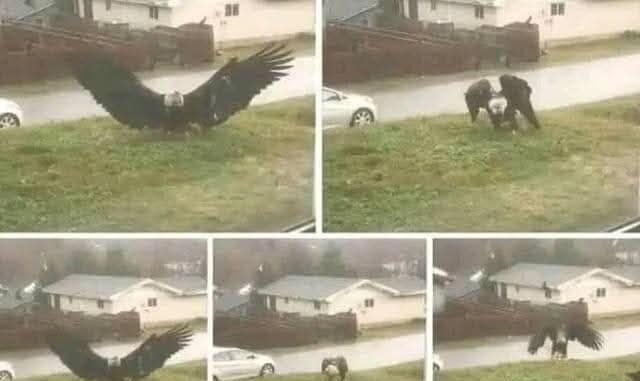
In late December, unusual reports began spreading across southern Texas near the Rio Grande Valley.
Hikers, birdwatchers, and local residents all described seeing something extraordinary in the sky — a massive bird of prey soaring high above the landscape.
At first, the sightings sounded like the kind of stories that occasionally circulate through wildlife communities. But as more people came forward with similar descriptions, even experienced researchers became curious.
Witnesses consistently described a huge raptor with an unusually large wingspan gliding over fields, wetlands, and riverbanks near Brownsville, Texas.
And what caught everyone’s attention was one specific detail:
People claimed the bird looked even larger than some of the biggest raptors normally seen in North America.
Why South Texas Is Famous for Wildlife Sightings
The lower Rio Grande Valley is one of the most biologically diverse regions in the United States.
Because of its unique location near the Mexican border, the area contains a mix of ecosystems including wetlands, coastal plains, farmland, forests, and river habitats. This combination attracts hundreds of bird species throughout the year.
Birdwatchers travel from around the country hoping to spot rare migratory birds that sometimes appear there unexpectedly.
So unusual wildlife sightings are not uncommon in the region.
Still, this particular report stood out.
Many witnesses were experienced outdoor enthusiasts familiar with local species. They insisted the bird they saw appeared far larger than common raptors found in the area.
Some compared it to a Bald Eagle.
Others mentioned the California Condor.
Yet many believed the mysterious bird looked even bigger.
The First Witness Accounts
The earliest reports spread through local birdwatching groups and online nature communities.
People described seeing:
- A giant bird soaring silently above open land
- Extremely wide wings designed for gliding flight
- Slow, powerful wingbeats
- A large shadow moving across fields below
- A silhouette much bigger than familiar birds of prey
Some witnesses spotted the bird perched in distant trees, while others saw it circling high near the Rio Grande River.
Although nobody could provide exact measurements, nearly every account emphasized the same thing:
Its size.
What made the sightings especially interesting was the consistency between different observers.
Even though sightings happened on separate days and in different locations, many descriptions closely matched one another.
Scientists Begin Investigating
Once wildlife officials learned about the repeated sightings, they decided to investigate carefully.
Instead of rushing toward dramatic conclusions, researchers approached the situation scientifically.
Their goal was simple:
Gather evidence.
Wildlife experts and ornithologists — scientists who study birds — began monitoring areas where sightings occurred most frequently.
Because the region includes large open spaces and wildlife corridors, researchers selected locations where they could observe birds without disturbing natural habitats.
The team used several tools commonly employed in wildlife studies, including:
- Motion-activated trail cameras
- Thermal imaging equipment
- Long-range binoculars
- High-powered photography lenses
- Observation stations near wetlands and fields
Importantly, researchers avoided interfering with animals during the investigation.
The focus remained entirely on observation and documentation.
Cameras Capture a Large Raptor
After weeks of monitoring, researchers finally captured footage of a large bird flying through the region.
The images were distant and not perfectly clear, but they confirmed one thing:
A sizable raptor had indeed been flying in the area.
Scientists reviewing the footage noted that the bird appeared larger than many species typically seen nearby. However, determining its exact identity proved difficult.
Rather than making assumptions, researchers labeled it simply as:
“An unidentified large raptor.”
That cautious wording reflects how science handles unusual discoveries.
Instead of sensational claims, scientists focus only on what evidence can confirm.
Possible Explanations Scientists Considered
As interest in the sightings grew, experts explored several possible explanations.
1. Misidentification
One of the most common explanations in wildlife sightings is simple visual confusion.
Distance, lighting, shadows, and perspective can dramatically change how large a bird appears in the sky.
For example, a bird flying closer than expected may seem enormous compared to birds farther away.
Because humans are not naturally good at estimating size from long distances, scientists always consider this possibility first.
2. An Exceptionally Large Individual Bird
Even within known species, individual animals can vary greatly in size.
Some birds grow larger than average due to genetics, diet, or environmental conditions.
Researchers suggested the mysterious bird could simply be an unusually large example of a species already known to science.
3. A Rare Migratory Visitor
Migration patterns are not always predictable.
Storms, weather systems, or navigational errors sometimes push birds far outside their normal ranges.
South Texas already attracts rare species from tropical regions and distant migration routes, making this another realistic explanation.
4. Environmental Illusions
Environmental conditions can also distort visual perception.
Open landscapes, reflective water surfaces, and atmospheric effects sometimes make airborne animals appear much larger than they truly are.
Scientists carefully examine these possibilities before reaching conclusions.
Why Experts Avoid Jumping to Conclusions
Whenever unusual wildlife stories spread online, rumors can quickly grow exaggerated.
Researchers work hard to prevent speculation from replacing evidence.
In this case, scientists emphasized that the available footage did not prove the existence of a new species or anything supernatural.
Instead, the evidence simply confirmed that a very large bird of prey had been observed.
That distinction matters.
Science depends on careful observation, repeatable findings, and verified data — especially when dealing with extraordinary claims.
By remaining cautious, researchers protect the credibility of the investigation while continuing to gather information.
Technology Is Changing Wildlife Research
The Texas bird investigation also highlighted how modern technology has transformed the study of wildlife.
Today, scientists can monitor remote habitats using tools that were unavailable just a few decades ago.
Motion-sensitive cameras allow researchers to capture elusive animals without human interference.
Thermal imaging detects movement in darkness.
High-resolution photography helps experts compare wing patterns, body shapes, and flight behavior from long distances.
These technologies have already led to important discoveries involving rare species and unexpected animal behaviors around the world.
Still, technology alone does not provide instant answers.
Images must be carefully analyzed and compared against known species before scientists can draw conclusions.
Public Curiosity Continues to Grow
As news of the giant bird spread, birdwatchers and nature enthusiasts across the country became fascinated by the mystery.
Many people hoped the sightings might reveal an exceptionally rare species visiting the area.
Others were simply excited by the possibility of witnessing something unusual in nature.
Wildlife officials encouraged public interest while also reminding people to remain respectful of natural habitats.
Researchers warned against disturbing ecosystems or attempting to chase wildlife in hopes of spotting the bird.
Responsible wildlife observation, they explained, means appreciating nature from a safe distance.
A Reminder of How Much Nature Still Surprises Us
Whether the mysterious Texas bird turns out to be a known species, a rare migratory visitor, or simply an unusually large raptor seen under unique conditions, the story has already reminded many people of something important:
Nature still holds mysteries.
Even in an age of satellites, smartphones, and constant information, the natural world continues to surprise scientists and ordinary people alike.
And sometimes, all it takes is one unexpected sighting in the sky to spark curiosity, research, and wonder all over again.
Leave a Reply