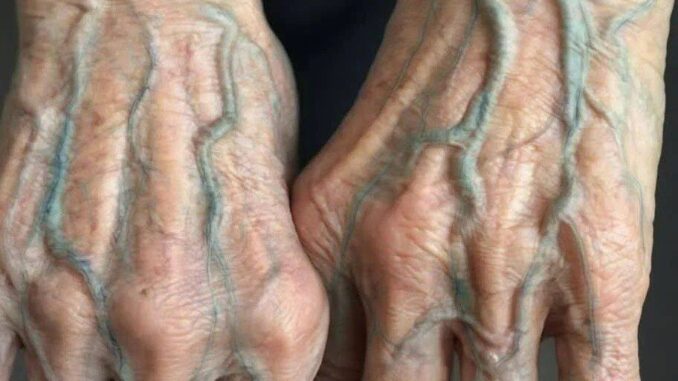
It’s very common to notice veins in your hands becoming more visible over time. For some people, this change can happen gradually, while for others it may seem more sudden and noticeable.
Understandably, this can raise questions about health. However, in most cases, visible hand veins are completely normal and not a sign of a medical problem.
This guide explains the most common reasons veins become more visible, when it might be worth paying attention, and how to interpret these changes in a calm and informed way.
Why Veins Become Visible in the First Place
Veins are blood vessels that carry blood back toward the heart. In areas like the hands, arms, and feet, they are naturally closer to the surface of the skin.
Because of this, it is normal for veins to sometimes be visible.
Their appearance can be influenced by several everyday factors, including:
- Skin thickness
- Body composition
- Age
- Temperature
- Activity level
In many cases, visible veins are simply a normal physical variation.
1. Lower Body Fat Makes Veins Easier to See
One of the most common reasons veins become more noticeable is having lower body fat.
Fat tissue lies beneath the skin and acts as a layer that partially covers blood vessels. When this layer is thinner, veins naturally become easier to see.
This is often observed in:
- Lean individuals
- Athletes
- People who have recently lost weight
In these situations, visible veins are typically a normal and healthy physical trait.
2. Aging and Natural Skin Changes
As people get older, the skin naturally becomes thinner and loses some elasticity.
This is a normal part of aging.
When this happens:
- Veins become more visible through the skin
- The hands may appear more defined
- Skin and vein contrast increases
This is one of the most common reasons older adults notice more prominent veins in their hands.
3. Temperature and Blood Flow Changes
Temperature has a direct effect on how veins appear.
When the body is warm, blood vessels expand in a process called vasodilation. This helps release heat and regulate body temperature.
You may notice more visible veins:
- After exercise
- In hot weather
- After a warm shower or bath
In cooler temperatures, veins often appear less noticeable again.
4. Exercise and Temporary Vein Visibility
Physical activity temporarily increases blood flow to muscles.
During or after exercise:
- Veins may appear more prominent
- Blood vessels expand temporarily
- The effect usually fades with rest
This is a normal response to increased circulation and physical exertion.
It is especially noticeable in the hands, arms, and forearms.
5. Genetics and Natural Differences
Genetics also play a role in how visible veins are.
Some people naturally have:
- Thinner skin
- Larger or more superficial veins
- Different patterns of tissue distribution
If visible veins run in your family, it is likely a normal inherited trait rather than a health concern.
6. When You Should Pay Attention
Although visible veins are usually harmless, there are certain changes that may deserve medical attention.
It may be worth consulting a healthcare professional if you notice:
- Sudden or unusual changes in vein appearance
- Pain or tenderness in the area
- Swelling in the hand or arm
- Skin discoloration around veins
- Veins that feel unusually hard or warm
These symptoms are not typically related to normal visible veins and may require evaluation.
However, conditions like vascular inflammation or vein disorders are more commonly seen in the legs than in the hands.
7. Hydration and Circulation
Hydration can influence circulation, which may subtly affect how veins appear.
When the body is well-hydrated:
- Blood flow remains stable
- Circulation functions efficiently
Dehydration may slightly affect vascular appearance, but it is rarely the primary cause of visible hand veins.
8. Lifestyle and Hormonal Factors
Several lifestyle factors can also influence circulation and vein visibility.
These include:
- Diet and nutrition
- Physical activity levels
- Smoking habits
- Stress levels
- Hormonal changes
Maintaining a healthy lifestyle supports overall vascular health and circulation.
9. Common Misconceptions
There are many myths online suggesting that visible veins always indicate illness.
In reality:
- Visible veins are not a disease
- They are not a reliable diagnostic sign on their own
- Most cases are completely normal
It is important to avoid drawing conclusions based only on appearance.
10. Supporting Healthy Circulation
While visible veins are usually harmless, maintaining good circulation supports overall health.
Helpful habits include:
- Staying physically active
- Drinking enough water
- Eating a balanced diet
- Avoiding long periods of inactivity
These habits support the cardiovascular system and general well-being.
11. When to Seek Medical Advice
If you are ever unsure about changes in your body, speaking with a healthcare professional is the best option.
A doctor can:
- Assess symptoms properly
- Provide reassurance
- Recommend further testing if needed
Seeking advice early can help clarify concerns and rule out uncommon conditions.
Final Thoughts
Visible veins in the hands are usually a normal part of how the human body works. They can be influenced by age, genetics, temperature, body composition, and activity level.
In most cases, they are harmless and not a sign of disease.
The most important factor is not appearance alone, but whether other symptoms are present. If anything feels unusual or uncomfortable, professional medical advice can provide clarity.
Understanding these changes in a calm, informed way helps avoid unnecessary worry and supports better awareness of overall health.
Leave a Reply