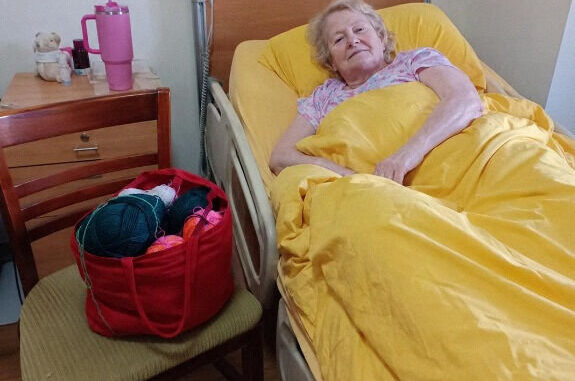
People often assume family is defined by biology.
My life taught me otherwise.
The woman I call Mom isn’t the woman who gave birth to me.
She’s the woman who chose to stay.
The woman who chose to care.
The woman who showed up every single day when she didn’t have to.
I was eight years old when my biological mother passed away after a long illness.
At that age, loss is difficult to understand.
I remember feeling confused more than anything else.
Confused about why life suddenly felt so different.
Confused about why everyone around me seemed sad all the time.
And confused about whether things would ever feel normal again.
A year later, my father met Elaine.
At first, I wasn’t thrilled.
Like many children, I worried someone new would somehow erase the memory of my mother.
But Elaine never tried to replace anyone.
She never demanded a special title.
Never forced affection.
Never acted as though she deserved a role she hadn’t earned.
Instead, she simply became part of my life through hundreds of small acts of kindness.
She packed school lunches.
Attended concerts.
Helped with homework.
Stayed awake beside my bed whenever I got sick.
She listened when I struggled.
Celebrated when I succeeded.
And comforted me whenever life became difficult.
Over time, something remarkable happened.
She stopped feeling like my father’s wife.
She became family.
Real family.
By adulthood, I rarely used the term “stepmother.”
To me, she was simply Mom.
When my father passed away two years ago, the loss affected both of us deeply.
Suddenly, the two people who had carried me through life’s hardest moments were reduced to one.
After the funeral, Elaine and I leaned heavily on each other.
We spoke frequently.
Shared meals.
Checked in regularly.
Neither of us wanted the other facing grief alone.
Unfortunately, life doesn’t pause simply because someone is grieving.
My career became increasingly demanding.
Long workdays turned into longer ones.
Twelve-hour schedules became normal.
Sometimes fourteen.
I traveled often.
Handled constant deadlines.
Managed growing responsibilities.
At the same time, Elaine’s health began changing gradually.
Nothing dramatic.
Just small signs that daily tasks were becoming more challenging.
She occasionally forgot appointments.
Moved more slowly.
Needed additional support with certain activities.
After several conversations, she suggested a solution.
She had found a retirement community she genuinely liked.
The place offered meals, social activities, transportation, and access to support services if needed.
Most importantly, she seemed excited about it.
“I’ll have people to talk to,” she told me.
“There are gardening clubs, book groups, and activities every week.”
For the first time in months, she sounded hopeful.
The monthly cost was substantial.
More than I could comfortably afford.
After paying my own expenses, it represented a significant portion of what remained each month.
But honestly, I never considered saying no.
How could I?
This was the woman who helped raise me.
The woman who never missed a school event.
The woman who sacrificed years of her life helping build mine.
If she needed support now, I was going to provide it.
End of discussion.
So every month, I delivered the payment.
Every month, I visited.
And every month followed a familiar routine.
We’d sit together.
Drink tea.
Talk about books.
Discuss family memories.
Laugh about old stories.
Sometimes she’d show me photos she’d rediscovered while organizing drawers.
Other times we’d simply enjoy each other’s company.
Those visits became one of the most meaningful parts of my schedule.
Everything felt normal.
Until last week.
A meeting cancellation freed part of my afternoon unexpectedly.
Since I was nearby, I decided to visit Elaine a day earlier than usual.
It seemed like a pleasant surprise.
I had no idea it would become one of the most confusing afternoons of my life.
When I entered the facility, I stopped briefly at the front desk.
A nurse I recognized smiled politely.
Then her expression changed.
Almost as though she was debating whether to say something.
Finally, she asked:
“You’re Elaine’s daughter, right?”
I nodded.
“Yes.”
She hesitated.
Then lowered her voice slightly.
“I hope this isn’t inappropriate, but I assumed you already knew.”
“Knew what?”
The nurse looked genuinely surprised.
For several seconds, she seemed unsure how to continue.
Then she spoke carefully.
“Elaine isn’t paying to live here.”
I stared at her.
Certain I misunderstood.
“What do you mean?”
According to the nurse, years earlier Elaine had contributed significant volunteer work and fundraising support to the community during its development.
Over time, those contributions evolved into a special lifetime arrangement recognizing her efforts.
As a result, many of her living expenses had already been covered.
The nurse quickly clarified that everything was perfectly legitimate and fully documented.
But the information left me stunned.
Because if Elaine wasn’t using the money for housing expenses…
Where was it going?
The nurse immediately realized my confusion.
“I don’t know the details,” she said gently. “I only assumed your family was aware.”
My mind raced.
For an entire year, I had been providing monthly payments believing they covered her living arrangements.
Yet apparently those costs were already addressed.
The revelation felt impossible to process.
I thanked the nurse and headed toward Elaine’s room.
As I walked down the hallway, dozens of possibilities filled my thoughts.
Had she been saving the money?
Helping someone else?
Supporting a charity?
Covering medical expenses she hadn’t mentioned?
Nothing made sense.
When I entered her room, everything appeared perfectly ordinary.
Her favorite chair sat beside the window.
Books rested neatly on a side table.
Knitting supplies occupied their usual spot nearby.
The room looked exactly as it always had.
Elaine greeted me warmly.
Clearly surprised by the unexpected visit.
For a while, we chatted normally.
But throughout the conversation, my thoughts kept returning to the nurse’s revelation.
Eventually, Elaine excused herself briefly.
As she stepped into another room, my eyes drifted toward the knitting basket beside her chair.
Part of me felt guilty even wondering about it.
Another part desperately wanted answers.
Then I noticed something unusual.
Tucked carefully beneath several bundles of yarn sat a large envelope.
Not hidden exactly.
But protected.
Important.
The kind of item someone checks frequently.
Curiosity overwhelmed me.
After several moments of hesitation, I opened the envelope.
Inside weren’t bank statements.
Or luxury purchases.
Or anything remotely suspicious.
Instead, I discovered dozens of letters.
Handwritten letters.
Each carefully organized and labeled.
Some contained photographs.
Others included newspaper clippings.
Several featured thank-you notes.
As I read through them, tears filled my eyes.
Because every letter told the story of someone Elaine had quietly helped.
Former students.
Neighbors.
Young families.
Scholarship recipients.
Community members facing difficult circumstances.
For years, she had been using the money to support others anonymously.
Educational programs.
Emergency assistance.
Books for children.
Transportation assistance.
Community projects.
She had documented everything carefully.
Not for recognition.
For remembrance.
When Elaine returned and saw the envelope open, she froze.
For several seconds, neither of us spoke.
Then she sighed softly.
“I was hoping you’d never find that.”
I looked at her in disbelief.
“You’ve been helping all these people?”
She smiled.
A little embarrassed.
A little emotional.
“Your father always said kindness grows when it’s shared.”
The room became very quiet.
Suddenly, everything made sense.
The monthly contributions weren’t disappearing.
They were multiplying.
Transforming into opportunities for others.
Creating small acts of hope throughout the community.
I sat beside her and held her hand.
“You should have told me.”
She smiled.
“I wasn’t trying to keep secrets.”
“Then why not tell me?”
Her answer changed the way I viewed generosity forever.
“Because the point wasn’t for people to know who helped,” she said.
“The point was helping.”
That evening, I left the facility with a completely different understanding of the woman who raised me.
For years, I believed I was repaying a debt.
Returning kindness she had given me.
But sitting there among those letters, I realized something important.
Elaine had been teaching me one final lesson all along.
Real generosity isn’t about recognition.
It isn’t about applause.
And it certainly isn’t about receiving credit.
Sometimes the most meaningful impact happens quietly.
One life at a time.
One act of kindness at a time.
And one person choosing to help simply because they can.
Looking back now, discovering that envelope wasn’t upsetting at all.
It was inspiring.
Because inside that simple knitting basket wasn’t a secret.
It was a legacy.
And it reminded me why I had called her Mom all these years.
Not because we shared DNA.
Because we shared something far more important:
A commitment to caring for others whenever possible.
And that’s a lesson worth carrying forward for the rest of my life.
Leave a Reply