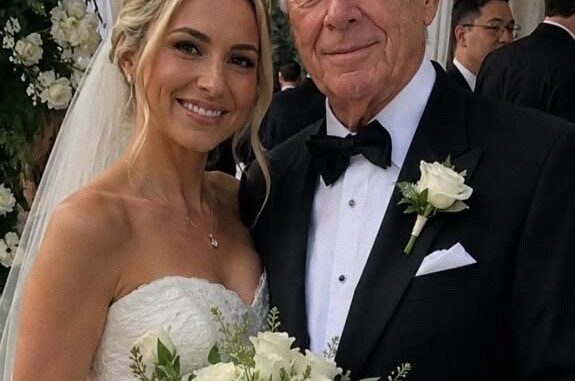
I married Arthur knowing what everyone thought: that I was after his money. I told myself it didn’t matter what they thought, that their judgment was irrelevant. But on his deathbed, he handed me a small cardboard box and whispered, “You won’t get my money. But I’m giving you exactly what you wanted.”
At that moment, his three adult children were waiting outside the hospital room, already deciding what they thought I deserved. Arthur’s fingers tightened around mine whenever their voices rose. He opened his eyes and said my name softly.
“Camille,” he whispered.
“I’m right here,” I said, leaning closer.
Beneath the blanket, he pulled out an old cardboard box. My name was scrawled across the top in black marker.
“You won’t get my money, darling,” he said.
My heart sank—not because I had married him for his fortune, but because a part of me had quietly wondered if his money might finally make me feel safe. He read my expression as though it were an open book.
“But I’m giving you exactly what you wanted,” he said.
Outside, Deborah, his eldest, snapped at the others: “We should be in there! That woman isn’t family!”
Arthur pressed the box into my hands. “Open it after my funeral,” he said. “Promise me, Camille.”
I promised. Two days later, he was gone.
When people first judged my marriage, they didn’t know me. I was thirty-two; Arthur was eighty-four. That alone seemed enough for everyone to assume I was a gold-digger. His friends scrutinized me over wine glasses; strangers at charity events looked at my ring first, then at Arthur’s walker. His children despised me before I even finished introducing myself.
At our wedding reception, as I cut a piece of salmon, Deborah whispered: “I hope whatever number you have in your head is worth this.”
“Worth what?” I asked.
“The way everyone is looking at you,” she said.
Arthur reached across the table and took my hand. “Don’t confuse cruelty with loyalty,” he said calmly.
Their judgment didn’t touch him the way it did me, but it never touched the truth of what our marriage was. Arthur’s money might have made life easier—heating bills always paid, groceries never counted twice—but I didn’t marry him for that. I married him because he was the first man who made me feel like I belonged.
One night, not long after the wedding, he found me in the kitchen, nervously making chamomile tea.
“You only make chamomile when you’re overwhelmed,” he said.
I laughed softly. “I don’t think that’s true.”
“It is,” he said. “You could pretend not to notice, Camille, but I don’t have time for pretense.”
I told him stories of past relationships: of apartments I wasn’t allowed to call home, of relatives’ spare rooms where I’d always felt temporary.
“What do you want, Camille?” he asked quietly.
“That,” I said, gesturing to the kitchen, the house, the life I was trying to claim as mine—a place where nobody could tell me to leave.
Arthur’s eyes softened. “So, what do you want?”
Our marriage was never glamorous. It was ordinary and comforting: rainy nights with old movies, crossword puzzles he “cheated” at, drives to doctor’s appointments, and quiet moments where he whispered, “You keep me alive… and respectable.”
Six months before he died, he took me to a small lakeside cottage with peeling shutters and a sagging porch.
“It was hers,” he said softly, referring to his late wife, Sophia. “Before me, before the children, before all the noise.”
I felt peace in that moment, something I had rarely known.
In his final months, Arthur’s health declined rapidly. I watched as nurses spoke softly, as stairs became impossible, as his children arrived more to count paintings than to comfort him. I brought him pajamas and his crossword book one afternoon, only to be stopped by Deborah.
“He asked for these,” I said, stepping past her. Arthur, frail yet sharp, said, “Let her in.”
That evening, he handed me the box. Two days later, he passed away.
At the funeral, I wore a simple black dress. His children whispered and judged, but I held my dignity. After the ceremony, Arthur’s lawyer gathered us for the reading of the estate.
The mansion, corporate holdings, and investments went to his children. I received nothing. Deborah’s smug satisfaction was sharp—but the lawyer had one more envelope.
“This is a separate instruction,” he said. “It’s the lakeside cottage, Sophia’s property. Arthur held a life estate, but Sophia left written instructions: if he ever found another woman who brought him peace, she should have it. Not as charity, but as a home, a door she could always open.”
The deed had already been recorded. The cottage was mine.
Inside the box were treasures I hadn’t imagined: a photograph of me on the porch, a brass key, a copy of the deed, a simple gold ring, and letters from both Sophia and Arthur. Sophia’s words told him to give me the cottage if I ever made him feel at home. Arthur’s letter read:
“Camille, you once told me you hated being anywhere your name wasn’t on the door. I remembered. My children will receive the money. They understand money. But you understood loneliness. So did Sophia. So did I. You gave me peace. The cottage is yours because you stayed. Welcome home, darling.”
Leave a Reply