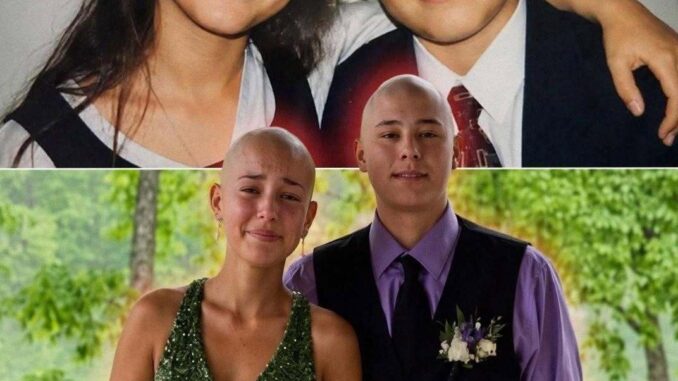
The night before my first chemotherapy treatment, I almost skipped prom.
At the time, it seemed like a small decision.
Looking back, I realize I was standing at a crossroads far bigger than one dance.
I was deciding whether cancer would take control of my life before the fight had even begun.
Fear had settled into every corner of my mind.
It followed me through the house.
Sat beside me at dinner.
Waited for me in the mirror every morning.
And whispered relentlessly every time I tried to imagine the future.
Three weeks earlier, I had been worrying about normal teenage things.
Final exams.
College applications.
Prom dresses.
Whether Leo would finally ask me to dance.
Then came the diagnosis.
A single appointment that divided my life into before and after.
Suddenly every conversation revolved around blood tests, treatment plans, specialists, and survival rates.
The future I had carefully imagined disappeared overnight.
The hardest part wasn’t the hospital visits.
It wasn’t the endless paperwork.
It wasn’t even hearing the word cancer spoken aloud.
The hardest part was watching my identity slowly unravel.
I stopped feeling like myself.
Every glance in the mirror became a reminder that my life was no longer normal.
I wasn’t simply Emma anymore.
I was the girl with cancer.
The girl everyone felt sorry for.
The girl people lowered their voices around.
The girl whose future suddenly came with terrifying uncertainty.
Prom was scheduled the night before my first chemotherapy session.
Everyone assumed I would still go.
Teachers encouraged me.
Friends texted constantly.
My parents insisted I should enjoy one normal night before treatment began.
But they didn’t understand what I felt every time I looked at my dress hanging in the closet.
It wasn’t excitement.
It was grief.
The emerald-green dress had once represented celebration.
Now it felt like a costume for someone else’s life.
The version of me who had chosen that dress no longer existed.
I imagined walking into the gymnasium.
Everyone staring.
Everyone whispering.
Everyone pretending not to notice the fear behind my smile.
The thought made me physically sick.
By the afternoon before prom, I had already decided not to go.
I sat alone in my bedroom staring out the window.
The dress remained untouched.
The tickets sat forgotten on my desk.
I planned to spend the evening at home.
Maybe watch television.
Maybe sleep.
Maybe pretend the next day wasn’t about to change everything.
Then someone knocked on the front door.
I heard voices downstairs.
A few moments later, my mother appeared.
Her eyes looked suspiciously emotional.
“Emma,” she said softly.
“You have a visitor.”
I already knew who it was.
Leo.
My boyfriend.
My best friend.
The one person who somehow never treated me differently after the diagnosis.
When I opened the door to my bedroom, he was standing there holding a small corsage.
At first, I smiled automatically.
Then I noticed something strange.
His head was completely shaved.
Every bit of hair was gone.
I stared.
Confused.
“Leo… what happened?”
He grinned.
“You said you were scared about losing your hair.”
Tears immediately filled my eyes.
“Leo.”
He shrugged.
“Figured we’d match.”
The room became very quiet.
My chest tightened so suddenly I could barely breathe.
Of all the things people had said since my diagnosis, nothing had touched me as deeply as that simple gesture.
He wasn’t trying to fix anything.
He wasn’t offering false optimism.
He was simply standing beside me.
Sharing part of the burden.
Then he handed me the corsage.
And an envelope.
“What’s this?”
“Open it.”
My hands trembled as I unfolded the paper inside.
At first, I didn’t understand what I was looking at.
Then the words came into focus.
Donation pledges.
Names.
Amounts.
Pages and pages of them.
I looked up.
“What is this?”
Leo smiled.
“Your prom gift.”
I blinked.
Still confused.
Then he explained.
Over the previous week, friends, teachers, local businesses, and neighbors had secretly organized a fundraiser.
Some donated five dollars.
Some donated fifty.
Some donated hundreds.
The goal wasn’t just helping with medical expenses.
It was reminding me that I wasn’t fighting alone.
The final total sat at the bottom of the page.
My hands started shaking.
Thousands of dollars.
Raised in secret.
For me.
I couldn’t speak.
I couldn’t stop crying.
Leo laughed softly.
“Now are you really going to skip prom?”
For the first time in weeks, I laughed too.
An hour later, I put on the emerald dress.
The same dress I had almost hidden away forever.
The same dress that had become a symbol of everything I thought cancer had stolen.
And somehow it felt different.
Not because my fear disappeared.
Because it didn’t.
The fear remained.
But it no longer felt bigger than me.
When we arrived at prom, I expected awkwardness.
I expected pity.
I expected people to look at me differently.
Instead, something remarkable happened.
As Leo and I entered the gymnasium, conversations gradually stopped.
Music continued playing.
Lights continued flashing.
But people began standing.
One by one.
Then dozens at a time.
Students.
Teachers.
Parents.
Neighbors.
The entire room rose to its feet.
Nobody said anything.
Nobody needed to.
The message was unmistakable.
You matter.
You belong here.
You are not alone.
The applause started slowly.
Then grew louder.
And louder.
Until the entire room echoed with it.
I cried.
My parents cried.
Even Leo looked suspiciously emotional.
In that moment, something shifted inside me.
For weeks, cancer had felt like a thief.
It had stolen certainty.
Confidence.
Security.
Plans.
But standing there surrounded by people who refused to let me disappear into fear, I realized it hadn’t taken everything.
It hadn’t taken love.
It hadn’t taken friendship.
It hadn’t taken community.
And it certainly hadn’t taken hope.
The next morning I sat in a chemotherapy chair for the first time.
The fear returned.
Of course it did.
No standing ovation could erase what lay ahead.
The treatments were difficult.
Some days were brutal.
There were nights I cried alone in the bathroom.
Days when I avoided mirrors.
Moments when statistics and uncertainty felt impossible to ignore.
Cancer didn’t become easier because people cared about me.
But something equally important happened.
I stopped carrying it alone.
Every appointment brought messages.
Every treatment brought visitors.
Every setback brought support.
Leo remained there through all of it.
So did my parents.
So did friends who refused to disappear when life became complicated.
Slowly, treatment became less about surviving and more about continuing.
One day at a time.
One appointment at a time.
One victory at a time.
Years later, when people ask what helped me through the hardest period of my life, they often expect me to talk about medicine.
And certainly medicine mattered.
Doctors mattered.
Science mattered.
But that’s not my first answer.
I think about a shaved head.
An emerald dress.
A crowded gymnasium.
And a room full of people who chose action instead of helplessness.
Because survival isn’t measured only by scans, charts, and test results.
It’s also measured by the people who show up when you’re terrified.
The people who refuse to let fear have the final word.
The people who stand beside you in the darkness until you remember how to see light again.
And sometimes, it begins with a knock on the door the night before everything changes.
Leave a Reply