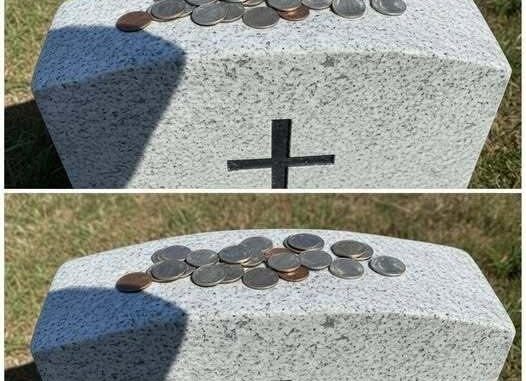
If you have ever walked through a cemetery and noticed coins resting on top of gravestones, you may have wondered why they were left there. At first glance, they might appear to be forgotten pocket change or objects accidentally dropped by visitors. In reality, these coins often carry a powerful meaning, especially when placed on the graves of military veterans.
What seems like a simple gesture is actually part of a long-standing tradition rooted in remembrance, respect, and the enduring bonds formed through military service. Each coin tells a story. Each denomination carries a different message. Together, they serve as silent reminders that the individuals buried beneath those headstones continue to be remembered and honored.
For many families, discovering coins on a loved one’s grave can be both emotional and comforting. These small pieces of metal represent something much larger than their monetary value. They symbolize gratitude, loyalty, and the promise that sacrifice will never be forgotten.
A Tradition Built on Remembrance
The custom of leaving coins on military graves has been practiced for many years throughout the United States. While historians debate exactly when the tradition began, it became widely recognized as a respectful way for veterans, service members, and visitors to honor those who served their country.
Unlike flowers that eventually fade or notes that can be damaged by weather, coins are durable and lasting. They remain visible long after they are placed, quietly conveying a message to anyone who understands their significance.
For visitors, leaving a coin is often a deeply personal act. It allows them to pay tribute without speaking a word. For families, the sight of those coins can provide reassurance that their loved one’s memory continues to live on in the hearts of others.
Why Coins Hold Special Meaning
Coins are universal objects. Nearly everyone recognizes them, yet few realize the symbolism they can carry when placed on a gravestone.
In military culture, the denomination of the coin often communicates the relationship between the visitor and the deceased. What appears to be spare change is actually a form of silent communication.
Each coin tells a different story.
A penny means one thing.
A nickel means another.
A dime carries deeper significance.
And a quarter often represents the most profound connection of all.
Together, these coins create a language of remembrance that has been passed from generation to generation.
The Meaning of a Penny
The penny is the coin most frequently found on military graves.
Although it has the smallest monetary value, its emotional significance is far greater.
Leaving a penny simply means that someone visited the grave. It is a way of saying, “I was here, and I remember.”
The message may seem simple, but it can be incredibly meaningful.
Families who visit a cemetery and find pennies resting on a loved one’s headstone know that others continue to honor that person’s life and service. Even years after a soldier has passed away, the presence of a penny confirms that their memory remains alive.
A penny serves as a quiet reminder that sacrifice has not been forgotten and that someone’s life continues to matter.
The Meaning of a Nickel
A nickel carries a more personal message.
When a visitor leaves a nickel on a military grave, it traditionally signifies that they attended boot camp or military training with the deceased.
Military training is often one of the most challenging experiences a service member will face. Recruits endure demanding physical exercises, strict discipline, and intense emotional challenges together.
Through those shared experiences, strong bonds are formed.
Leaving a nickel acknowledges that connection. It communicates that the visitor and the fallen service member began their military journeys side by side and shared important experiences during their training years.
The nickel symbolizes friendship, respect, and memories that have endured long after service ended.
The Meaning of a Dime
A dime represents an even closer connection.
Traditionally, leaving a dime indicates that the visitor served alongside the deceased during active military service.
This means they may have been stationed together, deployed together, or worked as members of the same unit.
For many veterans, these relationships become lifelong bonds.
Service members often rely on one another during difficult and dangerous circumstances. They share responsibilities, challenges, victories, and hardships that few outside the military fully understand.
When a dime is placed on a gravestone, it carries a powerful message:
“I served with you. I remember what we experienced together, and I will never forget.”
It is a tribute not only to military service but also to the friendship and trust built during that service.
The Meaning of a Quarter
Among all the coins left on military graves, the quarter carries the deepest meaning.
Traditionally, a quarter signifies that the person who left it was present when the service member died.
This could mean they were with the individual during combat, at a medical facility, or during their final moments in another setting.
The quarter represents witness and remembrance.
It tells the family that someone was there when their loved one passed away and that the memory of those final moments remains with them.
Because of its significance, the quarter often carries tremendous emotional weight.
It serves as a powerful reminder that no service member faces their final moments completely alone and that those who were present continue to honor their memory.
A Source of Comfort for Families
Many families first learn about this tradition after noticing coins on a gravestone and wondering what they mean.
Once they understand the symbolism, those small coins often take on enormous emotional importance.
For parents, spouses, children, and siblings, the coins represent evidence that others still remember their loved one.
The knowledge that fellow service members continue to visit, reflect, and pay tribute can bring comfort during difficult times.
Even years after a funeral, the presence of coins reminds families that the impact of their loved one’s life and service continues to be felt.
A Reflection of Military Brotherhood and Sisterhood
One reason this tradition remains so meaningful is because it reflects the unique bonds formed through military service.
Veterans often describe fellow service members as family.
The experiences they share create relationships built on trust, sacrifice, and mutual support.
Leaving a coin on a gravestone is one way of maintaining that connection even after death.
It is a promise that those bonds do not end when military service concludes.
Nor do they end when a life is lost.
The simple act of placing a coin on a headstone says, “You are still one of us.”
A Silent Language of Respect
What makes this tradition particularly powerful is that it requires no words.
A visitor does not need to leave a note or explain their presence.
The coin itself communicates the message.
Anyone familiar with the tradition immediately understands the meaning behind the gesture.
Even those who are unfamiliar often sense that the coin represents something important.
It is a quiet expression of respect that crosses generations, backgrounds, and personal beliefs.
The Power of a Small Gesture
In today’s world, meaningful acts are often associated with grand displays or large contributions.
The tradition of leaving coins on gravestones reminds us that even the smallest gestures can carry tremendous significance.
A penny, nickel, dime, or quarter costs very little.
Yet when placed intentionally on a gravestone, it becomes a symbol of gratitude, remembrance, and honor.
Its value comes not from its monetary worth but from the meaning attached to it.
Keeping Memories Alive
The next time you visit a cemetery and notice a coin resting on a headstone, take a moment to consider the story behind it.
That coin was not left there by accident.
It represents a connection.
A memory.
A friendship.
A shared experience.
Most importantly, it represents a commitment to never forget.
Through this simple tradition, generations of veterans and visitors continue to honor those who served and sacrificed. One coin at a time, they ensure that memories endure, stories remain alive, and the legacy of those who gave so much is preserved for future generations.
Sometimes the most meaningful tributes are also the simplest. A small coin resting quietly on a gravestone may seem insignificant to a passerby, but to those who understand its meaning, it speaks volumes about loyalty, gratitude, and remembrance.
Leave a Reply