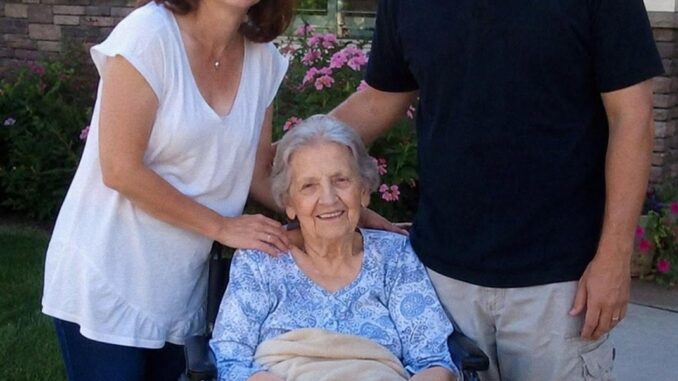
I stood at the edge of the open grave, my hands trembling as I clutched a heavy, sealed envelope, just seconds after my husband had handed me the crushing blow of a divorce decree. For twelve years, I had sacrificed my career, my friends, and my sanity to care for the woman who had become my only family, believing we were a united front against the tragedy of her illness. But as the dirt hit the casket, the mask finally slipped. My husband didn’t want comfort; he wanted a clean exit. Little did he know, his mother had been watching his every move from the shadows, and she had one final, devastating card to play from beyond the grave.
The beginning of my life with Dean felt like a dream. When I married him at twenty-five, his mother, Eleanor, didn’t just welcome me into the family; she embraced me with a warmth that felt like home. She called me her daughter, shared her secrets, and we built a life of Sunday dinners and shared laughter. But life has a cruel way of changing the landscape. When Eleanor was diagnosed with a debilitating illness, the sunny kitchen table where we once shared tea became the site of a grim, life-altering pact. Dean promised we would get through it together, and I, blinded by love and loyalty, believed him with my whole heart.
In the early days, we were a team. We color-coded pill bottles, navigated hospital visits, and kept each other’s spirits high. But as Eleanor’s condition worsened, the pressure began to fracture the foundation of our marriage. Dean received a high-profile promotion, and suddenly, the “team” became a hierarchy of one. He began disappearing for weeks at a time, leaving his phone face down on the counter and his eyes weary with an irritation he couldn’t quite mask. When the inevitable fall happened—when Eleanor collapsed while trying to make her own tea—the “we” finally dissolved. Dean sat me down and delivered the ultimatum: he couldn’t leave his career, so I had to leave mine.
I stepped away from a marketing career I loved, trading my professional identity for the role of a full-time caregiver. I convinced myself it was a temporary sacrifice—a year, maybe two. Seven years stretched into twelve. My office clothes gathered dust, my social life withered, and my hands grew accustomed to the rhythms of medicine, hygiene, and the quiet vigil of a bedside monitor. I stopped blaming Dean’s absence, telling myself he was just “grieving in advance.” I became Eleanor’s primary witness, the person who braided her hair, read to her in the dead of night, and listened to the stories she had never told anyone else. She told me things about her past, about a lost child and a secret heartbreak, telling me, “You’re the only one I tell these things to, Claire. Because you stay.”
Dean had stopped staying years before I finally admitted it to myself. Our anniversary cards ceased, our conversations became transactional, and our intimacy was replaced by a hollow, strained silence. Yet, I clung to the excuses like a lifeline, terrified of acknowledging that the man I had married had become a stranger who viewed his mother’s decline as an inconvenience.
When Eleanor finally passed on that quiet Tuesday morning, I was the one holding her hand. Dean showed up hours later, briefcase in hand, already asking about the funeral arrangements before her body was even cold. The funeral itself was a blur of black lace and hollow sympathies. I felt shattered, expecting comfort from the man who had promised to be my partner. Instead, Dean guided me toward a corner of the cemetery, away from the mourners, and handed me a folder. He didn’t offer a hug; he offered a legal termination. He looked at me with the cold efficiency of a businessman closing a ledger. “It’s cleaner this way,” he said. “Don’t make a scene.”
Leave a Reply