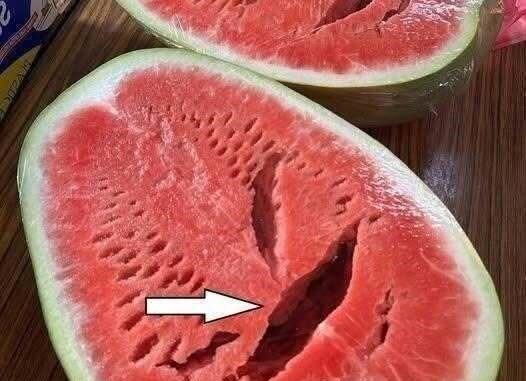
The knife goes in, the rind splits, and your stomach drops. Instead of smooth, perfect red, the watermelon is cracked, hollow, strangely patterned. Is it chemicals? Contamination? Something dangerous hiding in your kitchen? Rumors online say yes. But the truth is quieter, calmer, and far less sinister than the fear-soaked stories that race across social media. What looks alarming at first glance is often nothing more than nature leaving its fingerprints on a fruit that grew under less-than-perfect conditions.
Those strange cracks and hollow pockets inside a watermelon are usually the result of how the fruit grew, not what was sprayed on it. Rapid growth after a dry spell, sudden heavy rain, inconsistent watering, or dramatic swings in temperature can all cause the inside of the watermelon to expand unevenly. As the flesh grows faster than the surrounding tissues can support, small cavities and splits may form. To someone cutting into the fruit for the first time, those openings can look unnatural or even frightening. In reality, they are often no different than a scar left behind by a growth spurt.
The internet has helped spread countless theories about these unusual patterns. Some people immediately blame pesticides, artificial growth hormones, or genetic manipulation. Photos of cracked watermelons are frequently shared with alarming captions warning consumers to throw them away immediately. Yet agricultural experts and growers consistently point to environmental conditions as the most common explanation. Watermelons are living plants responding to weather, soil conditions, and moisture levels. Sometimes those responses leave visible marks inside the fruit.
One of the biggest contributors is inconsistent watering. After a period of drought or dryness, a sudden burst of rain can cause a watermelon to absorb large amounts of water very quickly. The interior flesh swells faster than the surrounding structure can accommodate, creating stress that may lead to splitting or hollow heart. Farmers have observed this phenomenon for generations, long before modern agricultural chemicals became a source of public concern. It is a natural occurrence that can happen in both commercial fields and home gardens.
While the appearance may not be ideal, the presence of cracks alone does not automatically mean the fruit is unsafe. What matters far more is the overall condition of the watermelon. Fresh watermelon should smell mild and sweet, with a clean aroma that suggests ripeness rather than decay. The flesh should be firm, juicy, and vibrant. If the fruit feels slimy, excessively soft, discolored, or develops a sour, fermented smell, those are the signs that deserve attention. Spoilage, not cracking, is the real concern when deciding whether a watermelon should be discarded.
Leave a Reply