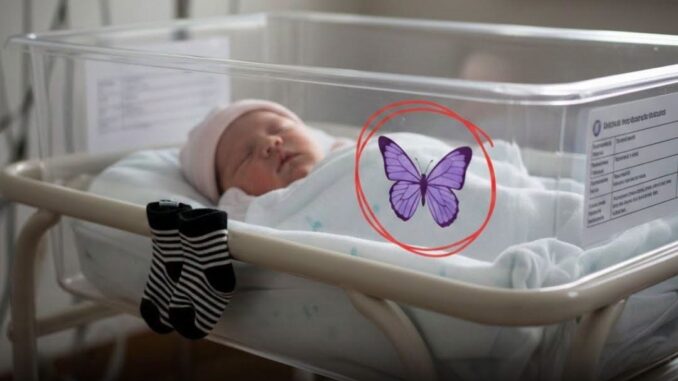
It is a sight that seems innocent enough—a small, delicate purple butterfly sticker gracing the side of a hospital incubator. To the casual observer, it might look like a simple piece of colorful decor, a way to brighten a sterile clinical space. But for the parents who know the truth, that tiny emblem represents a world of unimaginable grief. It is a silent signal, a secret code of sorrow that saves families from the most excruciating conversations imaginable. If you ever walk past a neonatal unit and spot this humble mark, pray for the miracle happening inside—and the tragedy that preceded it.
The story of the purple butterfly begins with Millie Smith and her partner, Lewis Cann. When they discovered they were expecting identical twin girls, they were overjoyed, already envisioning a future filled with the chaos and laughter that comes with raising sisters. But their joy was cut short during a routine ultrasound. The room went silent. The technician stopped talking, and the parents-to-be felt an immediate, sinking dread. They were eventually given a diagnosis that no parent should ever have to face: one of the babies had anencephaly, a severe birth
Despite the crushing news, Millie and Lewis chose to continue the pregnancy, determined to cherish every heartbeat. They named the twins Skye and Callie. “Skye” was chosen as a tribute to the heavens where she would eventually return, while Callie remained the one who would hopefully grow up to live the life they had imagined for both sisters. When the babies were born at 30 weeks via an emergency C-section, it was a moment of profound, bittersweet emotion. Both girls cried, which felt like a miraculous defiance of the medical prognosis, granting Millie and Lewis three precious hours of time with their daughter, Skye, before she passed away in their arms.
In the days that followed, the reality of life in the Neonatal Intensive Care Unit (NICU) set in. While Callie fought to grow strong in her incubator, Millie found herself surrounded by other parents experiencing the high-pressure, often exhausting environment of premature birth. It was here that the true weight of her loss became unbearable. Most of the nurses and staff knew about the tragedy, but the other parents in the unit were oblivious. For these strangers, Millie was simply a mother of healthy twins. She was often approached by well-meaning, exhausted mothers who, in a moment of honest venting, would look at Millie and say, “You’re so lucky you don’t have two infants to look after.”
Those words, though spoken with complete innocence, felt like a knife to Millie’s heart. Each comment forced her to relive the nightmare of Skye’s death or, worse, to ignore it entirely to avoid an awkward, painful conversation. She would often flee the room in tears, leaving the other parents confused and guilt-ridden, never realizing the pain they had unknowingly inflicted. Millie realized that the lack of awareness in the ward was creating a barrier of isolation for grieving parents. She knew she had to do something to protect other families from this soul-crushing cycle of well-meaning but devastating comments.
Leave a Reply