Weddings have always been about bringing family and friends together to celebrate one of life’s biggest milestones. But in recent years, a growing trend has sparked heated discussions online and at dinner tables everywhere: wedding invitations that suggest—or even request—a minimum cash gift amount from guests.
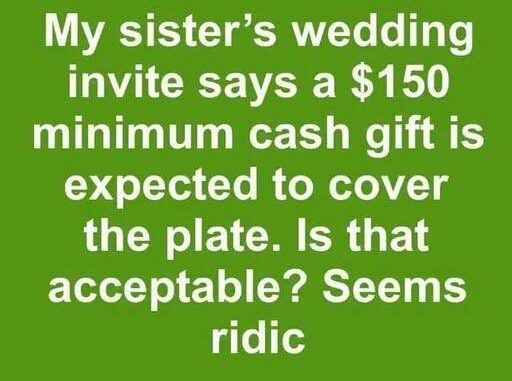
One example that recently caught attention involved an invitation stating that guests were expected to contribute at least $150 in cash to help “cover the cost of their plate” at the reception. While some people saw the request as practical and understandable, others viewed it as inappropriate and contrary to the spirit of gift-giving.
The debate raises an important question: Is it acceptable for couples to request a minimum wedding gift, or does doing so cross an etiquette line?
Why Some Couples Feel Comfortable Making the Request
Modern weddings can be expensive.
Between venue rentals, catering, decorations, photography, entertainment, and other expenses, the cost of hosting a wedding has increased significantly over the years. In many locations, couples spend thousands—or even tens of thousands—of dollars on a single day.
Because of these rising costs, some couples believe it is reasonable to be transparent about expectations. Supporters of minimum gift requests argue that guests receive a meal, entertainment, and a full evening of celebration, all of which come at a considerable cost to the hosts.
From this perspective, asking guests to contribute enough to offset part of those expenses is seen as practical rather than offensive.
Some people also point out that cash gifts have become increasingly common compared to traditional household gifts. Since many couples already live together before marriage, they may prefer financial contributions toward future goals such as purchasing a home, paying off debt, or funding a honeymoon.
For these individuals, discussing cash openly feels more honest than relying on unwritten assumptions.
Why Others Consider It Rude
Despite these arguments, many etiquette experts believe that specifying a minimum gift amount can create discomfort for guests.
Traditionally, wedding gifts have always been considered voluntary expressions of support and celebration. The value of a gift has generally been left to the discretion of the guest based on their relationship with the couple and their personal financial situation.
Critics argue that attaching a dollar amount to attendance changes the nature of the invitation.
Instead of feeling invited to celebrate, some guests may feel as though they are being charged an entry fee.
For people facing financial challenges, the request can be particularly stressful. Not everyone has the same budget, and what seems like a reasonable amount to one person may be difficult for another.
A wedding invitation that includes financial expectations may unintentionally place pressure on guests who genuinely want to attend but cannot comfortably afford the requested amount.
The “Cover Your Plate” Tradition
Part of the debate stems from a long-standing idea often referred to as “covering your plate.”
In some cultures and communities, guests commonly give enough money to roughly match the cost of their meal at the reception. While this practice has existed for decades, it has traditionally been viewed as an informal guideline rather than a requirement.
The key difference is that guests generally make that decision themselves.
When couples explicitly state a specific amount, many people feel the expectation changes from a personal choice to an obligation.
As a result, what was once an unwritten social custom becomes a direct financial request.
Changing Attitudes Toward Wedding Etiquette
The discussion also reflects broader changes in wedding culture.
Many traditional etiquette rules have evolved over time. Couples now personalize weddings in ways that were less common in previous generations, from nontraditional venues to unique gift registries and digital invitations.
Supporters of modern approaches argue that there is nothing inherently wrong with being upfront about preferences or financial realities.
Others believe some traditions remain important because they help maintain a sense of generosity and hospitality. According to this view, guests should never feel obligated to pay for the privilege of attending a wedding.
These differing perspectives help explain why the issue continues to generate strong opinions.
Social Media Fuels the Conversation
Stories involving minimum gift requests often spread quickly online.
Social media platforms regularly feature screenshots of invitations, registry notes, and wedding policies that spark debate among users. Comment sections typically become divided between those who see such requests as reasonable and those who view them as inappropriate.
Some commenters argue that if couples cannot afford a large wedding, they should scale back their plans rather than expect guests to help cover costs.
Others respond that guests always have the option to decline the invitation if they disagree with the expectations.
The variety of opinions highlights how personal and culturally influenced wedding etiquette can be.
What Do Etiquette Experts Recommend?
Most etiquette professionals continue to advise against specifying a minimum gift amount.
While it is generally acceptable for couples to indicate that cash gifts are welcome, directly stating a required dollar figure may make guests uncomfortable and risk damaging relationships.
Experts often recommend focusing on gratitude rather than expectations.
A wedding invitation is traditionally intended to invite loved ones to share in a meaningful life event—not to establish financial obligations.
Guests, in turn, are encouraged to give what feels appropriate and affordable based on their circumstances.
Finding a Balance
Ultimately, there is no universal answer that satisfies everyone.
Different families, cultures, and social circles may have different expectations regarding wedding gifts. What feels perfectly acceptable in one community may seem unusual in another.
Open communication, understanding, and consideration for others often go a long way in avoiding misunderstandings.
Whether guests choose to give cash, purchase a gift, or simply offer their presence and support, most people agree that the true purpose of a wedding is to celebrate love and commitment.
Final Thoughts
The question of whether couples should request a minimum cash gift continues to divide opinions. Some view it as a practical response to rising wedding costs, while others believe it conflicts with the traditional spirit of hospitality and gift-giving.
As weddings continue to evolve, so will conversations about etiquette, expectations, and financial transparency. What remains unchanged, however, is the importance of respecting both the couple’s wishes and the individual circumstances of their guests.
At the end of the day, a wedding is about bringing people together—and finding the right balance between expectations and appreciation may be the key to keeping the focus where it belongs.
Leave a Reply