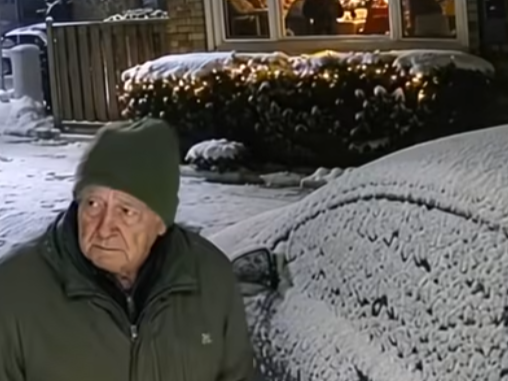
I smiled when my son told me I wouldn’t be joining them for Christmas.
Not because it didn’t hurt—but because, for the first time in years, I realized I wasn’t surprised anymore.
The words came through the phone like they were nothing.
“Dad… it’s just easier this year. The house is smaller, and with everything going on, we thought maybe you could just… stay home. We’ll call you.”
Stay home.
Like I was an item they could simply leave off a list.
I remember looking at the decorations I had already started unpacking. The same worn ornaments Maria and I had collected over decades. The same lights I used to hang while she made her “famous” sage stuffing, humming softly in the kitchen.
And instead of arguing, instead of begging, instead of trying to fix it like I always had…
I smiled.
“Alright,” I said quietly. “I understand.”
Then I hung up.
And let the silence settle in for the first time in years.
The phone lit up again almost immediately. My son, Michael. Then another call. Then a message. Then another.
But I didn’t answer.
For the first time in a long time, I let them wonder where I had gone.
Not physically.
But emotionally.
Because something inside me had shifted.
For years, I had been the person they leaned on. The problem solver. The safety net. The one who always said yes—even when it meant saying no to myself.
But somewhere along the way, I stopped existing outside of what they needed from me.
And that morning, sitting in my old armchair with the phone buzzing endlessly beside me, I finally understood something painful but freeing:
They had learned how to take my presence for granted.
And I had taught them how.
The next morning, I did something I hadn’t done in years.
I left the house just for me.
The winter air hit my face like something clean and unfamiliar. I walked slowly through the neighborhood, noticing things I used to pass without seeing—the quiet rhythm of life, the small cafés tucked between houses, the way people laughed without urgency.
I stopped at one of those cafés and ordered a coffee.
Just one.
No rush. No obligations. No interruptions.
I sat near the window and watched strangers live their lives without needing anything from me.
And strangely… I didn’t feel useless.
I felt light.
When I got home, I didn’t go back to my usual routine of waiting for the next call, the next request, the next crisis.
Instead, I grabbed a notepad.
At first, I didn’t know what to write.
Then slowly, words started coming.
Things I want to do.
Places I want to see.
Habits I used to love.
Music I used to play.
I even pulled out my old guitar from the closet.
It was dusty. A little out of tune. Like it had been waiting for me to remember it existed.
When I finally strummed it, the sound was rough—but real.
And for the first time in years, I didn’t feel like I was living in the background of someone else’s life.
A few days later, Michael showed up.
He didn’t come in loudly like before. No frustration. No assumptions.
Just hesitation.
He stood in my doorway like he wasn’t sure if he was still welcome in his own father’s house.
We sat at the kitchen table.
The same table where so many conversations had turned into demands over the years.
But this time, something was different.
This time, I didn’t feel small.
“Dad,” he finally said, “why did you stop helping us?”
Not why did you change your mind.
Not what happened.
Just—why did I stop being available.
I took a breath.
“Michael,” I said gently, “I love you. I always have. But somewhere along the way, helping turned into disappearing. I wasn’t just supporting you anymore—I was abandoning myself.”
He frowned slightly, like he hadn’t expected that answer.
“I never wanted that,” he said.
“I know,” I replied. “But it still happened.”
Silence settled between us, but it wasn’t the same heavy silence as before.
This one felt honest.
We talked longer than we had in years.
About money. About boundaries. About marriage. About responsibility. About how love without limits can quietly become resentment.
At one point, he looked down and said something I didn’t expect.
“I think we got used to you fixing everything.”
That hurt more than I wanted to admit.
But it was also the truth.
When he finally left that day, there was no dramatic ending. No perfect resolution.
Just a quieter understanding that things could no longer stay the same.
Before he walked out, he paused.
“I’ll try,” he said. “With everything. With Isabella. With us.”
I nodded.
“That’s all I can ask for.”
After he left, I sat in the kitchen for a long time.
The house wasn’t suddenly happier.
The silence wasn’t suddenly warm.
But it was mine again.
And for the first time, that didn’t feel lonely.
It felt necessary.
Christmas would come and go without me in their new house.
There would be photos I wasn’t in. Laughter I didn’t hear. A table I didn’t sit at.
But here, in my own home, something different would happen.
I would light my own small tree.
I would play my guitar.
I would cook my own meal.
And I would stop measuring my worth by how needed I was.
Because I finally understood something simple—but life-changing:
Love isn’t proven by how much you give until you disappear.
It’s proven by whether you’re still allowed to exist inside it.
And for the first time in a long time…
I chose to exist.
Leave a Reply