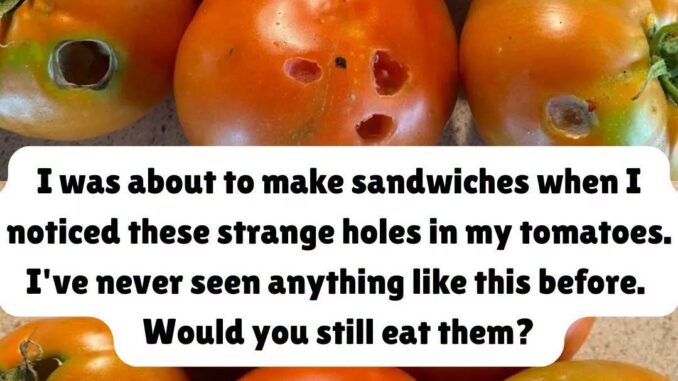
Finding a hole in a ripe tomato can be disappointing, but it usually has a simple explanation. Rather than being random damage, these marks often provide clues about what’s happening in your garden and can help you identify problems before they affect more of your harvest.
One of the most common causes is insect activity. Pests such as tomato hornworms, fruit worms, and certain beetles may feed on ripening tomatoes, leaving behind small holes or larger tunnels. In some cases, the damage is only visible on the surface, while in others it can extend into the fruit, making it more susceptible to decay.
Wildlife can also play a role. Birds, squirrels, and other small animals may take a single bite or peck from a tomato, especially during hot weather when they’re searching for food or moisture. Once the skin is damaged, fungi and bacteria can enter the fruit more easily, causing it to spoil more quickly.
Not all tomato damage is caused by pests, however. Environmental conditions can also affect fruit quality. Inconsistent watering, rapid temperature changes, or nutrient imbalances may lead to cracking, splitting, or deformities such as catfacing. These openings can later become entry points for insects or disease.
If you notice damaged tomatoes, it’s worth taking a closer look before removing the fruit. Check for signs such as chew marks, insect larvae, droppings, mold, or soft spots. Some tomatoes may only have minor cosmetic damage and can still be used after trimming away the affected area, while others may need to be discarded if rot has spread.
Preventing future damage starts with regular garden maintenance. Inspect plants frequently so pest problems can be identified early. Protective netting or row covers can help reduce damage from birds and other wildlife. Many gardeners also use companion plants such as basil or marigolds, which may help discourage certain insects while attracting beneficial pollinators.
Consistent watering is another important step. Keeping soil moisture as even as possible reduces stress on tomato plants and helps prevent cracking. Removing fallen or damaged fruit from around your plants can also discourage pests and reduce the spread of disease.
Every tomato tells you something about the growing conditions in your garden. By paying attention to these signs and responding early, you can improve plant health and enjoy a healthier, more productive harvest throughout the season.
Leave a Reply