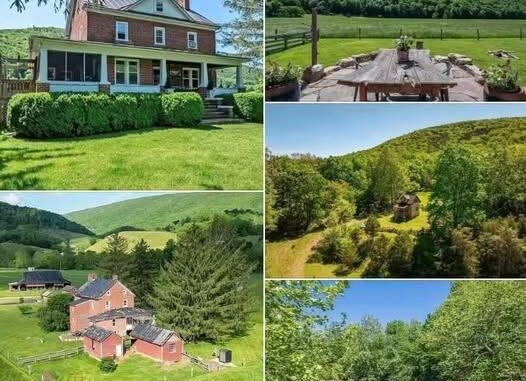
Step onto a property where time doesn’t feel linear anymore—where the past is still visible in hand-hewn beams, where the present is defined by open land and riverlight, and where the future feels wide open with possibility. This 86.5-acre estate along the South Branch of the Potomac River is not just a listing; it is a layered landscape of history, function, and natural beauty.
With more than half a mile of private river frontage, a restored 1812 farmhouse, fertile farmland, wooded acreage, and multiple supporting structures, the property represents a rare convergence of lifestyle and long-term value. It is the kind of place that can be lived in, worked on, preserved, expanded, or simply enjoyed as a private retreat away from the pace of modern life.
A Rare Stretch of Private Riverfront
One of the most defining features of this estate is its direct relationship with the river. With over 0.5 miles of frontage on the South Branch of the Potomac, the property offers a level of privacy and access that is increasingly difficult to find.
Here, the river is not a distant view—it is part of daily life.
The water provides opportunities for fishing, kayaking, and swimming, as well as quiet reflection along its banks. Mornings begin with mist rising off the surface, and evenings often end with sunlight breaking into long reflections across the current. Beyond its beauty, river frontage of this scale also carries strong long-term investment value, as waterfront land remains one of the most consistently sought-after real estate categories.
86.5 Acres of Purposeful Diversity
The land itself is not uniform—it is a balanced mix of farmland, pasture, and forest, each section offering its own use and character.
Approximately 30 acres are tillable farmland, suitable for crops or agricultural production. Another 26 acres serve as pasture land, currently leased and generating steady income. The remaining 30 acres are mature woods, offering shade, wildlife habitat, hunting potential, and natural trails.
This combination creates a property that is both scenic and functional. It supports multiple uses at once—agriculture, recreation, leasing, conservation, or residential expansion—making it appealing not only to homeowners but also to investors seeking diversified land value.
The Restored 1812 Farmhouse
At the center of the estate stands a farmhouse built in 1812, carefully restored to preserve its historic integrity while integrating modern comfort. With over 2,300 square feet of living space, the home includes three bedrooms and two bathrooms, arranged in a layout that reflects both its age and its thoughtful renovation.
Inside, original oak and heartwood floors remain intact, carrying the texture of more than two centuries of history. Beamed ceilings add structural warmth, while two fireplaces with stove inserts provide both function and atmosphere. Despite its historic foundation, the home is fully equipped for modern living, including high-speed internet access.
It is a rare balance—one that allows daily life to unfold within a space that feels both grounded in history and adapted for today.
Living Spaces Designed for Comfort and Function
The main level of the farmhouse is structured around generous, livable spaces. A large living room anchored by a fireplace serves as the central gathering point, while a formal dining room offers space for shared meals and gatherings. The kitchen is expansive, featuring a pantry and room for both preparation and conversation.
Rather than feeling confined by its age, the home opens into a series of warm, interconnected rooms designed for comfort and use. It is a house that accommodates both quiet daily routines and larger moments of gathering.
The four-level structure adds another layer of flexibility. Each level creates a distinct zone within the home, allowing for separation between living, sleeping, working, or guest accommodations. This vertical layout gives the home a sense of depth and adaptability that enhances its long-term usability.
Additional Structures and Hidden Potential
Beyond the main farmhouse, the property includes a hand-hewn log cabin situated near a creek, along with multiple barns and storage buildings. Each structure adds both character and practical utility to the estate.
The log cabin, in particular, offers significant flexibility. It could function as a guest house, rental unit, creative studio, or private retreat space. Its location near the creek enhances its sense of seclusion and atmosphere, making it one of the more versatile features on the property.
These secondary structures expand the estate beyond a single residence, turning it into a multi-use property with significant adaptability.
Water Features That Define the Landscape
In addition to the river frontage, the property also includes a large stocked pond. This creates a second water system within the estate, offering fishing opportunities, visual appeal, and ecological diversity.
Together, the pond and river form a rare dual-water landscape. This combination enhances both recreational value and long-term desirability, especially for buyers seeking properties with natural water access beyond a single feature.
Agricultural Value and Income Potential
This estate is not only scenic—it is productive.
The existing pasture lease generates approximately $1,500 annually, and the tillable acreage provides opportunities for crops or expanded agricultural use. The land is well suited for livestock, equestrian operations, or small-scale farming.
This blend of income-producing land and usable acreage creates flexibility for both active and passive land use strategies. Owners can maintain traditional farming operations, develop agritourism opportunities, or simply continue leasing portions of the property for steady return.
Outdoor Living and Natural Abundance
The surrounding landscape is defined by openness and variety. Rolling mountain views stretch across the horizon, while wooded sections provide privacy, shade, and seasonal color changes. Trails weave through mature trees, and fruit-bearing trees and berry bushes add to the land’s productivity.
This is a property that supports a farm-to-table rhythm of living. Seasonal harvesting, gardening, and outdoor exploration become part of daily life rather than occasional activities.
Outdoor spaces include a screened porch, patio areas, and fenced sections of land, including electric fencing. These features support both relaxation and functional land management.
Infrastructure and Modern Utilities
Despite its historic character and rural setting, the property is supported by modern infrastructure. It includes well water, a septic system, 200-amp electrical service, and high-speed internet.
Heating options include forced air, baseboard systems, and wood heating, while cooling is managed through window units and ceiling fans. This combination allows for adaptable comfort across seasons while maintaining the property’s traditional structure.
Location: Seclusion with Access
Located in the Franklin area, the estate offers a rare balance between privacy and accessibility. It is far enough from dense development to preserve its quiet rural atmosphere, yet close enough to nearby towns for essential services, supplies, and community needs.
This balance makes it suitable for both full-time residence and seasonal or retreat-style living.
Investment Perspective and Long-Term Value
At a price point reflecting its premium riverfront positioning and historic significance, this estate represents more than a home purchase—it represents land investment, lifestyle investment, and legacy planning.
Potential uses include a luxury vacation rental, a private retreat or event venue, a working farm, or a long-term land holding with appreciation potential. Properties combining acreage, water access, historic homes, and usable infrastructure are increasingly rare in today’s market.
A Property for Multiple Visions
This estate can serve many different kinds of owners:
For luxury buyers, it offers privacy, history, and water access.
For investors, it provides income-generating land and rental potential.
For homesteaders, it offers space, resources, and independence.
For outdoor enthusiasts, it delivers fishing, hunting, and recreation across varied terrain.
Final Reflection
This is not simply a house on land. It is a landscape shaped by time, maintained by care, and defined by possibility. From the restored 1812 farmhouse to the flowing edge of the Potomac, every part of this estate contributes to a larger story—one that can continue in many different directions depending on who chooses to carry it forward.
Opportunities like this do not appear often. When they do, they are defined by a simple truth: you are not just buying property—you are stepping into something that already has history, and deciding what its next chapter will be.
Leave a Reply