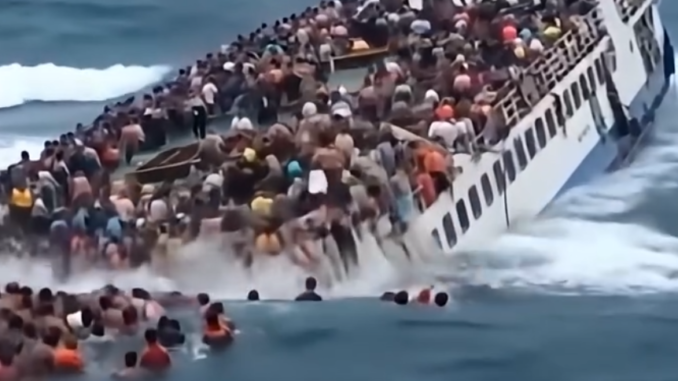
The sea swallowed hundreds of people before sunrise, yet much of the world barely seemed to notice. In a single night, countless dreams, families, and futures disappeared beneath the waves while political leaders debated responsibility and headlines quickly moved on to other stories. There were no long tributes, few photographs, and very little public mourning. Most of those who died were remembered only as numbers in official reports rather than as individuals with names, histories, and loved ones waiting for news that would never come. The tragedy raised an uncomfortable question that still lingers today: was this simply an unavoidable disaster, or the predictable outcome of choices made long before the boat ever left shore?
Every passenger carried far more than a small bag of belongings. They carried hope. Many had already survived unimaginable hardship before stepping onto the overcrowded fishing vessel known as the Adriana. Some fled neighborhoods devastated by years of conflict in Syria. Others escaped crushing poverty, political instability, or the absence of any realistic future in countries such as Pakistan and Egypt. Among them were fathers who had sold the tools they depended on for work in order to pay smugglers. Mothers quietly stitched savings into the hems of their clothing, praying they could protect every last dollar. Young people promised parents and siblings that once they reached Europe, they would find jobs, send money home, and begin rebuilding lives that war, violence, or economic collapse had nearly destroyed.
For many of them, Libya was never intended to become home. It was simply the final stop before attempting the dangerous Mediterranean crossing. Yet even reaching the Libyan coast meant surviving another layer of suffering. Countless migrants reported being held in overcrowded detention centers, subjected to extortion, violence, forced labor, and abuse while waiting for an opportunity to leave. Smugglers treated desperate families as commodities rather than human beings, demanding ever larger payments while offering little assurance that the boats would safely reach their destination. By the time the Adriana departed, many onboard knew the journey was dangerous. Even so, remaining behind often seemed even more frightening than risking the open sea.
In the days that followed, difficult questions quickly emerged regarding the response of authorities. Investigators, humanitarian organizations, and survivors examined emergency communications, rescue timelines, and decisions made during the critical hours before the sinking. Some argued that opportunities for earlier intervention may have existed, while officials defended the complexity of coordinating large-scale maritime rescue operations. Responsibility became the subject of international debate, with governments, coast guards, and humanitarian organizations offering differing accounts of events. As discussions continued, many families remained focused on a much simpler reality: they were still searching for answers about relatives who had vanished without trace.
Leave a Reply