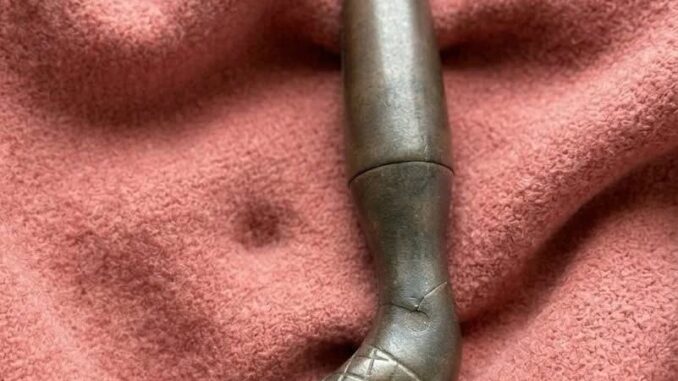
While helping organize the belongings of a late family friend, we expected to come across familiar keepsakes—old photographs, handwritten letters, well-used tools, and other everyday items collected over a lifetime.
Instead, we found an object none of us recognized.
It was tucked away in a box beneath several papers and other belongings. Smooth, sturdy, and clearly designed for a specific purpose, it didn’t resemble anything we had seen before.
Naturally, everyone began guessing.
Was it part of an old machine?
A woodworking tool?
Something used in farming or construction?
The more we examined it, the more curious we became.
Identifying the Mystery Object
After spending some time researching its shape and comparing it with historical tools, we discovered that it was a fid—a traditional tool used in sailing.
A fid is designed to separate and work with the strands of rope, making it easier to splice lines together or create strong, reliable rope connections.
Although many people today have never encountered one, it was once an essential tool aboard sailing ships.
An Important Tool at Sea
Before modern synthetic ropes and equipment, sailors depended on strong ropework for nearly every aspect of operating a vessel.
Ropes secured sails, controlled rigging, anchored ships, and helped protect cargo during long voyages.
Creating and repairing these ropes required skill, and a fid made that work much more efficient.
Without dependable rope splices, sailing safely could become much more difficult, particularly during rough weather.
A Window Into Maritime History
Learning the purpose of the tool gave us a greater appreciation for its history.
What first appeared to be an unfamiliar object turned out to be a practical piece of maritime craftsmanship that would have been used regularly by sailors.
It also served as a reminder that many everyday tools from previous generations can seem mysterious once the skills and trades they supported become less common.
Preserving Stories Through Objects
Finding the fid reminded us that old belongings often tell stories beyond the people who owned them.
Many objects survive long after their original purpose has faded from everyday life. With a little research, they can provide a fascinating glimpse into history, traditional craftsmanship, and the practical skills people once relied upon.
What began as an unidentified item became an opportunity to learn something new about maritime history and the tools that helped generations of sailors navigate the world’s oceans.
Sometimes, the most interesting discoveries aren’t valuable because of their price—they’re valuable because of the stories they preserve.
Leave a Reply