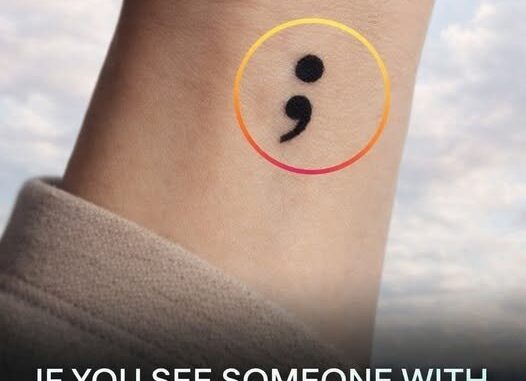
Tattoos have always carried personal meaning. For some people, they represent important memories, beliefs, milestones, or moments that changed their lives forever. While many tattoos are large and detailed, others are incredibly small and simple — yet still hold deep emotional significance.
One of the most meaningful minimalist tattoos in recent years is the semicolon tattoo.
At first glance, it may look like nothing more than a tiny punctuation mark. Most people recognize a semicolon from writing, where it is used to connect thoughts instead of ending them completely. But outside grammar, the symbol has taken on a much more powerful message for millions of people around the world.
Today, the semicolon tattoo is widely recognized as a symbol of hope, resilience, mental health awareness, and the decision to keep going even during life’s darkest moments.
How the Semicolon Became a Symbol
The movement connected to the semicolon began gaining global attention in 2013 through an initiative called Project Semicolon. The organization was founded to encourage open conversations about mental health, depression, self-harm, and suicide prevention.
The semicolon was chosen because of its meaning in writing.
An author uses a semicolon when they could end a sentence but decide not to. Instead, the sentence continues.
That simple idea became a powerful metaphor for life itself.
For many people, the symbol represents the choice to continue their story despite pain, fear, trauma, or emotional struggles. It reflects the belief that difficult chapters do not have to become the end of someone’s life story.
A Personal Symbol of Survival
For those who wear the tattoo, the meaning is often deeply personal.
Some individuals choose a semicolon tattoo after surviving depression, anxiety, addiction, or suicidal thoughts. Others get it to honor someone they love who faced similar battles. In many cases, the tattoo serves as a quiet reminder of strength during moments when life felt overwhelming.
Its simplicity is one reason the symbol resonates so strongly.
Unlike large or decorative tattoos, the semicolon does not demand attention. Many people place it discreetly on the wrist, finger, ankle, or behind the ear. To strangers, it may look small and insignificant. But to those who understand its meaning, it can communicate an entire story without a single word.
Helping Break the Silence Around Mental Health
As awareness of the semicolon symbol spread online and through social media, more public conversations about mental health began to emerge. Celebrities, athletes, advocates, and everyday people started sharing their tattoos and explaining the personal experiences behind them.
This openness helped reduce some of the stigma surrounding emotional struggles.
For decades, many people felt pressured to hide mental health challenges out of fear, embarrassment, or misunderstanding. The semicolon tattoo became part of a larger cultural shift encouraging compassion, honesty, and support instead of silence.
In many communities, spotting someone else with a semicolon tattoo creates an unspoken sense of connection — a reminder that no one has to face difficult moments entirely alone.
More Than Just a Trend
Although minimalist tattoos have become popular in modern culture, the semicolon has remained meaningful because of the message attached to it. For most people who wear it, the tattoo is not about fashion or appearance.
It represents endurance.
It symbolizes surviving moments that once felt impossible to overcome. It can also serve as a daily reminder to seek help, keep moving forward, and remember that healing is possible even when progress feels slow.
A Symbol of Continuing the Story
Ultimately, the semicolon tattoo carries a message that resonates far beyond body art itself. It reflects the understanding that life can include pain, setbacks, uncertainty, and emotional struggles — but those moments do not have to define a person forever.
Just like the punctuation mark in a sentence, the semicolon represents a pause rather than an ending.
Leave a Reply