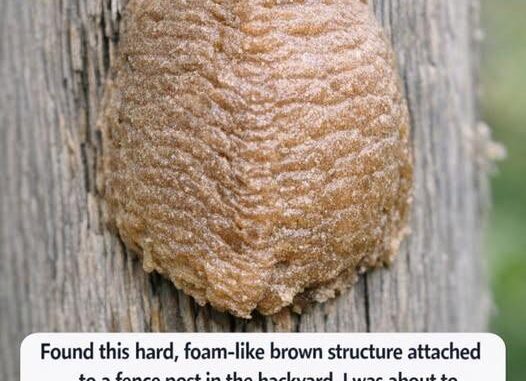
It can be surprising to spot a strange, foam-like brown lump attached to a fence, branch, or outdoor structure. At first glance, it might seem like something that needs to be removed right away. However, in many cases, this curious formation is actually something positive for your outdoor space. What you’re likely seeing is an egg case—commonly known as an ootheca—from a praying mantis. Far from being a problem, it plays a valuable role in maintaining a healthy garden environment.
A Closer Look at the Structure
This unusual cluster typically appears tan to brown in color and has a hardened, slightly foamy texture. It is often around one to two inches long and is usually attached firmly to stable surfaces such as fence posts, tree branches, or even outdoor furniture.
The texture may look odd, but it serves an important purpose. The casing acts as a natural shield, protecting what’s inside from harsh weather conditions, predators, and excess moisture. Its design allows it to endure cold temperatures, making it well-suited to survive through winter until conditions improve.
Why Its Presence Is a Positive Sign
Finding one of these egg cases in your yard is often an indication that your outdoor space supports a balanced ecosystem. Praying mantises are known as beneficial insects because they feed on a wide variety of other insects. Their diet includes flies, aphids, caterpillars, and other small creatures that can damage plants.
By leaving the egg case undisturbed, you are essentially allowing nature to take care of pest management for you. Once the eggs hatch, the young mantises will help control insect populations naturally, reducing the need for chemical solutions.
What’s Happening Inside
Inside this protective case are dozens, and sometimes even hundreds, of tiny eggs. Throughout the colder months, these eggs remain safely enclosed within the casing, shielded from environmental threats.
As temperatures begin to rise in the spring, the eggs hatch. Small mantises emerge from the case, already equipped with the ability to hunt. Despite their tiny size, they quickly begin feeding on other insects, contributing to a healthier garden environment almost immediately.
Is It Something to Worry About?
There is no need for concern. These egg cases are harmless to people and pets. They do not sting, spread disease, or cause damage to structures. While their appearance may be unfamiliar, they pose no risk.
In fact, removing or destroying one may do more harm than good. Doing so eliminates a group of helpful insects before they have the chance to develop and contribute to your yard’s natural balance.
When and How to Move It Safely
In most cases, it’s best to leave the egg case exactly where it is. However, if it is located in an area where it might be disturbed—such as on a frequently used gate or surface—it can be carefully relocated.
If you decide to move it, handle it gently and follow these simple steps:
- Cut the small piece of branch or material it is attached to, rather than trying to pull it off
- Place it in a sheltered area, such as within a shrub or a quiet corner of your garden
- Keep the structure upright to maintain its natural orientation
- Secure it gently so it stays in place
Avoid crushing, scraping, or damaging the casing, as this could harm the eggs inside.
How to Tell It Apart from Similar Objects
It’s common for people to confuse these egg cases with other natural or insect-made structures. Here are a few simple ways to distinguish them:
- Mantis egg case: Firm, elongated, foam-like texture with subtle ridges
- Wasp nest: Paper-like material with visible hexagonal openings
- Fungus: Typically softer, irregular in shape, and often appears moist or spongy
Recognizing these differences can help you better understand what you’re seeing and decide how to respond.
A Small Detail with Big Importance
What may initially look unusual or even concerning is actually a fascinating example of how nature quietly operates around us. This small structure serves as a temporary shelter for the next generation of beneficial insects.
If left undisturbed, it offers a unique opportunity to observe one of nature’s more interesting processes. When the weather warms, you may witness dozens of tiny mantises emerging—a brief yet remarkable event that can transform curiosity into appreciation.
Discoveries like this highlight how even the smallest details in your yard can have a meaningful role. Rather than something to remove, this foam-like structure is a sign that your outdoor space supports natural balance and biodiversity.
By allowing it to remain, you are supporting a natural cycle that benefits your garden and reduces the need for intervention. Sometimes, the best approach is simply to observe and let nature take its course.
Encouraging a Healthy Habitat
If you’ve discovered one of these egg cases in your yard, it can be a great opportunity to make your outdoor space even more welcoming to beneficial insects. Praying mantises thrive in environments that offer a mix of shelter, plant life, and a steady supply of insects to feed on.
You can support this natural balance by planting a variety of flowers, shrubs, and native plants. These not only provide hiding spots for young mantises but also attract the insects they rely on for food. Avoiding excessive use of chemical pesticides is also important, as these can reduce the insect population and unintentionally harm helpful species.
Leaving parts of your garden slightly undisturbed—such as a corner with taller grass or dense vegetation—can create a safe haven for many forms of wildlife, including mantises. These small adjustments can make a noticeable difference in maintaining a thriving ecosystem right outside your door.
The Life Cycle of a Praying Mantis
Understanding the life cycle of a praying mantis adds another layer of appreciation for what’s happening inside that small structure. After hatching in the spring, the tiny mantises—called nymphs—begin their journey almost immediately. They resemble miniature versions of adults but lack wings at first.
As they grow, they go through several stages known as molts, shedding their outer layer to accommodate their increasing size. During this time, they remain active hunters, feeding on small insects and gradually moving on to larger prey as they mature.
By late summer, many will have reached adulthood. Adult mantises are known for their distinctive posture and patient hunting style. They often remain still for long periods, waiting to ambush prey with remarkable speed and precision.
In the fall, adult mantises mate, and the cycle begins again as new egg cases are formed and carefully placed in protected locations.
Observing Without Disturbing
One of the most rewarding aspects of finding an egg case is the chance to observe nature up close. If you’re patient and keep an eye on the area as temperatures rise, you may witness the hatching process.
When the time comes, the egg case will release numerous tiny mantises over a short period. They emerge in a cluster and quickly disperse into the surrounding environment. This moment can pass quickly, so it requires a bit of timing and luck to see it firsthand.
If you do get the chance to observe it, it’s best to do so from a distance. Avoid touching or interfering, as the young mantises are delicate and need to spread out to survive. Watching quietly ensures that you don’t disrupt this natural event.
Common Misconceptions
Because of their unusual appearance, mantis egg cases are often misunderstood. Some people assume they are harmful or associate them with pests. In reality, mantises are generally considered beneficial and are welcomed by many gardeners.
Another misconception is that mantises will eliminate all unwanted insects in a yard. While they do help control populations, they are part of a larger ecosystem and do not target specific species exclusively. Their presence contributes to balance rather than complete control.
It’s also worth noting that mantises are solitary creatures. Even though many may hatch from a single egg case, they will quickly spread out and establish their own territories.
A Simple Way to Connect with Nature
Finding something unexpected like this in your yard can serve as a reminder of how much activity takes place in the natural world, often unnoticed. These small encounters can spark curiosity and encourage a deeper interest in the environment around you.
Whether you’re an experienced gardener or simply someone who enjoys spending time outdoors, moments like this offer a chance to slow down and observe. Watching the gradual changes—from the stillness of winter to the activity of spring—can be both educational and rewarding.
Wrapping Up
That small, foam-like structure attached to your fence or branch is more than it first appears. It’s a protective home, a survival mechanism, and the beginning of a new generation of helpful insects.
By understanding what it is and allowing it to remain undisturbed, you’re supporting a natural process that benefits your outdoor space. Instead of something to remove, it becomes something to appreciate—a quiet but important part of the ecosystem right in your own backyard.
Sometimes, the most interesting discoveries are the ones that seem ordinary at first glance. With a bit of knowledge, they can reveal a much bigger story about how nature works in harmony.
Leave a Reply