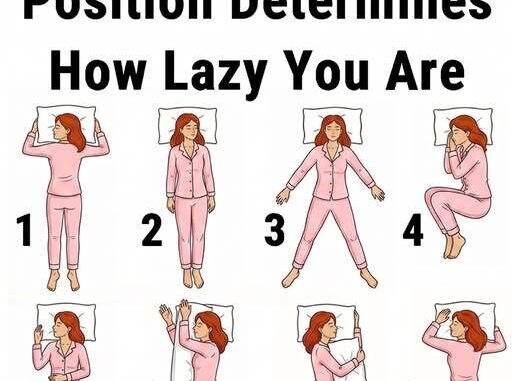
The idea that your sleep position can reveal whether you’re “lazy” sounds intriguing—but let’s be clear right away:
 There is no scientific evidence that sleep position determines laziness or work ethic.
Still, the topic is popular online because it’s fun, relatable, and encourages self-reflection. Let’s break down what’s real, what’s not, and what your sleep habits might actually say.
 What Science Really Says
Sleep position is influenced by:
- Physical comfort
- Breathing patterns
- Mattress and pillow support
- Habit and muscle relaxation
It is not linked to personality traits like laziness, motivation, or productivity.
However, sleep quality does affect energy levels—which can sometimes be confused with motivation.
 Common Sleep Positions (and Popular Interpretations)
These interpretations are entertainment-based, not scientific—but they’re still interesting to explore.
 “Arms Up” Sleeper
- Lying on your back with arms raised
- Often described as open and relaxed
Reality: This position may simply support comfortable breathing and spinal alignment.
 Straight Back Sleeper
- Arms by the sides, body aligned
Often linked to discipline and routine—but in reality, it’s just a stable, comfortable posture.
 Side Sleeper
- One of the most common positions
Associated with balance and practicality—but actually, it’s popular because it reduces pressure on the body and can improve breathing.
 Fetal Position
- Curled up on the side
Often described as emotionally sensitive—but scientifically, it’s just a natural comfort position, especially in cooler environments.
 Starfish Sleeper
- Spread out, taking up space
Linked to comfort and relaxation—but really, it may just mean the person has more room or prefers less pressure on joints.
 Combination Sleeper
- Moves between positions
Often labeled adaptable—and this one actually has some truth:
People who shift positions may be responding to body signals for comfort.
 Why the “Laziness” Myth Exists
The confusion comes from this simple link:
Poor sleep → Low energy → Less productivity
So if someone:
- Sleeps poorly
- Wakes up tired
- Feels sluggish
…it may look like laziness, but it’s actually fatigue.
 What Really Affects Your Energy
Instead of sleep position, focus on what actually matters:
 Sleep Quality
Deep, uninterrupted sleep is key.
Sleep Duration
Most adults need 7–9 hours.
Consistent Schedule
Going to bed and waking up at the same time helps regulate your body clock.
Nighttime Habits
- Less screen time
- Calm environment
- Reduced stress before bed
The Real Takeaway
Sleep position is:
About comfort About body alignment About habit
It is not:
 A measure of laziness A personality test A predictor of success
 Final Thoughts
Exploring sleep positions can be fun—but it’s important to separate entertainment from science.
If you want more energy and productivity, focus on:
- Better sleep habits
- Consistent routines
- Reducing nighttime distractions
In the end, it’s not how you sleep—it’s how well you sleep that truly matters.
Leave a Reply