Part 1
It had barely been five minutes after I signed my divorce papers when my ex-husband answered a call from his mistress right in front of me. In the softest, most affectionate voice I had ever heard from him, he told her he was on his way to meet “their baby.”
That was when I understood something irreversible: I hadn’t lost my marriage that morning.
I had finally left it behind.
The mediator’s office felt sterile and suffocating, too polished for the emotional wreckage unfolding inside it. My name is Catherine Harlow. I was thirty-two, mother of two young children, and I had just ended an eight-year marriage to David Harlow—the man who once promised I would never have to face life alone.
Promises, I had learned, were just carefully wrapped illusions.
The clock read 10:03 a.m. when David’s phone lit up. He didn’t hesitate—he simply answered.
“Yes, I’m done,” he said, already standing. “I’ll be there in ten minutes. Today’s the ultrasound, right?”
Then he smiled.
And added the words that shattered everything I still believed.
“Don’t worry, my whole family is coming. Your son is the heir, after all.”
Something in me went quiet. Not broken—just finished.
The mediator tried to guide him through settlement papers, but David barely looked at them. He signed everything immediately and dismissed it all as meaningless. The condo, the car, even custody—he treated it like clearing clutter.
“If she wants the kids, she can take them,” he said casually. “That’s easier anyway.”
His family nodded along, dismissing me as if I were already irrelevant. A woman no longer needed. A placeholder being replaced.
I simply placed the condo keys on the table.
Then I set two passports beside them.
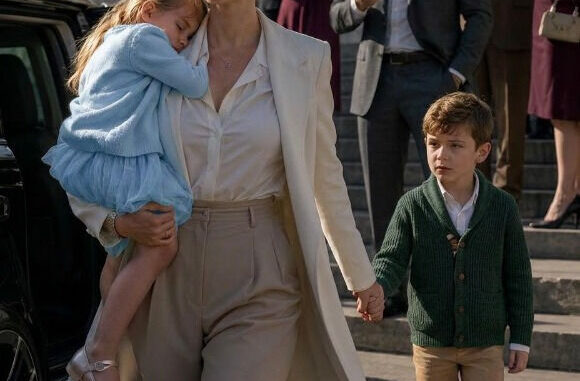
“I’m taking the children to London,” I said.
The room froze.
David laughed at first—then stopped when he realized I wasn’t bluffing.
Moments later, a black SUV arrived outside, waiting for me.
And I walked out with my children, leaving behind a life that had already stopped being mine long before the ink dried.
Part 2
The private fertility clinic on the Upper East Side was designed to feel like luxury rather than medicine—soft lighting, marble floors, and curated calm. It suited David’s family perfectly.
Inside, Allison sat in an expensive maternity dress, her hand resting theatrically over her stomach. David’s mother already spoke of the unborn child as though he were guaranteed legacy.
“My grandson,” she said proudly. “I can feel it.”
David stood nearby, convinced his future had already been secured.
But the moment the ultrasound began, the atmosphere shifted.
The doctor grew silent.
Then he adjusted the scan again.
And again.
Finally, he asked for security and legal counsel.
The room stiffened instantly.
Because the timeline didn’t match.
The conception date didn’t align with what Allison had claimed.
And slowly, the truth began to unravel in real time.
David’s confidence cracked first.
Then confusion.
Then fury.
“What do you mean?” he demanded.
The doctor remained calm: the data showed conception occurred weeks earlier than the story they had been told.
Silence swallowed the room.
And then everything collapsed.
Because the child they were celebrating was no longer certain to belong to the man they had destroyed a marriage for.
Meanwhile, I was already on a plane with my children.
My lawyer confirmed it simply: everything was in motion.
Assets exposed. Transfers traced. Lies documented.
David’s carefully built life was beginning to fall apart without me ever raising my voice.
And I felt nothing but distance.
Not revenge.
Just departure.
Part 3
Heatherwood House stood unchanged in the English countryside—stone walls, ivy, and quiet safety I had forgotten existed.
When we arrived, my children asked if it was ours.
And for the first time in years, I didn’t have to hesitate before saying yes.
My uncle Nick welcomed us like we had never been gone.
That night, I finally cried—not from pain, but from release.
Because I realized how long I had been surviving instead of living.
Meanwhile, across the ocean, David’s world collapsed in stages: financial exposure, reputational damage, and personal humiliation following the clinic revelation.
Allison disappeared.
His family fractured into blame.
And David was left with something unfamiliar: consequences.
When he eventually came to see the children in England, he was no longer the man who had walked away from me without hesitation.
He was tired.
Stripped of certainty.
Human in a way I had never been allowed to see before.
And slowly, carefully, we rebuilt something different—not a marriage, not forgiveness, but a functional truth for the children.
He learned to show up.
Not perfectly.
But consistently.
And that mattered more than apologies ever could.
Part 4
Over time, the damage settled into consequence rather than chaos.
David’s business collapsed under scrutiny. Hidden transfers surfaced. Partnerships dissolved. Reputation eroded quietly but completely.
His family rewrote their narratives, each trying to distance themselves from the fallout.
And I stopped being part of the storm.
In Surrey, life became steady.
My children grew softer again. Safer. More themselves.
There were visits. Awkward beginnings. Gradual acceptance.
Not reconciliation.
But structure.
Then one day, David came to the house asking to see them properly.
I allowed it.
Because peace sometimes requires controlled access to pain.
He played with them in the garden, laughed with them, listened more than he once did.
And for the first time, I saw the version of him that might have existed if he had chosen differently.
But it was too late for that version.
What remained was responsibility.
Not redemption.
Part 5
Eventually, the legal process ended.
Not dramatically.
Just decisively.
There was no victory speech.
Only resolution.
David accepted obligations he had once tried to avoid. He sold what he needed to. Rebuilt what he could.
And slowly, life became quieter for everyone involved.
Not healed.
But stabilized.
He visited the children regularly. Learned their rhythms. Their needs. Their lives.
And I learned something too:
Ending something destructive is not the same as erasing it.
It simply removes its authority over you.
Part 6
Years later, life did not feel like a triumph.
It felt like continuity.
A quieter home. A steadier mind. Children growing into themselves without fear defining them.
David remained present in their lives—imperfect but consistent.
I stopped measuring my worth through what had been taken from me.
And started measuring it through what I built afterward.
One morning, sitting by the pond as my children played nearby, I realized something simple:
I no longer lived in reaction to the past.
I lived in the present.
Not because everything had been repaired.
But because I no longer needed it to be.
The story was never about betrayal alone.
It was about the moment a woman stops mistaking endurance for love.
And finally chooses herself—not loudly, not destructively…
but completely.
And in that choice, everything changed.
Leave a Reply