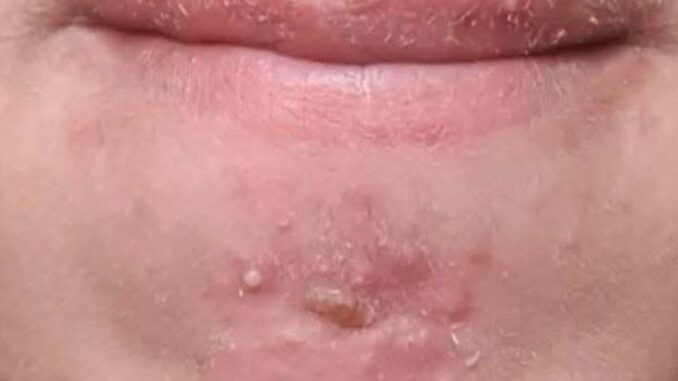
Waking up with a rash around your mouth can be alarming, especially if the skin appears red, flaky, irritated, or develops yellowish crusting. While a photo can’t provide a definitive diagnosis, certain symptoms should not be ignored—particularly if the area seems inflamed or infected.
What It Might Be
Based on the description of redness around the upper lip, chin, and mouth, along with peeling skin, bumps, and crusted patches, several conditions could be responsible:
1. Impetigo
- A bacterial infection that often causes reddish sores around the mouth and nose.
- Sores may burst, ooze, and form yellow or honey-colored crusts.
- Highly contagious; can spread via direct contact, scratching, towels, clothing, or shared personal items.
- Mayo Clinic and CDC note that impetigo frequently develops in this area and should be evaluated promptly.
2. Perioral Dermatitis
- Causes clusters of red or skin-colored bumps around the mouth.
- Can resemble acne but is an inflammatory condition.
- Harsh acne treatments may worsen irritation.
3. Other Possibilities
- Eczema or contact dermatitis
- Irritation from saliva, toothpaste, or skincare products
- Shaving irritation
- Cold sores or herpes simplex
- Infected minor abrasions
Because these conditions can look similar—NHS notes that impetigo may mimic eczema, shingles, or chickenpox—it’s important to seek professional evaluation.
What Not to Do
When skin is inflamed, aggressive home treatments can make things worse:
- Avoid picking, squeezing, or scrubbing bumps or crusts.
- Skip alcohol-heavy products or strong acne creams.
- Don’t apply steroid creams unless prescribed by a doctor.
Gentle Care Until You See a Doctor
- Wash gently with mild cleanser or lukewarm water.
- Pat the skin dry rather than rubbing.
- Avoid sharing towels, razors, or lip products.
- Skip heavy makeup over the irritated area.
- Minimize licking lips, spicy foods, or toothpaste that may aggravate the skin.
When to Seek Medical Advice
Consult a healthcare professional if the rash:
- Spreads quickly
- Is painful, swollen, or warm to the touch
- Produces pus or yellow crusts
- Is accompanied by fever or other worsening symptoms
If the condition is impetigo, treatment usually involves prescription antibiotics. Dermatologists commonly prescribe topical medications such as mupirocin or retapamulin.
Preventing Worsening or Spread
- Wash hands frequently.
- Change pillowcases and towels often.
- Avoid touching the rash.
- Skip heavily scented skincare products until cleared by a professional.
Key Takeaways
Crusting or inflamed rashes around the mouth should never be ignored or treated randomly with over-the-counter creams. Skin conditions that appear similar may have very different causes—bacterial, viral, allergic, or inflammatory. Proper evaluation by a healthcare professional or dermatologist is essential to prevent complications like spreading, scarring, or recurring flare-ups.
Leave a Reply