The Everyday Mystery Hiding in Plain Sight
Most of us use bath towels every single day without giving them much thought. They’re part of our routine—grab one after a shower, dry off, hang it back, and move on. Simple, right?
But what if something as ordinary as a towel had details you’ve overlooked your entire life?
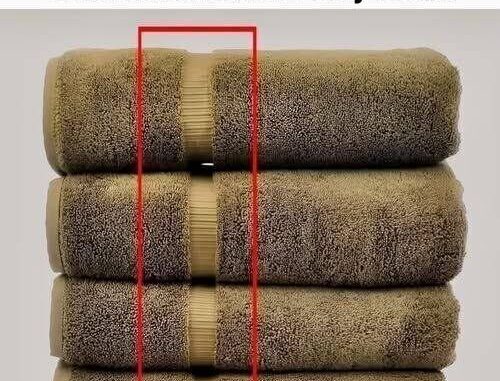
Take a closer look the next time you pick one up. Near the edges, you’ll likely notice subtle bands—thin lines, textured strips, or slightly different patterns woven into the fabric. They might run horizontally or vertically, sometimes appearing as decorative borders.
For years, many people assumed these lines were purely aesthetic—just a small design touch to make towels look more refined.
However, these features are far more intentional than they appear.
Behind those simple lines lies a blend of craftsmanship, function, and smart design choices that play an important role in how your towel performs over time.
A Detail Most People Ignore
It’s easy to overlook small details in everyday items. Towels, especially, don’t seem like something that would require much engineering or thought.
But textile design is more complex than it seems.
Those lines are not random. They are carefully woven into the towel during manufacturing, using specific techniques that have been refined over time.
And once you understand their purpose, it becomes clear that they’re doing much more than just sitting there.
What Those Lines Are Actually Called
The textured bands you see near the ends of most bath towels are known as dobby borders.
The name comes from a specialized weaving technique that uses a “dobby loom.” This type of loom allows manufacturers to create small, repeating geometric patterns within the fabric.
Unlike the soft, fluffy center of a towel, these borders are woven more tightly, creating a distinct look and texture.
But this difference isn’t just for appearance—it’s intentional.
The Role of Structure in Fabric Design
To understand why dobby borders exist, it helps to think about how towels are used.
Towels go through a lot:
- Frequent washing
- Exposure to heat during drying
- Constant pulling, folding, and hanging
- Moisture absorption and release
Over time, all of this can put stress on the fabric.
Without reinforcement, the edges of a towel would be more likely to fray, stretch, or lose their shape.
That’s where dobby borders come in.
Strengthening the Edges
One of the primary purposes of these woven lines is to reinforce the towel’s structure.
Think of them as a built-in support system.
Because the border is more tightly woven than the rest of the towel, it provides extra strength where it’s needed most—along the edges.
This helps:
- Prevent fraying
- Reduce wear and tear
- Extend the lifespan of the towel
Over time, this small design feature can make a noticeable difference in durability.
Keeping Towels in Shape
Another important function of these lines is maintaining the towel’s shape.
Washing machines create a lot of movement. Towels twist, spin, and stretch during each cycle. Without structural support, they could easily become misshapen.
The dobby border helps stabilize the fabric, reducing the chances of:
- Uneven stretching
- Shrinking in certain areas
- Warping or twisting
This means your towel is more likely to keep its original form, even after repeated use.
A Balance Between Function and Design
While functionality is important, appearance also plays a role.
Manufacturers use dobby borders to add a subtle decorative touch. These patterns can range from simple lines to more intricate geometric designs.
Even though they are understated, they contribute to the overall look of the towel, making it feel more polished and refined.
In many cases, these borders are what give towels that “hotel” or “spa-like” appearance.
Branding Through Design
Some brands go a step further by using unique dobby patterns as a signature feature.
Instead of logos or bold labels, the pattern itself becomes a way to recognize the product.
This approach combines branding with functionality, allowing companies to stand out while still maintaining a clean and elegant look.
Why That Area Feels Different
If you’ve ever noticed that the border feels less soft or absorbent than the rest of the towel, you’re not imagining it.
The reason is simple: the border is woven differently.
The center of the towel is made from looped fibers (often called terry cloth), which are designed to absorb water efficiently.
The border, on the other hand, is flat and tightly woven. This makes it:
- Stronger
- Less flexible
- Less absorbent
So while it plays an important structural role, it’s not the best area for drying.
How Towels Are Engineered for Performance
When you look at a towel as a whole, it’s actually a combination of different design elements working together:
- The soft center absorbs moisture
- The dobby border provides strength and stability
- The edges are reinforced to prevent unraveling
Each part serves a specific purpose, creating a balance between comfort, durability, and usability.
The Evolution of Towel Design
Towels haven’t always looked the way they do today.
Over time, manufacturers have refined their designs to improve performance and longevity. Features like dobby borders were introduced as practical solutions to common problems.
As washing machines became more powerful and usage increased, the need for durable, long-lasting textiles grew.
Today, these small details are standard in most towels—but their purpose is still not widely understood.
Why Small Details Matter
It’s easy to dismiss something as minor as a line on a towel.
But when you consider how much use towels get, even small improvements can have a big impact.
A stronger edge means fewer replacements.
Better shape retention means a more consistent experience.
Thoughtful design means better overall quality.
These are the kinds of details that often go unnoticed—but they’re what make everyday items more reliable.
A Lesson in Everyday Design
This simple feature offers a broader lesson about design in general.
Many of the objects we use daily are carefully engineered, even if we don’t realize it. From clothing to furniture to kitchen tools, small details often serve important purposes.
Understanding these details can change how we see the world around us.
Next Time You Reach for a Towel…
Take a moment to notice those lines.
They’re not just decorative.
They’re not random.
They represent a combination of function, durability, and thoughtful craftsmanship.
What once seemed like a minor detail becomes something meaningful—a reminder that even the simplest items can have depth and purpose.
Final Thoughts: The Beauty of Hidden Functionality
In a world filled with complex technology and advanced designs, it’s refreshing to discover that something as simple as a towel still relies on basic principles done well.
The lines you’ve seen countless times are a perfect example of how form and function can work together seamlessly.
They don’t demand attention.
They don’t stand out dramatically.
But they do their job—quietly and effectively.
And sometimes, that’s exactly what great design is all about.
Leave a Reply