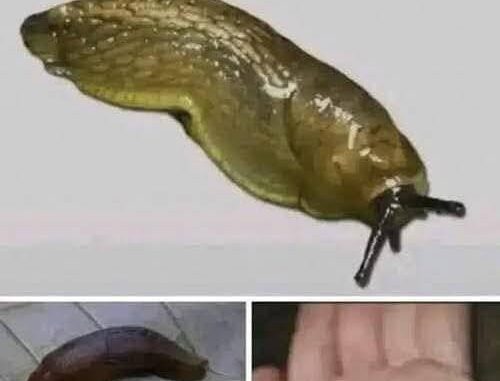
Most people react the same way when they spot a slug crawling through the garden or sliding across the kitchen floor.
Disgust.
Annoyance.
Maybe even panic.
Slugs are usually seen as slimy pests that leave messy trails behind and destroy plants overnight. But these slow-moving creatures may actually be far more important than most people realize.
In fact, the appearance of slugs around your home can reveal surprising things about your environment, your garden, and even the health of your ecosystem.
While they may not look particularly impressive, slugs play an important role in nature and contribute more to the environment than many people expect.
What Exactly Is a Slug?
A slug is closely related to a snail. The biggest difference is that slugs either lack an external shell entirely or carry a tiny internal shell hidden beneath their bodies.
They belong to a group of soft-bodied animals called mollusks, the same family that includes snails, octopuses, and clams.
Because their bodies are delicate and prone to drying out, slugs thrive in damp, shaded environments where moisture is easy to find.
One of their most fascinating survival tools is the slime they produce.
Although many people dislike slug slime, it serves several important purposes. The mucus helps slugs glide smoothly across rough surfaces, protects their soft bodies from injury, and keeps them from drying out too quickly.
That shiny trail left behind isn’t just random mess—it’s essential for their survival.
Why Do Slugs Appear Around Your Home?
If slugs are showing up in your yard or near your house, it often means your environment supports healthy biological activity.
Slugs are attracted to places with moisture, shelter, and organic material. Gardens with rich soil, mulch, fallen leaves, and dense plants create ideal conditions for them.
Some of the things that attract slugs include:
- Damp soil
- Mulch and leaf piles
- Compost
- Dense vegetation
- Cool, shaded spaces
- Moist areas after rainfall
In many ways, slugs are signs that nature is actively working around your home.
Their presence usually means your soil contains organic matter and your garden supports a functioning ecosystem.
Nature’s Cleanup Crew
One of the most important jobs slugs perform is helping break down dead organic material.
In nature, decomposition is essential because it returns nutrients back into the soil where plants can reuse them. Slugs help speed up this process by feeding on decaying matter.
They commonly eat:
- Fallen leaves
- Dead plants
- Mushrooms and fungi
- Algae
- Rotting vegetation
As slugs consume this material, they help break it into smaller particles that bacteria and fungi can continue decomposing.
Without decomposers like slugs, dead plant material would pile up much more slowly, disrupting the natural recycling process that keeps ecosystems healthy.
Slugs Help Improve Soil Health
Healthy soil is full of living organisms working together beneath the surface.
Earthworms often get most of the attention, but slugs also contribute to soil fertility in important ways.
By consuming decaying plants and organic debris, slugs help release nutrients back into the ground. This supports microbial life and improves nutrient cycling, allowing plants to grow more effectively.
Slugs are especially useful because they help break down tougher plant material that other decomposers may struggle to process.
Over time, this contributes to richer and healthier soil.
For gardeners, this means slugs are not always purely destructive. While some species can damage plants, they are also part of the larger system that keeps gardens alive and balanced.
An Important Part of the Food Chain
Slugs are also an important food source for many animals.
A variety of creatures depend on them for survival, including:
- Birds
- Frogs
- Toads
- Hedgehogs
- Beetles
- Small mammals
When slugs are present, predators often follow. Their appearance can actually indicate that your local ecosystem is active and functioning properly.
Removing every slug from an area may negatively affect animals higher up the food chain that rely on them as a food source.
Nature works through balance, and slugs play their role within that balance.
Slugs Can Reveal Environmental Conditions
Believe it or not, slugs can act like natural environmental indicators.
Because they are extremely sensitive to moisture and humidity, their activity often reflects surrounding conditions.
If you suddenly notice more slugs than usual, it may point to:
- Recent rainfall
- High humidity
- Excess moisture in soil
- Dense ground cover
- Overwatered gardens
If slugs repeatedly appear inside your house, especially in basements or near foundations, it may even suggest hidden moisture issues or leaks.
Rather than simply viewing them as pests, some people see slugs as small warning signs that something in the environment has changed.
The Surprising Science Behind Slug Slime
One of the most fascinating things about slugs is that scientists have studied their mucus for possible medical and cosmetic uses.
Slug slime contains unique compounds that help protect their bodies and promote healing.
Research has explored its potential benefits, including:
- Moisture retention
- Cell regeneration
- Wound healing support
- Natural antibacterial properties
Similar ingredients from snails have already become popular in skincare products around the world because of their hydrating and soothing effects.
While slug slime may sound unpleasant, researchers continue studying its unique biological properties for possible future medical applications.
Are Slugs Harmful?
Although slugs can damage gardens by feeding on plants and vegetables, they are generally harmless to humans.
They do not bite, sting, or attack people.
However, large slug populations can become frustrating for gardeners, especially when they target young plants.
Fortunately, there are natural ways to manage slugs without completely harming the ecosystem, including:
- Reducing excess moisture
- Removing hiding spots
- Encouraging natural predators like birds
- Using barriers around vulnerable plants
The goal is usually balance rather than total elimination.
More Than Just a Slimy Visitor
At first glance, slugs seem like insignificant creatures that most people would rather avoid.
But in reality, they quietly contribute to decomposition, soil health, nutrient recycling, and the food chain around us every day.
Their appearance can even tell us important things about the condition of our environment.
So the next time you spot a slug crawling through your yard or garden, you may see it a little differently.
Instead of viewing it as just a nuisance, you might recognize it as a small but important part of the natural world working silently behind the scenes.
Leave a Reply