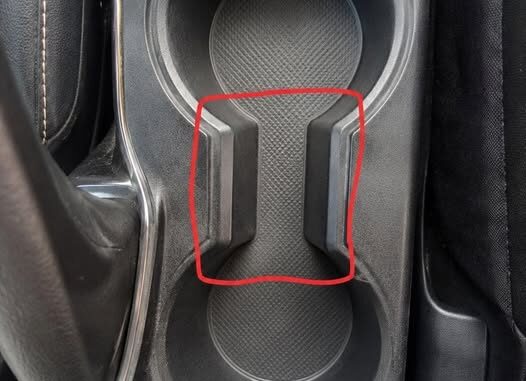
I always assumed the little gap in my car’s cup holder was just a quirk of molded plastic—until I saw someone post about it online. Suddenly, I noticed it in nearly every car I rode in, and it seemed deliberate, not accidental. That narrow space between two cups, once dismissed as a minor design choice, turns out to serve a surprisingly practical purpose.
Most of us use cup holders daily without giving much thought to why they’re shaped the way they are. Automotive designers, however, embed countless small functional details into car interiors, often unnoticed by drivers. The gap between cup holders is one of those clever but subtle features.
So, what is it really for?
In many vehicles, the space between cup holders exists to make grabbing drinks easier, to stabilize cups of different sizes, and to prevent two beverages from being awkwardly pressed together. The gap often acts as a flexible zone rather than a separate compartment.
For example, when you place two large drinks side by side, the open space gives your fingers enough room to lift one cup without bumping the other. It seems trivial, but try it next time—you’ll notice how useful it actually is.
In some cars, the gap also supports mugs with handles. If you’ve ever tried using a travel mug without realizing it, you’ve likely taken advantage of this space. The handle rests in the middle, while the circular holder keeps the cup stable.
However, this isn’t universal. Some manufacturers simply use the divider for finger access and cup positioning, while others design the gap specifically for oversized bottles or mugs. Cup holder design varies widely depending on brand, console space, and intended users.
One interesting point I discovered is that car interiors are rarely designed with only one function in mind. Most features, no matter how small, serve multiple purposes.
Historically, cup holders were simpler because drinks were smaller. Today, with enormous tumblers, reusable water bottles, iced coffee cups, energy drinks, and mugs with handles, creating a single cup holder that fits all sizes is challenging. The result? Asymmetrical or irregularly shaped holders with carefully positioned gaps and side openings.
The primary goal of these gaps is flexibility. They allow different beverages to coexist in a compact space while remaining stable during turns or sudden stops. A well-designed holder also lets you grab a drink with either hand without struggling, making the small detail surprisingly important for convenience and safety.
Many modern vehicles incorporate additional features to further improve cup stability. Spring-loaded grips, rubber inserts, textured surfaces, and narrow channels help accommodate various cup sizes and reduce wobbling. Oversized water bottles, I’ve learned, are likely the bane of automotive designers everywhere.
Car owners, however, have creatively repurposed this gap. Online posts reveal alternative uses ranging from organizing charging cables to holding straw wrappers, parking tickets, receipts, coins, or even temporary key storage. Some drivers use the opening to steady cups while opening lids or inserting straws, especially when the car is moving. These creative hacks, while unofficial, highlight the practical flexibility the designers unintentionally provided.
The cup holder gap is just one example of tiny car interior details that often go unnoticed. Others include the arrow next to the fuel icon showing which side the gas cap is on, hidden grocery bag hooks in trunks, small storage compartments under seats, and windshield vents designed to reduce fogging. Steering wheels may have subtle thumb indentations for comfort—features you only notice when they’re missing.
These details blend seamlessly into the background, serving their purpose quietly. Cup holder gaps fall squarely into this category. They aren’t flashy, they aren’t high-tech, but they improve functionality in subtle, practical ways.
In summary, the gap between car cup holders is primarily functional. It makes grabbing drinks easier, keeps beverages of different sizes stable, and provides flexibility in a confined space. In some vehicles, it accommodates mug handles or oversized bottles, preventing interference between cups.
Because car designs differ, there’s no single universal explanation for the gap. Some are wider, narrower, or placed differently depending on the brand, console layout, or target audience. But across models, the intent is clear: small, thoughtful design choices can make everyday tasks—like grabbing your morning coffee—slightly easier and much more convenient.
So next time you notice that little gap between your car cups, don’t ignore it. It’s a subtle reminder that good design often goes unnoticed until it’s absent—or until you finally understand why it was there all along.
Leave a Reply