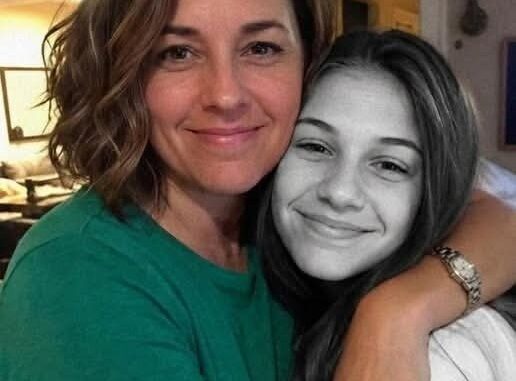
I thought I knew everything about my daughter’s world. Even after losing her, I believed I truly understood who she was, the person she had been, and the life we shared. I was completely wrong. I only realized how little I truly knew because of a phone call I almost ignored.
The death of a child changes everything. When Lily passed away at thirteen, it felt as if the world had split into two halves: the “before,” when hope still existed, and the “after,” when nothing seemed normal. Our home, once filled with laughter and chaos, turned silent. Every corner of the apartment reminded me of her absence.
I couldn’t bear to touch her things. Her gray hoodie hung on the back of her chair. Her pink sneakers lay on the floor exactly where she left them. Part of me still expected her to burst through the door with a dramatic story or a half-hearted apology, but she never did.
After her passing, I withdrew completely. I stopped answering my phone, lost track of time, and spent my days isolated indoors, while the rest of the world moved forward as if nothing had changed.
Then came a Tuesday morning when the middle school called.
At first, I hesitated. Phone calls had become sources of dread, and I almost let it go to voicemail. But the caller ID gave me pause. When I saw that it was Lily’s English teacher, Ms. Holloway, I panicked and answered.
Her voice trembled slightly as she explained she had found something belonging to Lily in her locker, addressed to me. The words “FOR MOMMY,” scrawled in Lily’s handwriting on the front of an envelope, made my hands shake as I took the note.
Ms. Holloway and the school counselor were on the verge of tears, and the tension in the hall was palpable. I left immediately, my heart pounding, and drove straight to the storage unit Lily had included in her message.
The building was nondescript, the kind of place you pass countless times without ever thinking twice. I opened the door with the small silver key and stepped inside, unsure of what to expect.
Instead of finding old school projects, I was met with rows of neatly stacked boxes—each labeled with my name. My knees nearly gave out.
The first box contained hundreds of handwritten letters. Each envelope had instructions: letters to be opened on birthdays, during lonely nights, and on days when grief became unbearable. Lily had somehow predicted the exact moments when I would need her words.
On top of the letters lay a small voice recorder. When I pressed play, her voice filled the space, calm and familiar. She spoke as though she knew exactly how I would react, explaining that if I was listening now, it meant she had not had the time she had hoped for in life. Sitting there on the cold concrete floor, I cried harder than I had in weeks.
I called my sister, Judy, who arrived quickly and froze when she saw the boxes. Together, we began to sort through them.
The second box contained timetables, meal suggestions, and reminders to care for myself. Lily had thought of everything: sleep, nutrition, emotional wellbeing. It was clear she wanted me to survive in her absence.
The third box contained a list of people she believed I needed in my life: friends, neighbors, teachers, and the school counselor. Each person had notes about their importance and guidance on when to reach out. She had considered how I would continue to connect with the world after she was gone.
One of the hardest boxes to unpack was labeled “Memories You’ll Forget First.” It contained pictures of simple moments I had long forgotten: burnt pancakes, movie nights, messy art projects. Lily had preserved them, adding notes to recount the story behind each memory. She wanted to safeguard our shared history from being lost to grief.
Then came the box marked “The Hard Truth.” Inside was Lily’s diary. She had documented doctor visits, fear, and her awareness of my constant worry. In so many ways, she had been stronger than I was, protecting me even as I tried to protect her.
Sitting there surrounded by her preparation and love, I finally allowed myself to break down. For weeks I had forced numbness, fearing that feeling the pain would be unbearable. But here, amidst her thoughtful planning, I wept openly, my sister holding me as the tears fell.
I learned that Lily had involved Judy in her plan months before. She had rented the storage unit with savings from babysitting jobs and birthday allowances, and Judy had helped cover the rest. Lily had begged her to keep it secret, knowing I could not have handled it mentally.
There was one final box, kept slightly apart from the others. Inside was a flash drive labeled “LAST ONE.” We watched the video together, tears streaming as Lily appeared on her bed, speaking directly to me.
Her message was simple, yet profound. She had prepared me to survive, not just to mourn. She reminded me to return to the school and care for the children who were often alone, just as she had been. Most importantly, she urged me to live—to find reasons to continue, even in the depths of grief.
The next morning, for the first time in weeks, I got out of bed. A letter from Lily awaited me on my nightstand, written for mornings like this when even leaving the bed felt impossible. Her words provided the motivation I needed to keep moving forward.
Later that day, I returned to her school. In the library, I noticed a girl sitting alone, wearing a gray hoodie remarkably similar to Lily’s. She looked withdrawn, unseen by others. For a moment, the pain threatened to overwhelm me. Then I remembered Lily’s instructions. I sat beside the girl, offering my presence and attention.
In that moment, I realized something extraordinary: Lily had spent her final months not preparing me for her death, but preparing me to survive it. She had left a roadmap of love, hope, and guidance to help me navigate life without her. Somehow, knowing this made moving forward feel possible again.
Lily’s foresight, compassion, and love continue to shape my days. Her letters, boxes, and final messages remind me that even in the face of the most unimaginable loss, we can find a way to carry on—and honor those we have loved.
Leave a Reply