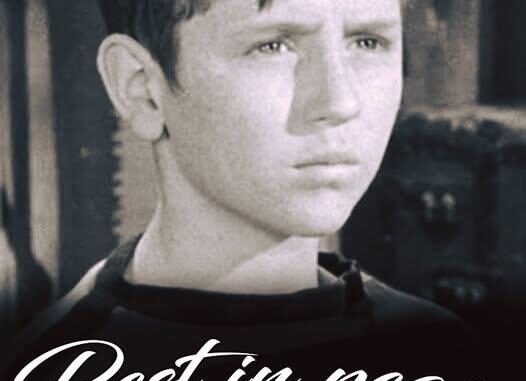
The news arrived quietly, almost gently, but for many longtime television fans, the sadness landed hard. Dennis Rush, remembered by generations as young Howie Pruitt from The Andy Griffith Show, has passed away. To casual viewers, he may have seemed like just one small part of Mayberry’s world. But for those who grew up watching the show, his face became woven into something much larger: the comforting feeling of an America that moved slower, laughed softer, and always seemed to end the day with kindness.
Rush never became a massive Hollywood celebrity, and strangely, that may be part of why his memory feels so personal to fans now. He represented a kind of television innocence that modern entertainment rarely captures anymore. As Howie Pruitt, he fit naturally into the gentle rhythm of Mayberry — bike rides down quiet streets, fishing trips, front-porch conversations, and childhood problems that felt enormous until wisdom and compassion quietly solved them by the end of the episode.
There was warmth in those stories.
Not spectacle. Not shock value. Just human closeness.
And Dennis Rush carried that atmosphere effortlessly onscreen.
Behind the scenes, life in Mayberry shaped him too. Cast members from The Andy Griffith Show often described the production almost like an extended family rather than a typical television set. For a young actor, that environment mattered. Rush was not pushed into the exhausting machinery of fame the way many child stars later experienced. Instead, he worked alongside adults who protected the spirit of the show and, in many ways, protected the children inside it too.
Yet unlike many actors who spend decades chasing Hollywood relevance, Rush quietly stepped away while still young.
He did not build his identity entirely around celebrity. He did not spend years forcing himself to remain visible. Instead, he chose something much more ordinary — and perhaps much rarer in the entertainment industry: a private life.
Leaving acting behind, he settled in San Diego and built routines far removed from cameras, studios, and red carpets. To outsiders, it may have looked like disappearing. But for Rush, it seemed less like retreat and more like choice. He pursued normalcy instead of constant attention, finding meaning outside the narrow definition of success Hollywood often imposes on former child actors.
That decision gave his story a different emotional texture than many others from classic television.
There was no dramatic scandal. No public collapse. No desperate attempt to cling to fading fame. Just a man who once belonged to one of America’s most beloved fictional towns and later chose to live quietly beyond it.
Leave a Reply