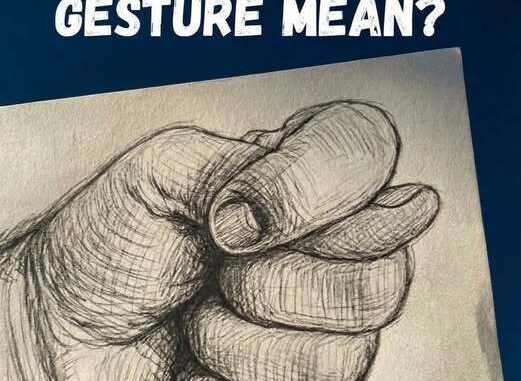
The human hand has always been one of the most powerful tools of expression ever created. Long before ordinary people could read and write, and centuries before emojis and instant messages became part of daily life, human beings communicated through gestures, symbols, and silent movements that carried enormous meaning. Among the many gestures passed down through history, few are as mysterious, misunderstood, and culturally rich as the simple act of tucking the thumb between the index and middle fingers inside a closed fist. Across parts of Europe and the Mediterranean, this sign became widely known as the fig gesture, or mano fica. At first glance, it may appear to be nothing more than an odd hand position or an outdated superstition. Yet behind that tiny movement lies a remarkable story about resistance, protection, survival, and the hidden language people once used to navigate difficult worlds.
To truly understand why this gesture mattered so much, it helps to imagine life in 19th-century Europe, where social rules were strict and power usually belonged to a small number of wealthy or influential people. In villages and small towns, ordinary laborers, merchants, and farmers often had very little freedom to openly challenge authority. Speaking against a landlord, refusing a powerful official, or insulting someone higher in status could carry serious consequences. A careless word might lead to humiliation, punishment, or complete social isolation. Because direct confrontation was dangerous, people learned to survive through subtlety. They developed quiet ways of expressing refusal, frustration, or defiance without openly provoking conflict. It was in this environment that the fig gesture became surprisingly powerful. By hiding the thumb between the fingers, a person could communicate a firm rejection or mock resistance without saying a single word aloud. It was a silent form of rebellion disguised as something harmless.
What made the gesture so effective was its ambiguity. To outsiders or strangers, it could appear meaningless or playful. But among people who understood its cultural significance, it carried a very clear message: “No,” “Not happening,” or “You have no power over me.” In many ways, it became the perfect weapon for ordinary people who lacked political or social authority. They could preserve their dignity and independence through wit and symbolism rather than direct aggression. Instead of shouting or fighting openly, they answered pressure with humor, irony, and quiet resistance. The gesture allowed people to maintain a sense of personal control even inside systems designed to silence them.
The physical structure of the gesture also contributed to its deeper symbolism. A normal clenched fist is universally associated with anger, strength, or combat readiness. But once the thumb disappears inside the fingers, the meaning changes completely. Suddenly the hand represents something hidden, protected, guarded from outside harm. Across many folk traditions — from the warm coastal regions of Italy to the colder Slavic countryside — the fig sign was believed to function as a protective charm against the evil eye, curses, jealousy, or spiritual harm. People feared that envy and negative energy from others could bring sickness, misfortune, or emotional suffering. The tucked thumb became a symbolic shield against those invisible threats.
Mothers especially passed these beliefs down through generations. Children were sometimes taught to make the gesture quietly while walking past individuals rumored to possess dangerous spiritual influence or bad intentions. In this context, the movement of the hand stopped being simple superstition and became something deeply emotional: an act of care and protection. A mother could not control every danger surrounding her child, but she could offer small rituals that symbolized safety and resilience. That tiny hidden thumb became a portable form of comfort carried everywhere in the body itself.
As time moved into the 20th century, the meaning of the gesture slowly softened and evolved. What once carried undertones of resistance and spiritual defense increasingly entered the private space of family life. Grandparents used it playfully with grandchildren. Parents used it jokingly during small household negotiations or games. In kitchens and living rooms, the gesture became less about conflict and more about affection, teasing, and inherited tradition. It survived not only because of its original meanings, but because families transformed it into part of their emotional culture. Elders quietly passed fragments of ancient nonverbal communication to younger generations without always fully explaining its historical roots. Family
Yet even in those softer family moments, the gesture still retained something powerful beneath the humor. It continued to symbolize standing one’s ground without cruelty or aggression. It taught children that boundaries did not always require shouting or violence. Sometimes confidence could exist quietly. Sometimes humor itself became a form of strength.
Leave a Reply