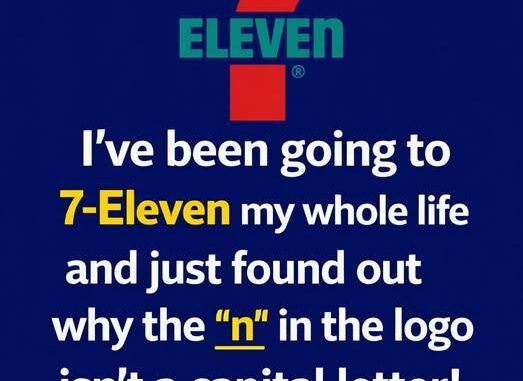
Most people can recognize the famous 7‑Eleven logo instantly. With its bright red, orange, and green colors, the brand has become one of the most recognizable convenience store chains in the world.
But hidden inside the logo is a small detail many people never notice:
The final “n” in “Eleven” is lowercase, while the rest of the letters are capitalized.
At first glance, it may seem like a design mistake. In reality, that tiny lowercase letter was a deliberate branding decision—and the reason behind it is surprisingly interesting.
How 7‑Eleven Got Its Name
The company originally began in 1927 in Dallas, Texas, under the name Tote’m Stores. At the time, the business focused on convenience by allowing customers to buy common household essentials like milk, eggs, and bread in one location.
In 1946, the company adopted the name 7‑Eleven to reflect its extended operating hours: open from 7 a.m. to 11 p.m.
Today, staying open that late may not seem unusual, but at the time it was considered highly convenient and innovative. The longer hours helped the company stand out from competitors and reinforced its identity as a store built around customer convenience.
Eventually, many locations moved to 24-hour service, but the name remained because it had already become iconic.
The Story Behind the Lowercase “n”
Early versions of the logo displayed the word “ELEVEN” entirely in capital letters.
However, according to company history, executives felt the design looked too harsh and formal. They wanted the logo to appear more welcoming and approachable.
That’s when an unexpected suggestion reportedly changed the brand forever.
The wife of former company president Joe C. Thompson Jr. is said to have recommended changing the final “N” to lowercase. Her reasoning was simple: the softer appearance would make the logo feel friendlier and less aggressive.
The company liked the idea and adopted the change permanently.
Since then, the lowercase “n” has remained one of the most unique features of the 7‑Eleven brand.
Why Small Logo Details Matter
At first, changing one letter may not sound important. But in branding and design psychology, even tiny adjustments can influence how people feel about a company.
Small visual choices can affect whether a brand appears:
- Friendly or formal
- Modern or outdated
- Relaxed or aggressive
- Approachable or corporate
In this case, the lowercase “n” subtly softened the overall appearance of the logo without most customers consciously noticing it.
That quiet design change helped create a more casual and welcoming identity.
The Psychology Behind the Colors
The logo’s colors also play a major role in why the brand is so recognizable.
The bright combination of red, orange, and green was carefully chosen to create visibility and emotional impact.
Red and Orange
These colors naturally attract attention and create a sense of energy, movement, and urgency. They are especially effective for businesses that rely on quick customer decisions.
Green
Green adds balance and freshness, helping soften the brighter colors while making the logo feel more inviting.
Together, the color palette makes the sign easy to spot from a distance—particularly for drivers looking for fuel, snacks, coffee, or a quick stop during travel.
A Logo Recognized Around the World
As 7‑Eleven expanded internationally, maintaining a consistent visual identity became increasingly important.
The recognizable logo helped customers instantly identify stores no matter where they traveled. Whether someone visited a location in the United States, Japan, Thailand, or another country, the branding created a familiar experience.
That consistency helped strengthen customer trust and global recognition over time.
More Than Just a Convenience Store
Over the decades, 7‑Eleven evolved far beyond its original concept.
What started as a small convenience store eventually became associated with:
- Late-night snacks
- Coffee runs before work
- Road trip stops
- Quick household purchases
- Fuel stations and travel essentials
For many people, the logo carries memories tied to everyday routines and small moments of daily life.
That emotional familiarity is one reason the brand has remained successful for so many decades.
The Power of Subtle Branding
One of the most fascinating aspects of branding is that the strongest design choices are often the least noticeable.
Most customers never consciously think about the lowercase “n.” Yet over time, that tiny detail helped shape how the company feels emotionally.
Designers and marketers understand that small adjustments in typography, spacing, colors, and shapes can dramatically influence public perception.
Rounded lettering may appear friendlier. Sharp edges may feel modern or bold. Even tiny lowercase letters can soften an entire logo.
The 7‑Eleven logo is a perfect example of how subtle branding works quietly in the background.
Why the Logo Has Lasted So Long
Many major brands redesign their logos repeatedly over the years. However, 7‑Eleven has managed to maintain a largely consistent identity while still modernizing gradually over time.
That balance between familiarity and adaptation is difficult to achieve.
The company’s recognizable branding continues to connect current customers with decades of history while remaining relevant in modern markets.
And through all those changes, the lowercase “n” has remained.
Final Thoughts
The story behind the lowercase “n” in the 7‑Eleven logo may seem like a small piece of trivia, but it reveals something much larger about branding and human psychology.
Sometimes the smallest details create the biggest impact.
A single lowercase letter helped soften the appearance of one of the world’s most recognizable logos, making it feel more approachable, memorable, and human.
Most people pass by the sign without ever noticing the difference.
But once you see it, you’ll probably never look at the logo the same way again.
Leave a Reply