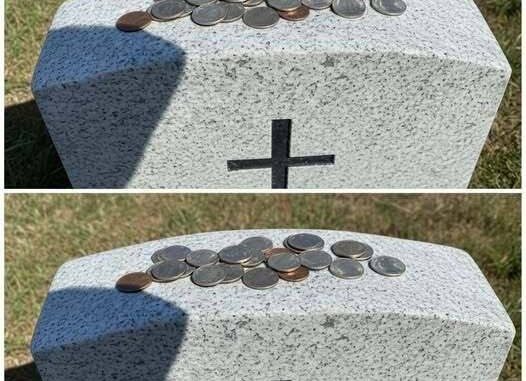
If you walk through a cemetery in the early morning or near sunset, you might notice something unexpected: a small coin resting on top of a gravestone. It could be a penny, a nickel, a dime, or even a quarter, quietly left behind as if it were forgotten change.
But these coins are not accidents.
They are part of a powerful tradition of remembrance—one that carries deep emotional meaning, especially in military cemeteries. Each coin is a silent message, left by someone who wants to honor a life, a service, and a sacrifice that still matters.
Over time, this simple act has become a meaningful custom among veterans, friends, and visitors who wish to pay respect to those who served. Though small in size, the gesture carries emotional weight far beyond its monetary value.
Why Coins Are Used
People could leave flowers, notes, or personal items, but coins have become especially significant for several practical and symbolic reasons.
Coins are durable. They don’t easily fade, blow away, or deteriorate in the weather. They are also universally recognizable and simple, making the gesture easy to understand once you know the meaning behind it.
Most importantly, a coin feels intentional. When someone sees it on a gravestone, they understand it was placed there with purpose, not by accident.
And within military tradition, that purpose often carries a specific coded meaning.
The Meaning of Each Coin
Over time, different coins have come to represent different relationships between the visitor and the deceased soldier. Each denomination tells part of a story.
Penny – A Sign of Remembrance
A penny is the most common coin left behind. Its message is simple but meaningful: someone visited.
It says, “You are remembered,” or “I was here to honor you.” Even though it is the smallest denomination, its meaning can be deeply comforting to families. It shows that the person’s life and service have not been forgotten.
Nickel – Shared Training
A nickel represents a stronger connection. It usually indicates that the visitor trained with the deceased, often during basic training or early military preparation.
Those early experiences create strong bonds through shared hardship and discipline. Leaving a nickel is a way of saying, “We went through the beginning of this journey together, and I remember those days.”
Dime – Fellow Service Member
A dime carries even deeper significance. It suggests that the person who left it served alongside the fallen soldier.
They may have shared deployment, faced similar conditions, or stood together during difficult moments in service. A dime communicates respect and shared experience: “I served with you. I remember what we went through together.”
Quarter – Present at the End
The quarter is considered the most meaningful of all.
It indicates that the visitor was present when the soldier passed away. This could mean they were there in final moments on the battlefield, in medical care, or during another final chapter of life.
A quarter represents witness and memory. It carries the message: “I was with you when your life ended, and I will never forget that moment.”
A Tradition Rooted in Memory and Brotherhood
While this practice is most commonly associated with military cemeteries in the United States, it is not always widely understood outside veteran communities. For families who discover these coins without knowing their meaning, learning the symbolism can be both emotional and comforting.
It reassures them that their loved one is still remembered by others who served or cared deeply.
In many cases, visitors leave coins quietly over many years, creating a layered history on a single gravestone. A single headstone may hold pennies from strangers, nickels from training friends, and dimes or quarters from those who shared closer bonds.
Together, they form a silent record of respect.
Why the Tradition Matters
At its core, the tradition reflects the lasting bonds formed through military service. For many veterans, leaving a coin is not just an act of remembrance—it is a continuation of loyalty that does not end with death.
It is a way of saying that service members remain connected, even after their lives have ended.
The act itself is simple, but its meaning is profound. It transforms ordinary currency into a message of honor, grief, and respect.
A Quiet Language of Respect
One of the most powerful aspects of this tradition is that it requires no words. Anyone from any background can participate, and the meaning is understood through context and knowledge rather than speech.
A coin on a gravestone quietly communicates something universal: this person mattered.
Whether placed on Memorial Day, Veterans Day, or during a private visit, each coin contributes to a larger story of remembrance shared across generations.
Final Reflection
Next time you walk through a cemetery and notice a small coin resting on a headstone, take a moment to pause.
It may look like something small and ordinary, but it represents something far greater.
It could be a memory of shared training, a bond formed in service, or a final goodbye that could never be spoken aloud.
These coins remind us that honoring someone does not always require grand gestures. Sometimes, the smallest object carries the deepest meaning.
A penny, a nickel, a dime, or a quarter—each one is a quiet promise:
You are remembered.
Leave a Reply