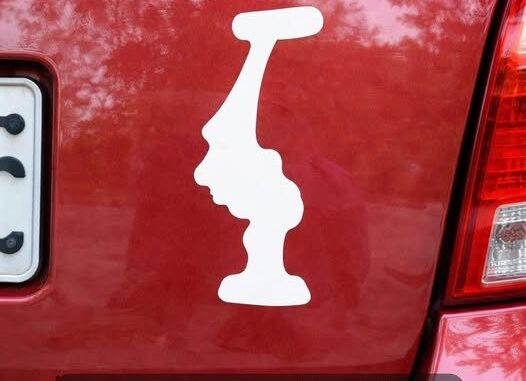
If you’ve ever noticed a Washington State outline sticker on a car—especially one that appears flipped upside down—you might have done a double take. At first glance, it can look like a printing mistake or a decal applied incorrectly. But in reality, this unusual orientation has become a recognizable and intentional trend among drivers, especially those connected to the Pacific Northwest.
What started as a simple state-shaped bumper sticker has evolved into a subtle symbol of identity, humor, and personal expression.
The Rise of State Outline Stickers
State silhouette stickers have become popular over the past several years, largely thanks to outdoor culture and social media. These minimalist decals often appear on car windows, laptops, and water bottles, allowing people to show pride in where they live or where they come from.
Washington State, with its distinct jagged borders and recognizable shape, lends itself especially well to this style. The clean outline makes it instantly identifiable even in simple form, which helped it become a favorite among travelers, hikers, and outdoor enthusiasts.
As the trend grew, people began using these stickers not just as geographic markers, but as personal statements.
Why the Sticker Is Flipped
At some point, drivers began deliberately rotating the Washington State outline upside down. While it may seem random, the choice often carries meaning depending on the individual.
For some, the flipped sticker is simply a playful twist. It adds humor or irony to an otherwise straightforward symbol of state pride. It’s a way of saying, “Yes, I’m from Washington—but I don’t take it too seriously.”
For others, it represents distance or change. People who have moved away from Washington sometimes use the inverted sticker as a quiet nod to being “turned around” from home. It becomes a small, personal reminder of where they came from, even if they are now far away.
There are also those who appreciate it purely for aesthetic reasons. The upside-down version feels different, unconventional, and slightly rebellious—an intentional break from the expected design.
In many cases, the meaning is deeply personal, and sometimes it’s simply about sparking curiosity.
A Symbol That Starts Conversations
One of the most common reasons people adopt the upside-down sticker is how often it draws attention. Strangers notice it, ask about it, and start conversations.
That small interaction turns a simple decal into something more meaningful: a story about home, travel, or identity. For people living far from Washington, it can even serve as a way to connect with others who share the same background.
In this sense, the sticker becomes more than decoration—it becomes a social bridge.
Where You’ll Spot It
Although it originated in Washington, the upside-down sticker has traveled far beyond the state’s borders.
You might see it on vehicles in nearby regions like Oregon or British Columbia, or much farther away in places like Australia, New Zealand, or across various parts of the United States. Travelers, students, and outdoor enthusiasts often carry it with them as they move or explore new places.
It’s especially common on vehicles associated with adventure lifestyles—Subarus, vans, SUVs, and campers. These are the kinds of cars often linked with road trips, national parks, and long-distance travel.
Wherever it appears, it tends to signal movement, exploration, and a connection to nature.
How People Get the Sticker
The popularity of the design has made it widely available. People can find Washington State outline decals online, through independent creators, or in specialty shops. Many prefer weather-resistant vinyl versions so the sticker lasts through road trips and changing climates.
Some buyers intentionally look for artist-made versions, especially from creators in the Pacific Northwest, who often add their own stylistic touches to the design.
Whether purchased locally or online, the sticker has become easy to obtain—but its meaning varies from person to person.
More Than Just a Decal
What makes the upside-down Washington State sticker interesting isn’t the design itself, but what it represents.
For some people, it’s a symbol of home. For others, it reflects change, distance, or memory. And for many, it’s simply a lighthearted way to personalize a vehicle.
Over time, it has become part of a broader culture of sticker expression, where people use small visual symbols to communicate identity, interests, and experiences without saying a word.
In a world filled with mass-produced branding, these small personal touches stand out precisely because they are simple.
A Reflection of Identity and Belonging
At its core, the sticker represents a connection—to a place, a memory, or a sense of belonging.
Washington State, with its forests, mountains, and coastline, holds strong emotional significance for many who live there or have moved away. The sticker becomes a way of carrying that connection forward, even when life takes people elsewhere.
The upside-down variation adds another layer of meaning. It suggests distance, change, or individuality. It can represent leaving home, missing home, or redefining what “home” means in the first place.
But above all, it reflects personal interpretation. Each driver assigns their own meaning to it.
Why It Resonates
The reason this small decal has gained attention is simple: it feels personal.
It is not a corporate logo or a mass marketing symbol. It is a flexible, open-ended expression that can mean different things to different people. That openness is what makes it powerful.
It can represent pride, humor, nostalgia, rebellion, or curiosity—all depending on who is looking at it.
And because it is subtle, it invites questions rather than demanding attention.
Final Thoughts
The upside-down Washington State sticker may seem like a small detail on a car, but for many people, it carries quiet meaning. It reflects movement, memory, and identity in a simple visual form.
Whether used to spark conversation, express pride, or mark a personal journey, it shows how even the smallest symbols can hold significance.
Sometimes, meaning doesn’t need to be loud or complicated. It can be as simple as a sticker—flipped, noticed, and understood in different ways by everyone who sees it.
Leave a Reply