After my husband Pete passed away, I spent years trying to keep life stable for my daughter Hanna and me.
She was only seven when she lost her father.
At that age, children do not always understand grief fully. They just feel the emptiness it leaves behind. They notice the silence at dinner, the missing footsteps in the hallway, and the way adults suddenly cry when they think nobody is looking.
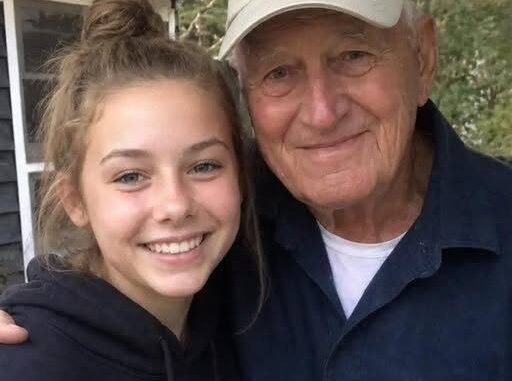
During those difficult years, one person became Hanna’s steady source of comfort: Pete’s father, Stuart.
Stuart never tried to replace her dad. Instead, he simply showed up consistently.
He attended school concerts.
Helped with homework.
Built birdhouses with her in the garage.
Sat through dance recitals.
And every birthday, he baked the same chocolate cake Pete used to love as a child.
Their bond became something beautiful.
And honestly, I was grateful for it.
For years, our small family slowly rebuilt itself around routines, memories, and quiet healing.
But when Hanna turned fifteen, something began changing between us.
At first, it was subtle.
She spent more time in her room.
Our conversations became shorter.
She stopped telling me about school or her friends.
At dinner, she barely touched her food.
Whenever I asked if something was wrong, she always gave me the same answer.
“I’m fine. I’m just going to Grandpa Stuart’s later.”
At first, I thought nothing of it.
Teenagers naturally pull away sometimes. They need independence. They become private. I told myself not to overreact.
But over time, the distance between us became painful.
Hanna no longer laughed freely around me the way she once had.
Some nights, I heard her quietly crying in her room after returning from Stuart’s house.
When I asked about it, she shut down immediately.
One evening, I gently suggested we visit Stuart together over the weekend.
The reaction shocked me.
“Why do you always have to ask questions?” she snapped.
The sharpness in her voice stunned me into silence.
Then she grabbed her plate and disappeared upstairs.
I sat alone in the kitchen afterward wondering where I had lost my daughter.
That same night, I called Stuart.
At first, he sounded normal.
Calm.
Warm.
Steady as always.
But when I mentioned Hanna’s behavior, he hesitated.
Only for a second.
Still, it was enough for me to notice.
“She’s okay,” he said carefully. “We’ve just been spending time in the garden.”
The answer sounded simple.
Too simple.
Something inside me knew there was more.
The following afternoon, guilt battled curiosity as I drove to Stuart’s neighborhood and parked quietly down the street.
I hated feeling suspicious.
But I also felt desperate.
From my parked car, I watched Hanna in Stuart’s backyard.
And for the first time in weeks, I saw my daughter smile.
A real smile.
She laughed while helping him carry flower pots across the yard. Stuart handed her gardening gloves while she teased him about planting too many lilies again this year.
The sight should have comforted me.
Instead, it hurt.
Why could she still be herself with him but not with me?
I drove home feeling more confused than before.
Several days later, Stuart arrived unexpectedly at my front door early in the morning.
The moment I saw his face, I knew something was wrong.
He looked exhausted.
Older somehow.
He quietly asked if we could go for a walk.
At the nearby park, we sat together on a bench beneath the trees in complete silence for several moments before he finally spoke.
“Hanna found out months ago,” he said softly.
I frowned in confusion.
“Found out what?”
He looked down at his hands before answering.
“I have cancer.”
The words hit me like ice water.
For a moment, I genuinely could not breathe.
Stuart explained that Hanna accidentally discovered medical paperwork while searching for gardening gloves in his garage cabinet months earlier.
She confronted him immediately.
And after begging him to tell her the truth, he finally admitted everything.
The diagnosis.
The treatments.
The uncertainty.
He had not wanted me to know yet because our family had already endured so much loss after Pete died.
And Hanna, terrified of hurting me again, promised to keep the secret.
Suddenly everything made sense.
The silence.
The sadness.
The distance between us.
My daughter had been carrying fear far too heavy for a fifteen-year-old to bear alone.
She wasn’t avoiding me because she stopped loving me.
She was protecting me the only way she knew how.
That realization broke my heart completely.
When I returned home, Hanna was standing in the kitchen preparing blueberry pie filling for Stuart.
I gently told her that I knew.
At first, panic crossed her face.
Then the walls she had built for months finally collapsed.
She burst into tears instantly.
“I didn’t want you to hurt again,” she whispered through sobs.
I pulled her into my arms, and for the first time in months, she let herself fall apart completely.
She admitted how terrified she had been.
Terrified of losing another father figure.
Terrified of watching someone she loved disappear again.
Terrified of seeing me relive grief all over again.
So instead of talking about her fear, she spent every spare moment trying to make Stuart happy.
They planted flowers together.
Cooked meals.
Looked through old photo albums.
Watched movies late into the night.
She was trying to fill his remaining days with peace before time ran out.
And somehow, in carrying that burden alone, she forgot she needed support too.
Before we even finished baking the pie, the phone rang.
A neighbor had found Stuart collapsed in his garden beside the white lilies he planted every year in memory of his late wife.
We rushed to the hospital immediately.
Doctors spoke gently, but the truth was clear.
He did not have much time left.
Over the following two weeks, Hanna rarely left his side.
She held his hand.
Read to him.
Adjusted his blankets.
Talked to him about school and music and dreams for the future.
I watched my daughter show more strength and compassion than many adults twice her age.
When Stuart finally passed away peacefully, white lilies filled the church during his funeral service.
Hanna stood beside me the entire time holding my hand tightly.
And although grief surrounded us again, I realized something important.
My daughter had changed.
Not hardened.
Not broken.
But grown.
Loss had taught her empathy in ways no lesson ever could.
Now, months later, we still visit Stuart’s garden together every Sunday morning.
We pull weeds.
Plant flowers.
Trim the lilies he loved so much.
And while we work side by side, Hanna talks again.
About school.
About her future.
About memories she never wants to forget.
Looking back now, I understand something I couldn’t see before.
Love does not always arrive loudly.
Sometimes it looks like silence.
Sometimes it looks like distance.
Sometimes it looks like a child quietly carrying pain because she believes she is protecting someone else.
Hanna’s secret broke my heart.
But it also showed me the incredible young woman she was becoming.
Kind.
Brave.
Compassionate.
And every time the lilies bloom in Stuart’s garden, I’m reminded that even after tremendous loss, love still finds ways to grow.
Leave a Reply